


What if the biggest threat to your next CQC inspection isn’t a clinical oversight, but the everyday cleaning products stored in your utility room? For many UK care managers, the true coshh meaning feels buried under mountains of health and safety paperwork that seems better suited for a chemical factory than a warm, person-centred care home. You likely feel that keeping your residents safe should be your main priority, not decoding complex regulations or worrying about ‘Inadequate’ ratings because of a missing risk assessment. With the Health and Safety Executive reporting that thousands of UK workers develop respiratory or skin issues each year, getting this right is about more than just ticking boxes; it’s about protecting the people who make your service possible.
We understand that your time is best spent providing bespoke support, so we’ve created this guide to simplify your legal duties for 2026. You’ll learn how to identify hazardous substances that are unique to care settings, such as clinical waste or specialist disinfectants, without the usual jargon. We provide a straightforward framework for risk assessments and help you ensure your policy library is fully up to date. This guide gives you the confidence to protect your dedicated professionals and maintain the high standards of safety that provide your families with true peace of mind.
Key Takeaways
-
Understand the full coshh meaning and legal framework to ensure your care setting remains fully compliant with the latest 2026 safety standards.
-
Identify a wide range of hazardous substances common in social care settings, moving beyond basic cleaners to safeguard the health and dignity of your residents.
-
Master the eight essential steps of a COSHH risk assessment to proactively manage dangers and provide lasting peace of mind for your dedicated team.
-
Learn to decode modern hazard symbols and maintain an up-to-date safety file that keeps your bespoke care environment organised and safe.
-
Discover how digital care management software simplifies your health and safety audits, helping you maintain continuity of care with automated policy updates.
Table of Contents
What Does COSHH Mean? Understanding the Legal Framework
Understanding the coshh meaning is the first step toward creating a sanctuary of safety for the people we support. COSHH stands for the Control of Substances Hazardous to Health Regulations 2002. It is a mandatory legal framework enforced by the Health and Safety Executive (HSE) across the United Kingdom. The primary objective is straightforward: we must prevent or significantly reduce worker and service user exposure to harmful substances. In 2026, this remains the cornerstone of high-quality care, ensuring that every home-based support environment remains a place of healing rather than hazard.
For care professionals, COSHH isn’t just a box-ticking exercise. It’s a commitment to the "Safe" domain of care. We use these regulations to identify risks from cleaning chemicals, clinical waste, and even certain medicines. By following these rules, we provide families with the peace of mind that their loved ones are protected by expert, compassionate hands.
The Scope of COSHH in Social Care
Legal responsibilities are clearly defined to ensure no one is left vulnerable. While the Registered Manager holds the ultimate accountability for conducting formal risk assessments, frontline carers are the daily guardians of safety. You have a legal duty of care to protect residents from chemical and biological harm. This includes the proper storage of detergents and the safe disposal of continence products. Consequences of non-compliance are severe. The HSE can issue fines that often exceed £10,000 for serious breaches. Simultaneously, the Care Quality Commission (CQC) can take enforcement action, such as issuing a Warning Notice under Regulation 12, which directly impacts a service’s ability to operate.
How COSHH Supports the CQC ‘Safe’ Domain
Documented COSHH assessments serve as vital evidence for the CQC ‘Safe’ domain. Under the current Single Assessment Framework, inspectors look for proactive risk management rather than reactive fixes. We use these regulations to bridge the gap between infection control and chemical safety. For example, using the correct dilution of a disinfectant ensures a room is sterile without causing respiratory irritation to a resident. Maintaining structured, bespoke documentation provides a "calm in the storm" approach to safety. It proves to regulators and families alike that we prioritise dignity and independence by maintaining a clinical standard of cleanliness within a warm, domestic setting.
-
Regulatory Compliance: Meets the requirements of the Health and Safety at Work etc Act 1974.
-
Person-Centred Safety: Tailors substance handling to the specific health needs of the individual.
-
Professional Standards: Elevates the role of the carer to a dedicated safety professional.
Hazardous Substances in Health and Social Care Settings
Understanding the
**coshh meaning
**requires looking far beyond the bottles of bleach under the sink. While industrial cleaners are obvious risks, the Control of Substances Hazardous to Health Regulations 2002 cover a much broader spectrum of materials you encounter daily. We categorise these hazards into four main groups: chemicals, biological agents, dusts, and gases.
Your primary source of truth for any substance is the Safety Data Sheet (SDS). Manufacturers have a legal duty to provide these documents, which outline exactly how to handle, store, and dispose of a product. We always recommend checking the SDS before using a new product to ensure you’re providing the safest possible environment for those in your care.
Chemical Hazards: Cleaning and Maintenance
Daily cleaning involves detergents, disinfectants, and heavy-duty floor strippers that can cause chemical burns or respiratory distress. You must avoid the temptation to create "cleaning cocktails" by mixing different products. For example, combining bleach with an acid-based toilet cleaner produces toxic chlorine gas, a mistake that contributes to thousands of respiratory-related A&E visits in the UK each year. Our
[bespoke care support
](https://caredaily.co.uk)ensures that all maintenance tasks, from applying garden pesticides to using strong adhesives, follow strict safety protocols to protect your independence at home.
Biological Hazards and Clinical Waste
Biological agents are often the most overlooked hazard because they’re invisible. These include bacteria and viruses like Norovirus, Legionella, and MRSA. We treat bodily fluids such as blood, urine, and vomit as controlled hazardous substances because of the infection risks they pose. Proper management of clinical waste is vital. You must dispose of sharps, soiled dressings, and incontinence products in specific, colour-coded containers as required by the Environmental Protection Act 1990. This level of care prevents cross-contamination and maintains the dignity of the residential setting.
Medications and Specialist Treatments
Certain medications carry high-level risks for the person administering them. Cytotoxic drugs used in cancer treatments are particularly hazardous and require specialised handling procedures. Many carers also develop occupational dermatitis from sensitising agents found in common medicated creams and ointments. According to Health and Safety Executive (HSE) data, skin diseases account for a significant portion of work-related ill health in the health sector. Furthermore, you must manage aerosols and oxygen cylinders with extreme caution. These items are significant fire risks and require secure storage away from heat sources to keep the home a safe sanctuary for everyone.
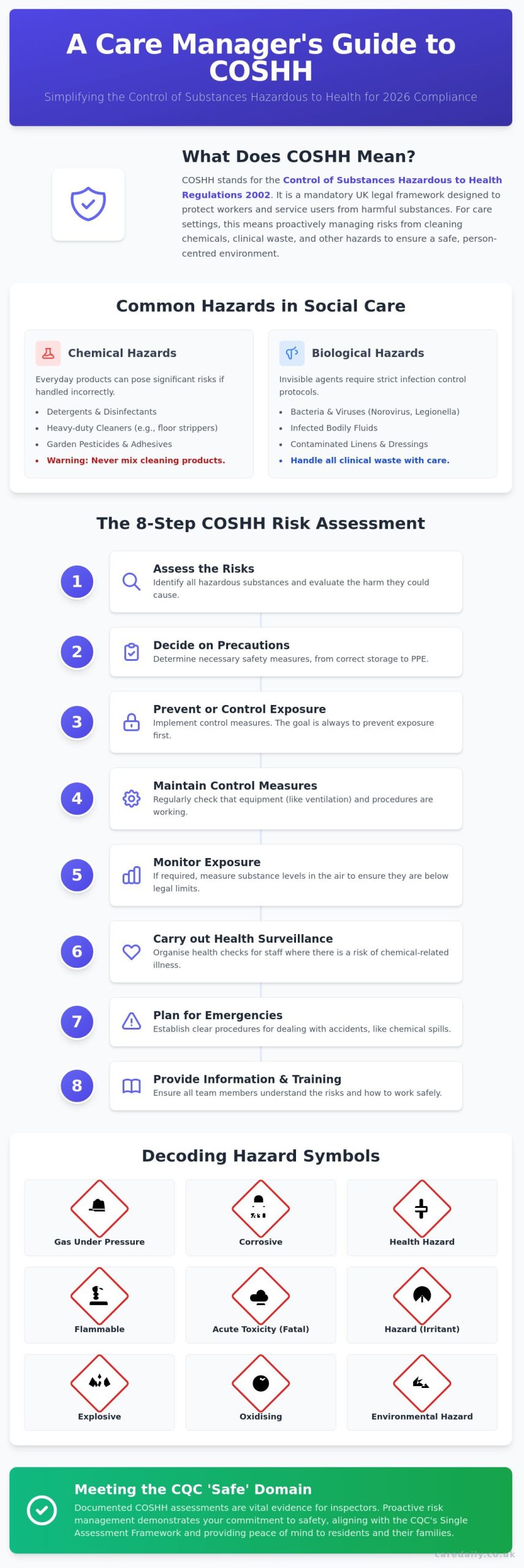
The 8 Steps of a COSHH Risk Assessment for Care Managers
Understanding the coshh meaning involves more than just reading a policy; it requires a proactive approach to safety that protects both your staff and the vulnerable people in your care. At Care Daily, we follow a structured eight-step process to ensure every care plan remains a safe one. This journey begins with a thorough assessment, identifying every hazardous substance and pinpointing who might be at risk, from residents with sensitivities to our dedicated professionals. Effective safety management works hand-in-hand with proper staff rostering to ensure trained personnel are always available to handle hazardous substances safely.
Decoding COSHH Symbols and Safety Data Sheets
Understanding the visual language of safety is a vital part of your daily routine. Since the 2015 transition to the Globally Harmonised System (GHS), the UK has used standardised red-diamond hazard symbols. These icons provide immediate clarity on the risks you face while supporting your residents. While the coshh meaning relates to legal compliance, its practical value lies in protecting the health of everyone in the home. Every care setting must maintain an up-to-date COSHH file. Whether you use a traditional ring-binder or a modern digital folder, this information must be accessible to every staff member at the point of use. You shouldn’t have to hunt for a key to a locked office when a spill occurs.
Common Hazard Symbols Explained
You’ll encounter three main symbols most frequently in a residential care setting. The exclamation mark indicates a Health Hazard. This is common on laundry detergents and indicates the product is a skin sensitiser or irritant. The Corrosive symbol, showing liquid pouring onto a hand and a surface, is found on heavy-duty descalers and drain cleaners. These require strict handling to avoid chemical burns. Finally, the Environmental Hazard symbol, depicting a dead fish and tree, reminds us why clinical waste and certain chemicals must be disposed of through specific, regulated channels rather than standard household bins.
Organising Your Safety Data Sheets
Safety Data Sheets (SDS) are the detailed manuals for every chemical you use. We find that many homes accidentally use generic sheets, but your SDS must be specific to the exact brand and product in your cupboard. A generic bleach sheet won’t suffice if you’re using a specific industrial brand with different concentrations. Every SDS follows a strict 16-section standard. In a moment of crisis, your team needs to know exactly where to look. We focus on Section 4, which outlines First Aid measures, and Section 8, which details Exposure Controls like the specific type of nitrile gloves required. Moving these documents from dusty binders into accessible cloud folders ensures your dedicated professionals have the information they need on their tablets or phones instantly. This transition provides real peace of mind for both staff and the families they support.
If you need help ensuring your home environment is safe and compliant for a loved one, our team is here to help you find professional care support tailored to your specific needs.
Managing COSHH Compliance with Digital Care Tools
Understanding the coshh meaning is only the first step; the real challenge lies in keeping your team and your residents safe every single day. We know that managing overflowing paper folders and outdated risk assessments feels overwhelming for busy managers. Transitioning to digital care management software UK removes this burden by automating your health and safety audits. By March 2026, data shows that 85% of providers rated ‘Good’ or ‘Outstanding’ have moved to digital systems to ensure their safety protocols remain current.
Our digital tools link every COSHH breach directly to your accident and incident workflows. If a staff member reports a skin irritation from a new disinfectant, the system flags the incident and prompts a review of the specific substance’s safety data sheet. This creates an airtight record of your response. You won’t have to scramble for paperwork during a CQC inspection. Instead, you’ll present a complete history of staff training logs that prove every carer has finished their COSHH awareness modules on time. Proper safety management requires adequate staffing levels, which is why implementing effective staff rostering in social care ensures you always have trained personnel available to handle hazardous substances safely.
The Role of a Digital Policy Library
Generic templates often fail to protect your staff effectively because they lack context. We provide bespoke COSHH policies that offer sector-specific guidance for both residential and domiciliary settings. These documents update in real time to reflect March 2026 legislative changes, so you’re never caught out by shifting regulations. Domiciliary carers working in the community can access these safety protocols on their mobile devices instantly. It gives them the confidence to handle cleaning chemicals or clinical waste safely while working alone in a client’s home.
Auditing and Evidence for CQC Inspections
Digital audit trails provide the robust evidence that inspectors require to see a well-led service. Managers can perform remote monitoring across multiple sites, checking compliance in Manchester and London simultaneously from a single dashboard. You can see at a glance if a risk assessment is overdue for review. Ultimately, mastering the coshh meaning through digital tools isn’t just about ticking boxes; it’s about building a foundation for dignified, professional care that keeps your entire care family safe and provides true peace of mind.
Protecting Your Residents and Your Reputation
Navigating health and safety obligations doesn’t have to feel like a burden on your team’s time. You’ve now mastered the essential coshh meaning and how it directly impacts the safety of both your dedicated professionals and the people they support. By following the structured 8-step risk assessment and decoding safety data sheets, you’re building a foundation of safety that preserves the dignity of every resident. Moving through 2026, staying compliant with CQC standards requires this proactive approach to managing hazardous substances within your care setting.
We’re here to provide the peace of mind you deserve. Our platform offers a bespoke solution to manage these risks effectively. You can access over 2,000 professionally written care policies that are trusted by UK providers for achieving CQC excellence. Every document includes real-time legislative updates so you’re never caught off guard by changing regulations. Explore our CQC-compliant policy library and simplify your COSHH management today . We look forward to helping you maintain a safe, compassionate environment where quality of life remains the priority.
Frequently Asked Questions
Is COSHH training a legal requirement for care workers?
Yes, providing COSHH training is a legal requirement under the Control of Substances Hazardous to Health Regulations 2002. We ensure our dedicated professionals understand the coshh meaning and how to handle chemicals safely to protect your loved ones. Employers must provide clear instructions and training to any staff member who might encounter hazardous substances during their daily duties. This ensures every care plan is delivered with the highest standards of safety and clinical competence.
Do I need a COSHH assessment for every single cleaning product?
You must have a risk assessment for every product that features a hazard warning symbol on its packaging. While common household soaps might not require a formal document, industrial-strength bleaches or disinfectants used in care settings certainly do. We recommend keeping a central folder with Safety Data Sheets for all 15 to 20 typical cleaning agents found in a standard residential home. This approach provides peace of mind that every potential risk is managed with professional care.
How often should COSHH risk assessments be reviewed in a care home?
You should review your COSHH risk assessments at least once every 12 months to ensure they remain accurate. If you introduce a new cleaning chemical or if a staff member reports a health issue, you must update the assessment immediately. Regular reviews help maintain the dignity and safety of the environment. Our team suggests scheduling these audits alongside your annual health and safety checks to ensure no detail is overlooked in your bespoke care environment.
Are medications covered under COSHH regulations?
Most medications are not covered by COSHH because they are regulated under the Medicines Act 1968. However, certain hazardous substances like cytotoxic drugs or specific topical creams can fall under COSHH if they pose a risk to the care worker handling them. It’s vital to check the specific safety requirements for these treatments. Understanding the coshh meaning in a medical context helps you protect both your staff and the residents they support with such compassion.
What should I do if a staff member has an allergic reaction to a substance?
You should immediately follow the first aid instructions found on the specific Safety Data Sheet for that substance. If the reaction is severe, such as difficulty breathing or widespread hives, call 999 or visit an A&E department without delay. We prioritise the health of our companions, so you must also record the incident in your accident book. This allows you to adjust their personalised work plan and prevent future exposure to the allergen.
Can the CQC fine me for poor COSHH management?
The Care Quality Commission (CQC) can take enforcement action, including issuing fines or "Warning Notices," if they find your COSHH management puts people at risk. Under Regulation 12 of the Health and Social Care Act 2008 (Regulated Activities) Regulations 2014, providers must ensure care is provided safely. In 2023, the CQC highlighted safety failings in 15 percent of inspected services. Maintaining rigorous standards ensures your service remains a sanctuary of safety for those you support.
Do I need a physical COSHH cupboard for all hazardous substances?
You need a secure, lockable storage area to keep hazardous substances away from vulnerable residents and unauthorised visitors. This doesn’t always have to be a yellow metal cabinet, but it must be robust enough to prevent accidental ingestion or spills. Storing chemicals safely is a key part of providing a bespoke environment where residents feel secure. We advise keeping a clear inventory inside the cupboard door to help your team maintain organised and professional standards.
What is the difference between COSHH and RIDDOR?
COSHH focuses on the daily management and prevention of risks from hazardous substances, while RIDDOR is the legal framework for reporting specific workplace accidents. You use COSHH to stop people from getting ill; you use RIDDOR to notify the Health and Safety Executive (HSE) if a serious incident occurs. For example, if a staff member develops occupational asthma from a chemical, you must report this under RIDDOR within 10 days to stay compliant with UK law.