Home > Health & Social Care > Electronic Medication Administration Record Systems UK: The 2026 Guide

Electronic Medication Administration Record Systems UK: The 2026 Guide

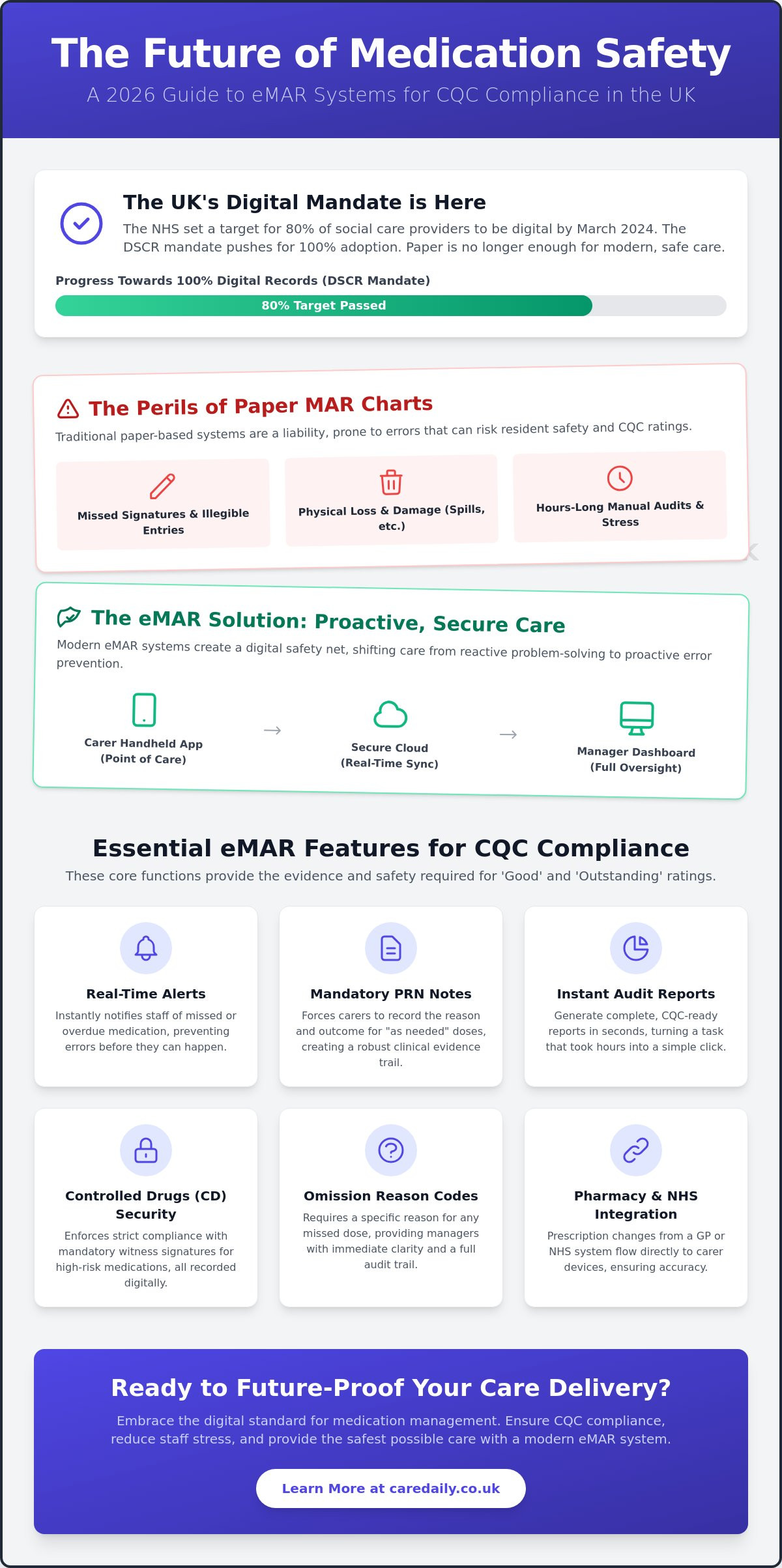
Imagine it’s 3:00 PM on a Tuesday, and you’re staring at a stack of paper MAR charts, knowing a CQC inspector is arriving tomorrow. The fear that a single missed signature or a vague PRN entry could lead to a safeguarding flag is enough to keep any manager awake at night. You know that paper-based records aren’t enough to manage modern care, which is why electronic medication administration record systems UK are the new standard for safety. With the NHS target for 80% of social care providers to be digital by March 2024 now passed, this technology is essential for protecting the dignity of those we care for.

You deserve a system that supports your dedication rather than adding to your workload. We’ll show you how modern eMAR technology transforms medication safety, ensures total CQC compliance, and provides the peace of mind you’ve been looking for. This 2026 guide explores everything from real-time oversight of all administrations to instant, audit-ready reports that reduce stress for your entire team. It’s time to move away from the filing cabinet and toward a future where you can focus on what matters most: the people in your care.

Key Takeaways

  • Understand why the DSCR mandate makes digital records essential for modern providers and how to transition from paper while maintaining total peace of mind.

  • Identify the critical features, like real-time alerts and mandatory PRN notes, that protect your clients’ safety and ensure you are always ready for a CQC inspection.

  • Learn how to audit your current pain points to select the most effective electronic medication administration record systems UK vendors have to offer.

  • Overcome staff anxiety by addressing the fear of technology and discover the best practices for "dual running" systems during your initial rollout.

  • Explore how bespoke software can automate clinical "must-haves" while keeping the individual’s dignity and independence at the heart of your care delivery.

Table of Contents

What are Electronic Medication Administration Record (eMAR) Systems?

An electronic medication administration record system UK is a secure digital platform designed to transform how we manage and record prescriptions in care settings. At its core, it replaces traditional, hand-written Medication Administration Record (MAR) charts with encrypted, cloud-based data. This transition isn’t just about going paperless; it’s about creating a safer environment for both the person receiving care and the dedicated professionals supporting them.

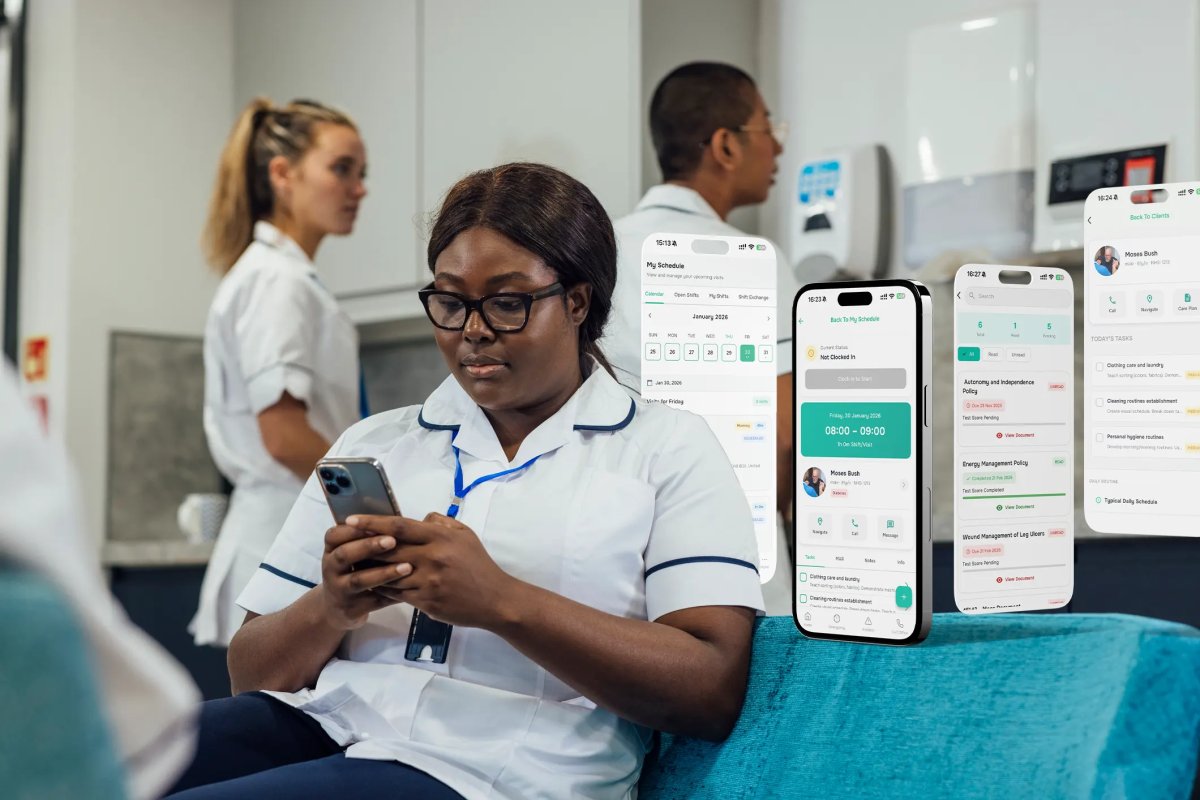
As we approach 2026, the UK care landscape is shifting rapidly. The Department of Health and Social Care (DHSC) has set a clear mandate through the Digital Social Care Record (DSCR) initiative, aiming for 100% of CQC-registered providers to adopt digital records. This move makes electronic medication administration record systems UK essential for compliance. These systems typically consist of a handheld app for carers to use at the point of care and a central management dashboard. This dual-structure allows for a shift from reactive to proactive care. Instead of identifying a missed dose hours after the fact, the system provides "calm in the storm" by alerting staff the moment a task is overdue, effectively stopping errors before they happen.

The Evolution of Medication Management in the UK

The journey from "pen and paper" to digital security represents a major leap in resident safety. In the past, paper charts were a liability, prone to coffee spills, illegible handwriting, and physical loss. Today, cloud-based systems ensure that sensitive health data is protected by bank-level encryption. Modern eMAR platforms now integrate directly with GP pharmacies and NHS systems. This means when a doctor changes a prescription, the update flows through to the carer’s device almost instantly. We define eMAR as the digital heartbeat of safe medication delivery, providing a bespoke record that respects the dignity of every individual.

Key Terminology for Care Managers

Transitioning to a digital system requires familiarity with a few specific terms that will appear during your daily operations and CQC inspections. Understanding these helps you maintain the high standards of continuity of care your clients deserve.

  • PRN (Pro Re Nata): These are "as needed" medications. Digital systems prompt carers to record the reason for the dose and the subsequent outcome, ensuring a complete clinical picture.

  • Controlled Drugs (CD): High-risk medications that require extra layers of security. Digital records often include mandatory witness signatures to maintain strict compliance.

  • Omissions: Any dose that wasn’t given. The system requires a reason code for every omission, which provides immediate peace of mind for managers during audits.

You’ll also need to decide between a standalone eMAR or an integrated care management suite. While standalone tools focus purely on medicine, integrated suites link medication data with wider care plans and rotas. Regardless of which you choose, "real-time" is the most important phrase for your 2026 CQC audit. Inspectors want to see live evidence of safe practice, proving that your team is responsive and professional in every interaction.

Essential eMAR Features for CQC Compliance and Patient Safety

We understand that managing medication is one of the most high-pressure tasks your team faces every day. Transitioning to electronic medication administration record systems UK providers trust helps lift that weight from your shoulders. These platforms act as a digital safety net, using real-time alerts to notify staff the moment a dose is missed or forgotten. By 2026, the expectation for immediate notification will be the standard for "Good" and "Outstanding" ratings, as these alerts prevent the minor oversights that can lead to serious incidents.

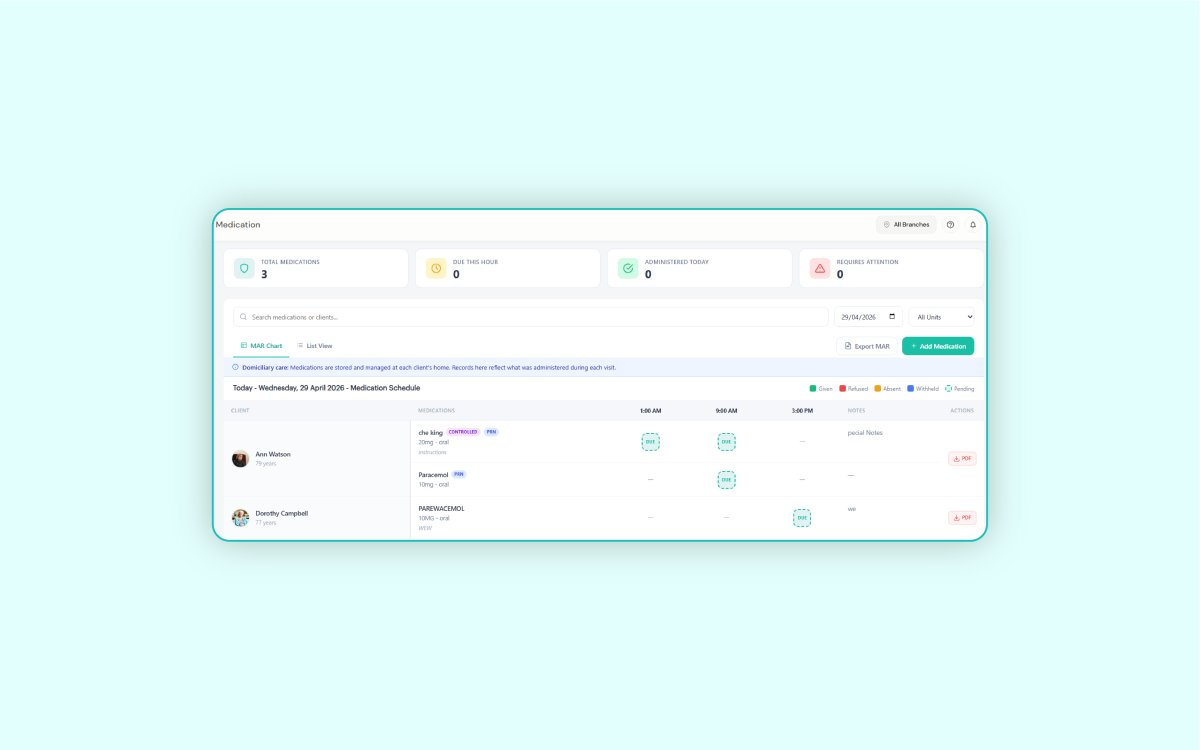
You can’t rely on memory during a frantic shift. Mandatory notes for PRN (as required) medication ensure your team always records the "why" behind a dose before the system allows them to proceed. This creates a robust evidence trail for inspectors, proving that clinical judgment was used appropriately. When it’s time for a review, you can generate a comprehensive month-end report in roughly 30 seconds. This transforms a task that traditionally took hours of manual cross-referencing into a simple, stress-free process.

Safety is further enhanced through photo evidence and barcode scanning. Staff scan the medication packaging and the resident’s profile to ensure a 100% match before administration. This is particularly vital for high-risk medications where the margin for error is zero. If you want to see how these features can protect your residents, you might consider exploring our bespoke care solutions for more tailored advice.

Meeting Regulation 17: Good Governance

The CQC demands that Medicines administration records are accurate, complete, and contemporaneous. Digital systems achieve this by timestamping every action, leaving no room for retrospective "gap-filling." By linking these records to wider digital care planning, you create a holistic view of a resident’s wellbeing. You can use this data to identify trends, such as a 15% increase in medication refusals, which might signal a change in a resident’s underlying health or mood.

Managing Controlled Drugs and High-Risk Scenarios

Managing Controlled Drugs (CDs) requires absolute precision and accountability. Digital witness signatures maintain your safety protocols without the need for bulky paper ledgers that can be lost or damaged. The system performs stock count calculations automatically, which significantly reduces the 20% error rate often associated with manual arithmetic in busy care environments. These automated alerts act as a calm in the storm for busy managers, providing the reassurance that every high-risk dose is accounted for and every protocol is followed to the letter.

Electronic Medication Administration Record Systems UK: The 2026 Guide

The Transition: Moving from Paper MAR Charts to Digital Systems

Moving from traditional paper MAR charts to digital platforms is a significant milestone for any care provider. We understand that this change can feel daunting for your team. Most staff resistance doesn’t actually stem from a dislike of technology. Instead, it usually comes from a deep-seated fear of making a mistake that could affect a resident’s safety. When you introduce electronic medication administration record systems UK, your primary goal is to replace that anxiety with a sense of security and confidence.

The "dual running" debate is a common hurdle during the planning phase. While keeping paper records alongside digital ones for the first week seems like a safe bet, it often creates double the workload. This duplication can lead to data discrepancies and increased stress. We recommend a "soft launch" with a small group of residents first, followed by a full digital switchover. This approach ensures your data migration is clean. You should audit your current paper MARs at least 48 hours before the transition to ensure every dosage and frequency is 100% accurate before it enters the new system.

Winning Over Your Care Team

Success depends on your people. We suggest identifying "digital champions" within your team. These are carers who feel comfortable with tablets and can support their colleagues on the floor. Your training should avoid technical jargon and focus on the "peace of mind" these systems provide. Show them how the software prevents missed doses and automatically flags potential errors. On average, moving to an eMAR system saves a dedicated professional between 20 and 30 minutes of admin time per shift. This gives them more time to focus on providing bespoke, person-centered care.

Contingency and Offline Functionality

Reliability is a primary concern for providers across the country. You need a system that offers a robust "offline mode," especially for domiciliary care where mobile signal in rural areas can be unpredictable. This allows your companions to record administration data without an active connection, automatically syncing it once they return to a Wi-Fi zone. You must also establish clear standard operating procedures (SOPs) for hardware issues. If a tablet breaks or is lost, your team should know exactly where the backup device is kept. It’s the perfect time to update your medication management policies to reflect these digital workflows. This ensures your service remains compliant with CQC standards while using electronic medication administration record systems UK to enhance the safety and dignity of those you support.

How to Choose the Right eMAR Software for Your Agency

Selecting the right electronic medication administration record systems UK is a significant decision that impacts both your staff’s daily routine and the safety of those you support. We understand the weight of this choice. It’s about more than just software; it’s about finding a partner that helps you maintain the highest standards of dignity and care. To find the best fit for your home or agency, follow these five practical steps.

  • Audit your current pain points: Identify exactly where your current system fails. Is it the time spent on monthly audits, or the anxiety caused by missed signatures? Pinpointing these issues helps you choose a solution that offers immediate relief and peace of mind.

  • Verify CQC and DSCR compliance: Ensure your vendor is on the NHS England Digital Social Care Record (DSCR) approved list. This is vital for meeting the 2026 target where 80% of CQC-registered providers must use digital records.

  • Check for integration: Your software should communicate with your existing staff rostering and care planning tools. Seamless data flow reduces manual entry and protects the continuity of care.

  • Evaluate the support: Ask if you’ll have access to a dedicated UK-based account manager. When you’re dealing with complex care scenarios, you need a companion who understands the local regulatory landscape.

  • Request a bespoke demo: Don’t settle for a generic walkthrough. Ask the provider to demonstrate how the system handles your specific, high-risk resident scenarios using real-world examples.

Integration vs. Standalone Systems

Choosing integrated electronic medication administration record systems UK helps prevent the risks of data silos. When your medication software doesn’t talk to your rostering tools, vital information gets lost. This gap can lead to missed doses if a shift change isn’t updated in real-time. A single, unified platform improves the continuity of care for service users, ensuring their needs are met without interruption. While a standalone system might seem cheaper upfront, the cost-benefit analysis favors integration. The financial and reputational damage of a "Requires Improvement" CQC rating far outweighs the monthly subscription fees of a robust, connected system.

Questions to Ask During a Software Demo

We recommend going into every demo with a list of firm requirements. Focus on how the software supports your person-centered approach rather than just its technical specs. Ask these questions to see if the provider shares your commitment to excellence:

  • "How does this system handle complex PRN protocols to ensure residents get medication exactly when they need it?"

  • "Can I customize the alerts for specific high-risk residents to provide extra safety for our most vulnerable service users?"

  • "What is the average time it takes to train a new carer on the app? We want our dedicated professionals to spend more time with residents and less time on paperwork."

If you’re ready to enhance the safety and efficiency of your care delivery, contact our team today for a consultation on modernizing your records.

Future-Proofing Your Care Delivery with Care Daily’s eMAR

Choosing the right electronic medication administration record systems UK providers trust involves finding a partner who understands that care is about people, not just data. We built Care Daily to bridge the gap between clinical excellence and the human touch. Our platform automates essential clinical tasks, like dosage tracking and allergy alerts, so your team can focus on the person in front of them. This approach protects a client’s dignity while ensuring accuracy in every visit, which is vital since medication errors remain a leading cause of avoidable harm in the UK social care sector.

Families often feel anxious when they can’t be physically present. Our Family Portal provides real-time oversight, offering immediate peace of mind that their loved one has received their prescribed support. Whether you’re a startup agency launching your first site or a multi-site provider group managing 500+ beds, our system scales with you. We’ve designed the interface to be intuitive, reducing the training burden on your staff while maintaining a robust audit trail that satisfies even the most rigorous inspections.

Policies and Software Working in Harmony

Our library of over 2,000 CQC compliant policies forms the bedrock of our eMAR workflow. When the law changes, such as the updates to the CQC’s single assessment framework in late 2024, your software and policies update together automatically. This ensures you’re always operating under the latest legal requirements without manual paperwork. We act as your Compassionate Guide through the digital transition, ensuring your team feels supported while your business stays safe.

Getting Started with Your Digital Transformation

Our implementation process is expert and deeply kind. We don’t just hand you a login; we walk beside you through every stage of the setup. We know that moving to electronic medication administration record systems UK wide can feel daunting for staff used to paper. Our ongoing support team remains available long after the initial go-live date because we’re more than a software vendor, we’re your partner in delivering quality care. You’ll find our trainers are patient, knowledgeable, and committed to your success.

  • Bespoke software tailored to your specific service type.

  • Automatic legislative updates to keep you compliant.

  • Dedicated support from experts who understand UK care regulations.

  • Scalable solutions that grow alongside your business ambitions.

    Ready to see how we can transform your medication management? Book your bespoke eMAR demo with Care Daily today and take the first step toward a safer, more efficient future for your residents and your team.

Empowering Your Care Team for the 2026 Digital Transition

Transitioning to electronic medication administration record systems UK isn’t just about meeting government mandates; it’s about protecting the people you support every day. You’ll eliminate the risks associated with illegible paper charts and ensure every dose is recorded with clinical precision. This shift gives your staff more time to focus on meaningful companionship rather than manual paperwork. It’s a practical way to ensure your agency remains resilient and ready for the future of care.

We understand that changing your core systems feels like a significant step for any team. That’s why we’ve built a platform that’s fully CQC and DSCR compliant, helping you maintain the highest standards of safety and dignity. More than 1,000 UK care providers already trust us to safeguard their daily operations. Our system also includes over 2,000 professionally written policies to give you total peace of mind during inspections.

[Book a bespoke eMAR demo for your care agency

](https://www.caredaily.co.uk/company/demo-booking) We’re here to help you navigate this journey with confidence and care.

Frequently Asked Questions

Is an eMAR system mandatory for CQC compliance in 2026?

While not a strict legal requirement for every provider, the CQC expects most services to have transitioned to digital records. The Department of Health and Social Care set a clear target for 80% of CQC-registered providers to adopt digital social care records by 2024. By 2026, using electronic medication administration record systems UK is considered the standard for achieving a "Good" or "Outstanding" rating during inspections.

How does an eMAR system reduce medication errors?

We use real-time alerts to prevent missed doses before they happen, providing a vital safety net for your loved one. These systems eliminate risks from illegible handwriting and offer automatic warnings for potential drug interactions. Data from the NHS suggests that digital systems can reduce medication recording errors by up to 90%, ensuring our dedicated professionals provide the safest care possible in your home.

Can eMAR systems work without an internet connection?

Yes, most professional systems include an offline mode designed specifically for areas with poor signal or thick walls. Carers can record administration details on their device even without Wi-Fi or a 4G connection. Once the device reconnects to the internet, the data syncs automatically with our central office. This ensures continuity of care and peace of mind regardless of the connection quality in your sanctuary.

What is the difference between a MAR chart and an eMAR system?

A traditional MAR chart is a paper document that requires manual updates and physical storage, which can lead to delays in oversight. In contrast, an electronic medication administration record systems UK platform is a live digital tool. It offers instant visibility for managers and families, automated reminders for staff, and secure cloud storage. This modern approach gives our team more time to focus on compassionate, person-centered support.

How long does it take to implement eMAR in a domiciliary care agency?

Implementation typically takes between 4 and 8 weeks for a standard domiciliary agency. This timeline includes the careful migration of client data, bespoke staff training, and a period of parallel running to ensure total safety. We prioritize a steady, guided transition to maintain the dignity of our clients while our companions become experts in the new digital software.

Do eMAR systems integrate with community pharmacies?

Many modern systems integrate directly with community pharmacies through secure digital links. This allows prescriptions to flow straight into the care record, which can reduce manual data entry by 100% for supported pharmacies. It creates a seamless circle of care between the GP, the pharmacist, and our home-based support team, ensuring your bespoke medication list is always accurate and up to date.

Are digital medication records secure and GDPR compliant?

Your data is protected by bank-level encryption and stored on secure UK-based servers. These systems are built to meet strict GDPR standards and the Data Security and Protection Toolkit (DSPT) requirements. Only authorized professionals and clinical staff can access specific records. This provides you with the reassurance that personal health information remains private and is handled with the utmost respect.

What happens if a carer loses their phone or tablet during a shift?

Security is our priority, so no sensitive health data is stored directly on the physical hardware of the device. If a tablet is lost, we can remotely lock the account and wipe the application access immediately. A replacement device can be configured in minutes, allowing the carer to continue their shift without any loss of information or disruption to your personalized care plan.

Related Articles

Care Daily Blog

Share This Article

Share on X

Share on LinkedIn

Copy Link

Get Compliance Updates

Weekly insights for care providers — every Tuesday morning.

Empowering care providers with intelligent documentation and workflow management solutions for better outcomes.

GDPR Compliant

256-bit SSL Secured

Care Daily © 2026 operated by NXT Digital Ltd, Registered in England and Wales, Company Number: 13265961