
PASS everyLIFE alternatives: match digital records to care needs

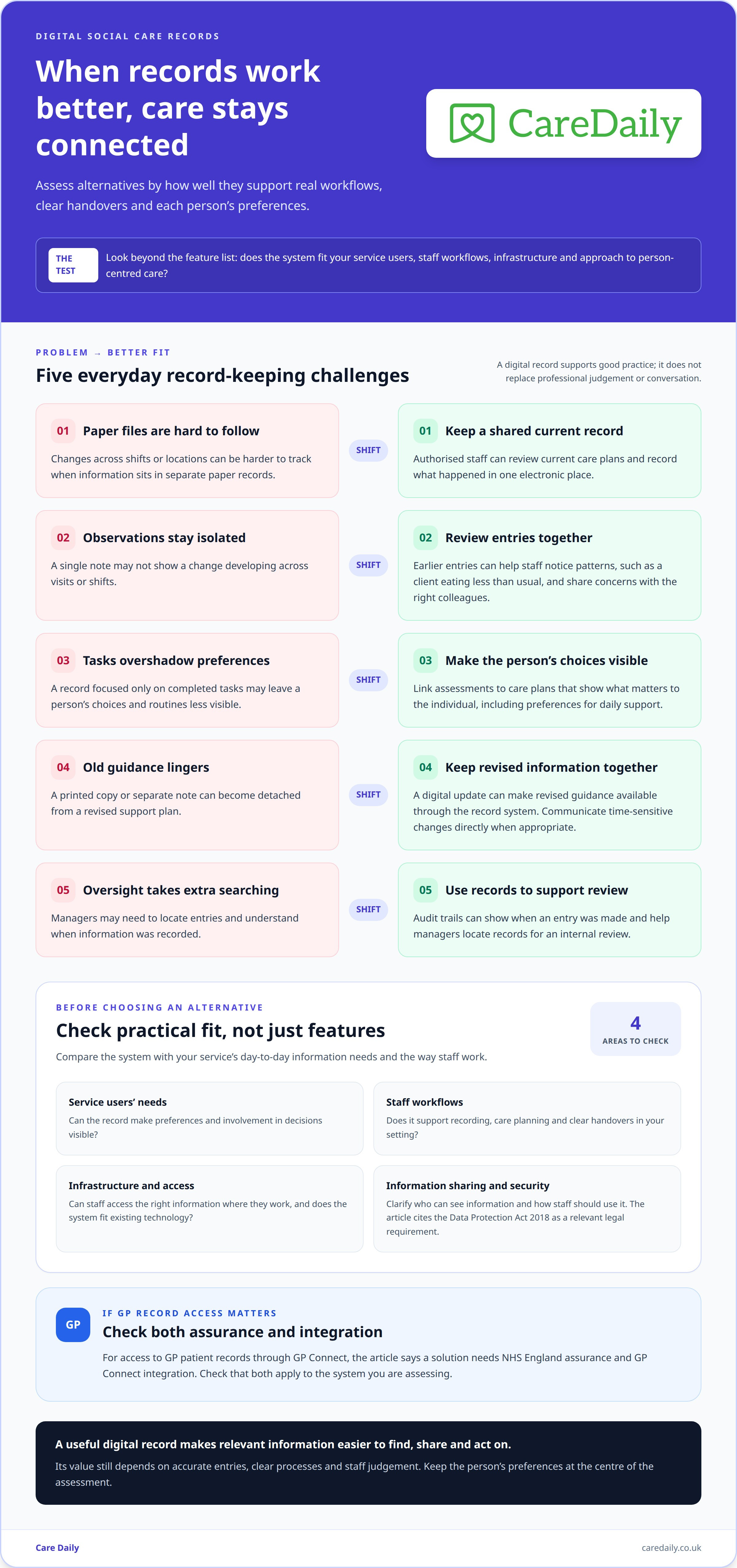
A digital record only improves care when it fits the way your teams work. When assessing PASS everyLIFE alternatives for digital social care records, look beyond the feature list: consider your service users’ needs, staff workflows, existing infrastructure and how well the system supports relationship-focused care.
Reducing paperwork and keeping records accessible are important, but a system also needs to work in the realities of each service. That might mean recording a missed domiciliary visit or sharing a clear handover between shifts in a care home.
This article explains why providers use digital social care records and how to assess what your organisation needs. We’ll cover practical questions about infrastructure, care planning and person-centred features, helping you judge whether an alternative is a better fit for your setting and the people you support.
Key Takeaways
- Identify where digital records could make handovers, care planning and day-to-day recording clearer for your teams.
- Assess how a record system needs to fit your service users’ preferences and the realities of each care setting.
- Consider staff workflows, existing technology and data protection when evaluating the practical fit of a system.
- Look beyond core record-keeping to the features that support coordinated, person-centred care.
- Explore how digital care planning, eMAR and policy tools can support connected care management.
Why do I need a Digital Social Care Record system?
UK providers considering alternatives to PASS can compare digital social care record platforms against their own requirements. If access to GP records is a priority, check for NHS England assurance and GP Connect integration. A digital social care record (DSCR) captures information about a person’s care, replacing traditional paper records. The right system should fit staff workflows, connect information appropriately and support the person’s involvement in decisions.
Paper records can make it harder to follow changes in a person’s care across shifts and locations. An electronic record gives authorised staff a shared place to review current care plans and record what happened. For example, if a carer notices that a client has eaten less than usual during a domiciliary visit, a clear entry can help colleagues recognise a possible pattern. In a care home, the next shift can review relevant entries during handover. Records support continuity, but staff still need to interpret observations and respond through their usual care processes.
Interoperability means systems can exchange information to support coordinated care. A digital record connected to relevant NHS systems can reduce reliance on separate, manually updated records. NHS England-assured digital social care record solutions can connect with GP records. For CQC-registered providers to access GP patient records through GP Connect, the solution needs NHS England assurance and GP Connect integration. This can make relevant information easier for authorised staff to access alongside social care records.
Data sharing needs to be handled with care, not treated as a technical feature alone. Digital social care records can support secure, real-time sharing with authorised people across health and care. Providers still need clear processes for who can see information and how staff use it. The Data Protection Act 2018 is cited as a legal requirement relevant to digital social care records, according to UK Parliament. Person-centred tools also matter: people should be able to contribute to decisions about daily support, rather than being represented only by system entries. A record should help staff understand preferences as well as tasks.
Connected records can help teams spot changes by presenting observations in a clearer sequence. One entry may not reveal a trend, but several observations read together can prompt a timely discussion about support. For instance, changes in appetite recorded across visits may be easier to notice when staff can review earlier entries and share concerns with the right colleagues. Digital systems can support continuity between carers, coordinators and health professionals. They do not replace professional judgement or conversation with the person receiving care.
When assessing an alternative, consider whether its records support your service’s handovers, care plans and information-sharing needs. Check how staff access the right information where they work and how the system supports authorised connections with other services. A feature list matters less than whether electronic records help staff act on relevant information while keeping the person’s preferences visible. This practical fit is central to care quality, especially when support involves different teams or settings.
Benefits of digital social care records
For care providers, digital records can make routine information easier to find, update and use. Staff can record a visit, review a care plan and see relevant notes without searching through paper files. This matters during a busy handover, when a colleague needs the latest instructions rather than an outdated document. Clear electronic records also show who entered information and when, supporting a more consistent account of the care delivered.
Digital care planning can link an assessment to the support that follows. For example, if an assessment records that a client prefers personal care at a particular time, the plan can make that preference part of the team’s day-to-day guidance. Staff can record relevant changes against the current plan instead of relying on a note that may become separated from it. This keeps the person’s preferences visible alongside the tasks that support their independence.
Records can also help registered managers review how information moves between staff. A digital audit trail can show when an entry was made and help managers locate records during an internal review. NHS England-assured digital social care record solutions offer care planning, recording, reporting and audit trails. These functions support oversight, but their value depends on accurate entries and clear processes. A record cannot clarify an unclear entry or replace a manager’s judgement about what needs follow-up.
For adult social care teams, a shared record can reduce repeated transcription across documents. If a mobility support plan changes, staff need the current guidance, not an old printed copy in a folder. A digital update can make revised information available through the record system. Teams should still communicate changes directly when appropriate, particularly when a handover involves immediate risks or time-sensitive support.
Digital records can make a person’s involvement in care planning more visible. A record should capture more than completed tasks: it can reflect choices, routines and what matters to the individual. In supported living, for instance, staff might record how a person wants support with a daily activity and refer to that plan consistently. This helps distinguish agreed support from assumptions and gives conversations about changing needs a clearer starting point.
At Care Daily, we find that the useful question is not simply whether a provider has digitised records. It is whether staff can turn a recorded preference or observation into coordinated action. A provider reviewing its workflows can explore digital care management options as part of that assessment, considering how records and care planning fit its service.
Assessing organisational requirements and digital infrastructure
Choose a system to fit your service model, staff workflows and information needs. Assess implementation, support and security arrangements in practical terms, not just through a supplier’s feature list. A structured review helps identify essential requirements before you compare platforms.
Frameworks and supplier criteria
The Digital working in adult social care: what Good Looks Like framework helps providers assess their digital practice. Its themes include leadership, skills, infrastructure and information use. Council assessments can also show where local services are progressing and where they face practical barriers. Together, these perspectives give managers useful context for assessing their organisation’s readiness.
When evaluating PASS everyLIFE alternatives for digital social care records, compare training, migration support and customer service. Support levels and formats can vary between suppliers and agreements. Establish how legacy information will be prepared, who will support staff learning and how access issues are handled during a shift. Include system access, data handling and implementation responsibilities in the same assessment.
Suitability across care settings
The right system depends on how each service delivers support and records needs. Domiciliary care teams need usable care information between visits, including when staff work away from the office. Residential care teams may prioritise clear handovers and shared oversight. Supported living teams need plans that help individuals direct their routines and choices.
Compare systems against a typical working day in each setting: a carer arriving at a client’s home, a residential team receiving handover, or a supported-living worker helping someone with a chosen activity. In each scenario, assess whether staff can find the relevant care plan and needs assessment. The strongest fit supports real workflows without making person-centred information harder to use.
Costs, implementation and risk assessment
When comparing PASS everyLIFE alternatives for digital social care records, review each proposal’s full costs and terms. Check what is included in the subscription and whether there are separate charges for setup, training, customisation or hardware. Review renewal and cancellation terms, and ensure the proposal fits your procurement process with responsibilities clearly set out before implementation.
Before implementation, map current records, agree migration responsibilities, prepare staff training and test key workflows. Assess UK GDPR responsibilities, access controls, hosting, data recovery and business continuity. Plan how staff will access essential care information if a system or internet connection becomes unavailable. These checks help determine whether digital records can support people receiving care while keeping day-to-day processes workable.
What is PASS by everyLIFE, and what features does its digital social care record system offer?
PASS by everyLIFE is a digital social care record option for providers moving away from paper-based care documentation. A digital social care record stores information about an individual and the care they receive. Its purpose is practical: staff need to find current information, make accurate entries and understand the support already provided.
Product-specific feature claims need careful distinction. The information available here establishes PASS as a digital record option, but does not substantiate a detailed PASS feature list. NHS England-assured digital social care record solutions, as a category, offer care planning, recording, reporting and audit trails. Those functions provide a useful framework for understanding what a provider may expect from a digital record system, without assuming every platform offers identical tools.
Care planning links assessed needs and preferences with agreed support. Recording captures what staff did or observed, while reporting helps managers review information across the service. An audit trail records activity within the system. For example, a manager reviewing a change to someone’s support can look for the current plan, relevant entries and recorded updates. These functions support oversight, but staff still need to make clear, timely entries.
If you’re comparing PASS with other options, examine how each system handles an ordinary shift. Can staff find the right care plan before a visit or handover? Can they record an observation against the correct person’s record? Can a manager retrieve the history needed to understand a change? Follow a real workflow, such as recording mobility support, rather than relying on feature names alone.
A function’s existence does not necessarily mean it fits a service’s practice. A domiciliary carer may need access between visits, while residential teams may review records during handover. In supported living, plans should make an individual’s chosen routines clear to staff. Use these scenarios to assess whether a system’s records work in each setting and support person-centred care rather than simply digitising paperwork.
Questions about NHS connections need a precise answer. NHS England-assured solutions can connect with GP records, but this is a category-level capability, not a claim about every PASS configuration. Providers seeking GP record access need to consider NHS England assurance and GP Connect integration. Assess this requirement separately from everyday recording instead of treating all digital care record systems as interchangeable.
In practice, assess the platform against the records staff create, the reports managers need and the information individuals expect teams to respect. Follow one care plan from assessment through delivery and review. That gives managers a grounded basis for comparing PASS with alternatives, and for reviewing digital record requirements in their own service.
Care Daily: eMAR (Electronic Medication Administration Records)
Care Daily may suit providers looking beyond records alone, particularly if they want medication administration within day-to-day care management. Its eMAR supports electronic medication records, while Digital Care Planning helps teams organise agreed support alongside other care management tasks.
For example, a manager reviewing a medication entry may also need to understand the relevant care plan and the wider context of support. Bringing these workflows into a care management platform can help teams work with connected records, rather than treating medication documentation as an isolated process. The right fit depends on your organisation’s workflows and the needs of people receiving support. Contact Care Daily to discuss your requirements.
Turn your requirements into a confident next step
The most useful next step is to map your system requirements to the work staff do every day. Consider which records, planning processes and governance tasks need to sit together, and where a separate tool would add steps for your team.
When weighing alternatives to PASS everyLIFE for digital social care records, consider how each option supports your organisation’s priorities in practice. Care Daily offers Care Management Software, Digital Care Planning and a Policy & Procedure Library. These can help bring care records, planning and policy resources into your operational approach.
There is no need to decide on a platform based on feature names alone. Start with the workflows that matter most to your staff and the people receiving support, then explore how the available tools align with them. A focused conversation can help clarify the next step for your service. Contact Care Daily to discuss your options, and move forward at a pace that works for your organisation.
Frequently Asked Questions
Which digital social care record systems integrate with NHS systems, local authorities, payroll and care-management software?
Assess integrations against the information your service needs to exchange. Care Daily integrates with GP Connect and NHS Spine, supports local-authority export formats, and connects with Xero, Sage and QuickBooks. Its care management platform brings records and workflows together in one system. If you need a specific workflow, such as exporting billing data or accessing GP records, assess how the relevant connection supports it.
How do PASS everyLIFE alternatives compare on care planning, medication management, eMAR, rostering and reporting?
Compare systems on how well care plans, recording, reporting and audit trails support your workflows. NHS England-assured solutions offer these functions. Assess medication management, eMAR and rostering separately against your service’s needs.
Which digital care-record systems are best suited to UK domiciliary care, residential care and supported living?
Choose according to setting and workflow: domiciliary teams need usable care information between visits, residential teams may prioritise handovers and shared oversight, and supported living teams need plans that support individuals’ routines and choices.
What are the prices and contract terms for PASS everyLIFE and competing care-record systems in the UK?
Compare the full subscription and contract terms, including any costs for hardware, customisation, setup or training. Ask how pricing is structured and what is included, then check that responsibilities and renewal terms are clear before implementation.
Frequently asked questions
Which digital social care record systems integrate with NHS systems, local authorities, payroll and care-management software?
Assess integrations against the information your service needs to exchange. Care Daily integrates with GP Connect and NHS Spine, supports local-authority export formats, and connects with Xero, Sage and QuickBooks. Its care management platform brings records and workflows together in one system. If you need a specific workflow, such as exporting billing data or accessing GP records, assess how the relevant connection supports it.
How do PASS everyLIFE alternatives compare on care planning, medication management, eMAR, rostering and reporting?
Compare systems on how well care plans, recording, reporting and audit trails support your workflows. NHS England-assured solutions offer these functions. Assess medication management, eMAR and rostering separately against your service’s needs.
Which digital care-record systems are best suited to UK domiciliary care, residential care and supported living?
Choose according to setting and workflow: domiciliary teams need usable care information between visits, residential teams may prioritise handovers and shared oversight, and supported living teams need plans that support individuals’ routines and choices.
What are the prices and contract terms for PASS everyLIFE and competing care-record systems in the UK?
Compare the full subscription and contract terms, including any costs for hardware, customisation, setup or training. Ask how pricing is structured and what is included, then check that responsibilities and renewal terms are clear before implementation.
More from the blog

Paperless children's home: reduce admin, protect data and save space
A paperless children's home can reduce admin, protect sensitive records and free up space. Explore practical steps for a safe, effective digital transition.
Read more →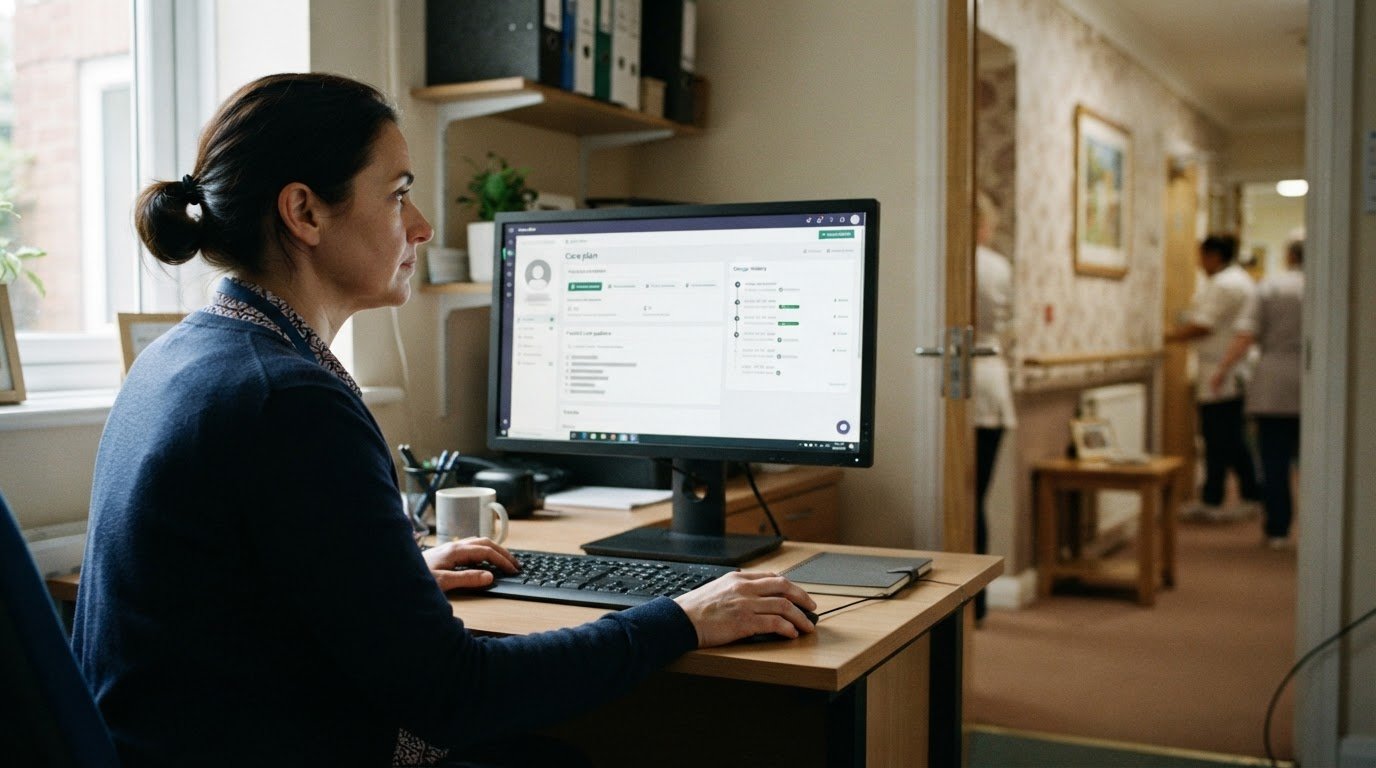
Which care planning system fits your home’s needs?
Compare CareDocs alternatives care planning software UK providers can assess for compliance, care plan clarity, reporting and fit across service settings.
Read more →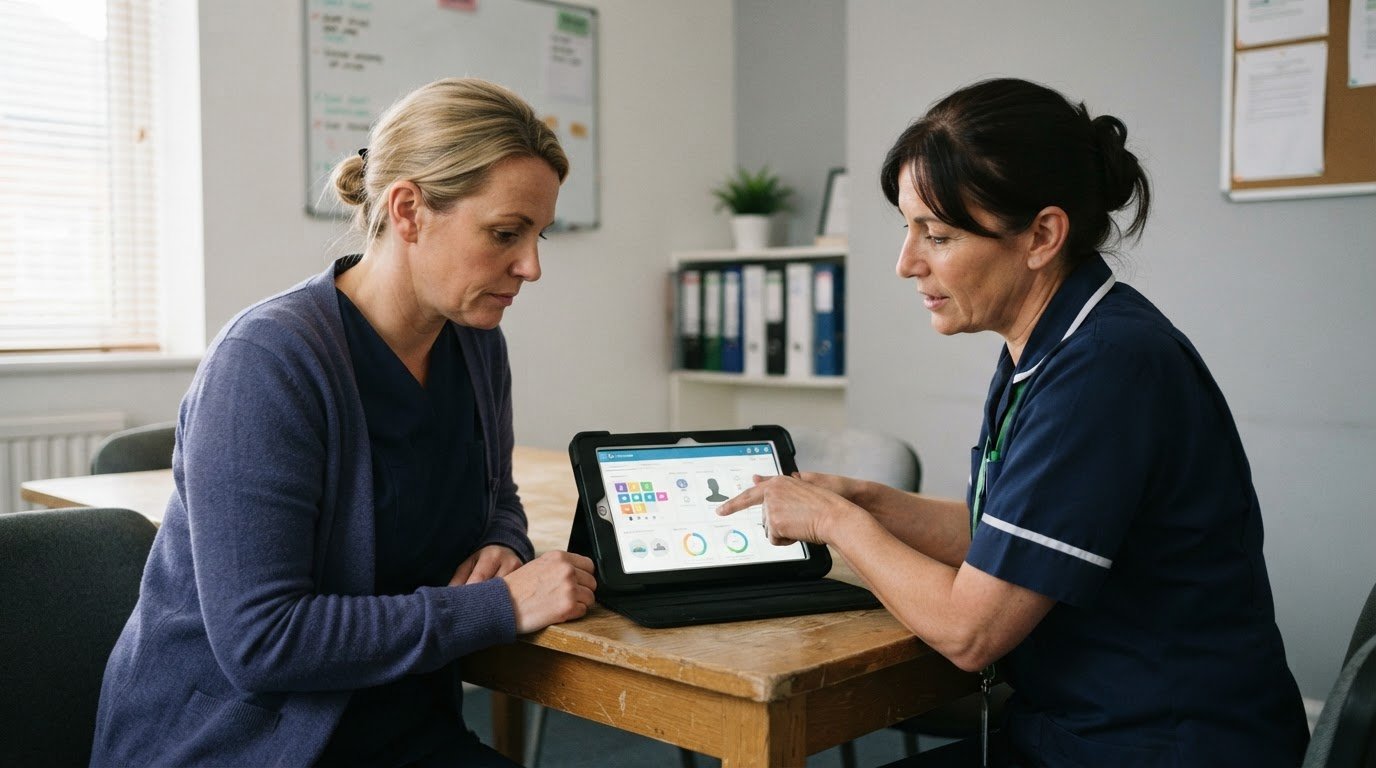
Cura Systems alternatives for UK care homes
Compare Cura Systems alternatives care homes can use, with guidance on workflows, records, migration and usability for residential, nursing and complex care.
Read more →