

What if the secret to improving efficiency in a care home wasn’t about asking your team to work faster, but about removing the invisible hurdles that stop them from caring? At Care Daily, we understand that administrative friction is often the primary driver of staff burnout and high turnover rates. You likely feel the constant pressure of rising operational costs and the persistent worry of a regulator inspection whilst managing fragmented paper records. It is a heavy burden for any manager to carry alone.
We believe that your time, and the time of your carers, is best spent supporting the people who call your home their own. This guide will show you how to reclaim those lost hours and improve service user outcomes by embracing digital innovation and smarter, more intuitive workflows. We will explore how real-time compliance visibility can transform your daily operations, reduce your reliance on expensive agency staff through better rostering, and ultimately create a calmer, more person-centred environment for everyone.
Key Takeaways
- Learn why defining efficiency as the removal of non-value-added tasks is the first step toward reclaiming staff time and reducing burnout.
- Explore how digital care management systems create a single source of truth that aligns with the regulator’s Single Assessment Framework.
- Discover a practical five-step framework for auditing workflows and improving efficiency in a care home through smarter staff rostering and eMAR implementation.
- Understand how to identify and empower “efficiency champions” within your team to ensure that digital tools drive long-term cultural change.
Tackling Time Poverty: Why Operational Efficiency is Essential in 2026
Operational efficiency in a care setting is frequently misunderstood. It is not about forcing staff to work faster or cutting back on essential resources. Instead, true efficiency is the deliberate removal of non-value-added tasks; those repetitive, administrative hurdles that keep your team away from meaningful interaction with residents. When we focus on improving efficiency in a care home, we are actually focusing on reclaiming the “lost hours” that should belong to the people we support.
As we move through 2026, the UK care sector faces a workforce turnover rate of approximately 25%. With burnout cited as a major factor, the industry can no longer afford to ignore the “time poverty” that plagues our homes. When carers are stretched too thin, the quality of person-centred support inevitably suffers. Effective nursing management principles suggest that by streamlining workflows, we provide staff with the emotional and physical space they need to perform their roles with genuine care rather than rushed compliance.
The Impact of Administrative Burden on Staff Retention
Manual documentation often leads to an “invisible shift” where carers stay late to finish notes or update charts. This hidden overtime is a significant driver of staff frustration. When you replace clipboards with digital tools, you remove the psychological weight of unfinished paperwork. At Care Daily, we find that digital-first homes report higher staff satisfaction scores because their teams can focus on the residents’ life stories and emotional needs instead of wrestling with files. A carer who feels they have done their job well is far more likely to stay with your service long-term.
Moving Beyond Legacy Systems: The Cost of “The Way We’ve Always Done It”
The hidden costs of paper-based systems are staggering. Beyond the price of printing and physical storage, you must consider the hours spent by managers during audits. Fragmented information also poses a serious risk during clinical emergencies or handovers, whilst a comprehensive policy library ensures that every staff member has access to the same, current guidance. Legacy system friction is the primary barrier to responsive care. It creates a disconnect between the information you have and the actions your team needs to take to keep residents safe and happy.
Digital Transformation: The Foundation of Compliant Efficiency
Efficiency isn’t just about speed; it’s the bedrock of safety. In 2026, the regulator’s Single Assessment Framework demands evidence that is current, accessible, and meaningful. Digital transformation is no longer a luxury but a necessity for improving efficiency in a care home. By moving to a digital system, you create a single version of the truth for your home. This eliminates the frantic search for missing paperwork during an inspection and ensures every decision is based on live, accurate data.
Centralising your records allows you to move from a reactive stance to a proactive one. Instead of finding a gap in care after it happens, you can spot trends and intervene early. Implementing a robust digital care planning system is a vital step in reclaiming manager time. It automates the tracking of review dates and dependency levels, freeing you to focus on the quality of life within your service rather than the logistics of documentation.
Real-Time CQC Readiness and the Audit Trail
Digital systems transform the way you prepare for inspections. Rather than spending weeks sifting through physical archives, you can generate instant audits at the touch of a button. Time-stamped records provide irrefutable proof of care delivery, which is essential for the Safe and Well-Led domains of the regulator’s framework. This level of transparency builds immediate trust with inspectors. It provides peace of mind that your compliance status is always visible and verifiable, regardless of when a visit occurs.
Policy Management: Reducing the Update Fatigue
Keeping policies up to date is a notorious efficiency drain. Legislation changes frequently, and manually cross-referencing every document is a task that often falls to the bottom of a busy manager’s pile. At Care Daily, our policy library provides a solution to this update fatigue. With over 500 templates that update automatically with new regulations, you can save hundreds of hours of senior management time. This ensures your team is always working from the most current guidance. If you want to see how these tools work in practice, you can begin your journey towards a more efficient home here.
Optimising Daily Workflows: From Staff Rostering to eMAR
Workflows are the heartbeat of your service. When they are clunky or repetitive, they drain the energy of your team and create unnecessary delays in care. To begin improving efficiency in a care home, you must first understand where the bottlenecks live. We recommend a simple five-step framework for auditing your current processes:
- Identify a high-frequency repetitive task, such as a morning handover.
- Trace the physical movement of the carer throughout that task.
- Locate the documentation bottleneck, such as waiting for a shared paper file.
- Replace manual entry with a mobile digital touchpoint.
- Review the impact on staff energy levels and time saved.
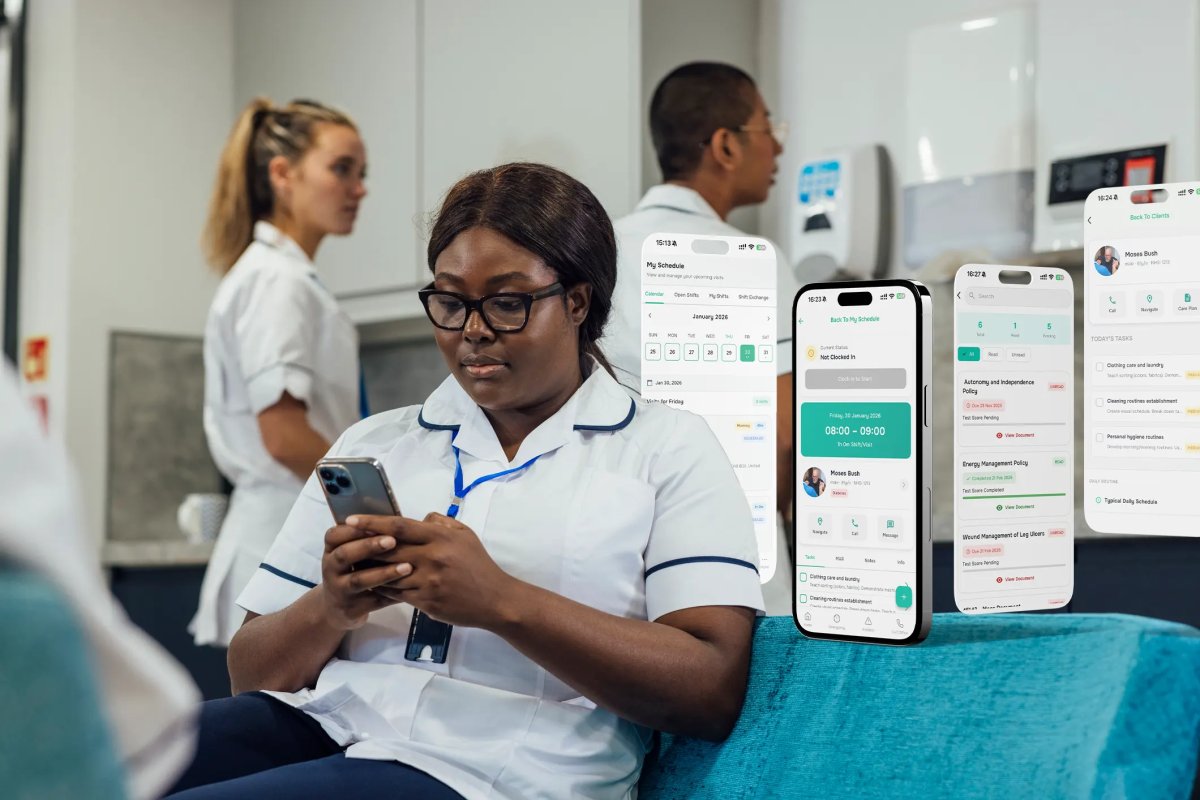
Mobile-first tools allow carers to record information at the point of care, ensuring that data is captured accurately whilst the interaction is fresh. This prevents the “data duplication” trap, where staff write notes on scraps of paper only to type them into a system later. Integrated platforms ensure that once information is entered, it flows seamlessly across client records and compliance reports without any extra effort from your team.
Intelligent Rostering to Control Agency Spend
Staffing is your most significant operational cost. Automated staff rostering does more than just fill shifts; it identifies potential gaps weeks in advance, allowing you to manage absences without relying on expensive last-minute agency cover. By matching staff skills and personal preferences to the specific needs of service users, you create a more stable environment. This continuity of care is vital for resident wellbeing and significantly reduces the administrative stress of managing complex rotas manually.
Streamlining the Medication Cycle with eMAR
The medication round is often the most time-pressured part of a carer’s day. Moving from paper MAR charts to an eMAR system can save hours of collective staff time every single week. Digital systems provide automatic alerts for missed medications, which prevents the need for time-consuming incident reporting and safeguarding investigations. Furthermore, digital pharmacy integrations allow for seamless reordering and stock control. This ensures you never run low on essential prescriptions and removes the manual burden of stock checks. To see how these tools can transform your daily operations, you can start your digital transition today.
Implementing Change: A Manager’s Roadmap to a Leaner Care Home
Whilst digital tools provide the necessary framework for a modern service, your team’s mindset remains the true engine of change. Success in improving efficiency in a care home depends on how you introduce these new ways of working. We recommend identifying “efficiency champions” early in the process. These are staff members, regardless of their seniority, who are comfortable with technology and can act as peer mentors. Their hands-on support is often more effective than a top-down directive, as they can demonstrate the practical benefits of new systems in real-time care scenarios.
A phased implementation is usually the safest route to long-term success. Attempting to digitise every workflow overnight can lead to confusion and resistance. By introducing changes in manageable stages, such as starting with digital care planning before moving to eMAR, you allow your team to build confidence. At Care Daily, we believe our role is to act as a partner in this transition. We provide the tools and guidance needed to ensure your service remains safe, compliant, and deeply focused on the person, not the process.
Supporting Staff Through the Digital Transition
Tech-anxiety is a genuine barrier for many, particularly amongst long-serving carers who have spent decades using paper-based systems. You can address this by providing accessible, jargon-free training that focuses on the “why” as much as the “how.” Our customers tell us that involving staff in the choice of software and the audit process significantly increases adoption rates. When carers see that a digital tool is designed to protect their time and reduce their stress, they become your strongest advocates for change.
Measuring Success: Key Performance Indicators for Efficiency
You cannot manage what you do not measure. To track the impact of your changes, you should identify specific Key Performance Indicators (KPIs) that reflect your goals. We suggest monitoring the following metrics:
- The ratio of time spent on direct care versus administrative tasks per shift.
- Reductions in medication error rates and near-misses.
- A decrease in monthly agency spend as your rostering becomes more predictable.
- Improvements in staff satisfaction and retention scores.
Use these data points to celebrate wins with your team and your board. Showing a carer that they have reclaimed an hour of their day for meaningful resident interaction is a powerful motivator. It proves that improving efficiency in a care home is not a cold business exercise, but a commitment to improving the quality of life for everyone who lives and works within your service.
Building a Future Focused on Care
Improving efficiency in a care home is fundamentally about reclaiming the human moments that define high-quality support. By addressing time poverty and embracing digital innovation, you create a sanctuary where both staff and residents can thrive. You now have the roadmap to audit your workflows, empower your team, and move away from the administrative friction that leads to burnout and high staff turnover.
At Care Daily, we’ve helped hundreds of UK providers reclaim time for care by streamlining their operations. Our platform allows you to access over 500+ CQC-compliant policy templates and manage your service with integrated digital care planning and eMAR. This transition doesn’t just improve your compliance status; it stabilises your workforce and reduces the persistent need for expensive agency cover.
Book a demo with Care Daily to see how our platform organises your care home for maximum efficiency. You have the expertise to lead your home into 2026, and we’re here to provide the tools that make that journey smoother and more rewarding for everyone.
Frequently Asked Questions
How does digital care management software actually save time for carers?
Digital systems save time by eliminating the need for manual transcription and searching for physical files. Carers can record notes at the point of care using mobile devices, which sync instantly with the central record. This removes the end of shift documentation rush. It allows staff to finish their work on time whilst focusing more on person-centred support during their active hours.
Can improving efficiency in a care home lead to better ratings from the regulator?
Yes, because improving efficiency in a care home provides the real-time visibility required by the regulator’s Single Assessment Framework. When your processes are streamlined, you can provide time-stamped evidence for the Well-Led and Safe domains instantly. This transparency proves that care is being delivered consistently and that management has proactive oversight of any emerging risks or gaps in service.
Is it difficult to move from paper records to a digital system whilst maintaining care?
Transitioning is a manageable process when you approach it in phases rather than all at once. Most providers find that starting with one module, such as staff rostering or digital care planning, allows the team to adapt without disruption. At Care Daily, we suggest running systems in parallel for a short period to ensure no data is lost during the switchover and to build staff confidence.
What are the most common efficiency bottlenecks in UK residential care?
Bottlenecks usually occur during handovers, medication rounds, and the manual updating of policies. Paper MAR charts and physical care folders create queues where staff wait to access or record information. By improving efficiency in a care home through digitising these touchpoints, you remove the physical barriers that slow down daily routines and cause frustration amongst the care team.
How much does it cost to implement an efficiency-focused care platform?
Costs vary depending on the size of your service and the specific features you require, such as eMAR or recruitment tools. Most platforms operate on a subscription basis, which avoids the need for large upfront capital expenditure. It is best to speak with a provider directly for a tailored quote that reflects your home’s unique requirements and the number of service users you support.
Will staff be resistant to new technology in the care home?
Resistance often stems from a fear of the unknown rather than the technology itself. You can overcome this by involving carers in the selection process and clearly highlighting how the tools will make their specific jobs easier. When staff see that the system reduces their paperwork burden and protects their time, they usually become the biggest supporters of the digital transition.