

What if the key to achieving an ‘Outstanding’ rating isn’t about working faster, but about reclaiming the time your staff spend on paperwork? At Care Daily, our customers often tell us that the greatest barrier to person centred care isn’t a lack of compassion; it’s the weight of task-led routines. You likely feel the constant tension between meeting a service user’s immediate physical needs and honouring their individual preferences whilst the clock is ticking.
It’s a frustration we understand deeply. You want your carers to be companions, not just clinicians, yet evidencing that level of detail to the regulator can feel like an uphill struggle. This guide provides a clear roadmap to help you transform your delivery into a truly personalised experience that exceeds the 2026 standards. We’ll examine the core principles of bespoke care, offer practical strategies for daily documentation, and show you how to build a framework that protects both your staff’s time and your clients’ dignity.
Key Takeaways
- Learn how to move beyond clinical tasks by adopting a social model that prioritises a service user’s unique history and identity.
- Understand how to implement person centred care by balancing safety with positive risk-taking to preserve client independence.
- Transition from generic assessments to bespoke care plans that involve families and advocates as essential partners.
- Discover how to use structured policy frameworks to evidence your performance clearly to the regulator.
- Identify practical ways to reduce staff burnout by shifting the focus from rigid schedules to meaningful human connection.
Understanding Person-Centred Care: More Than Just a Buzzword
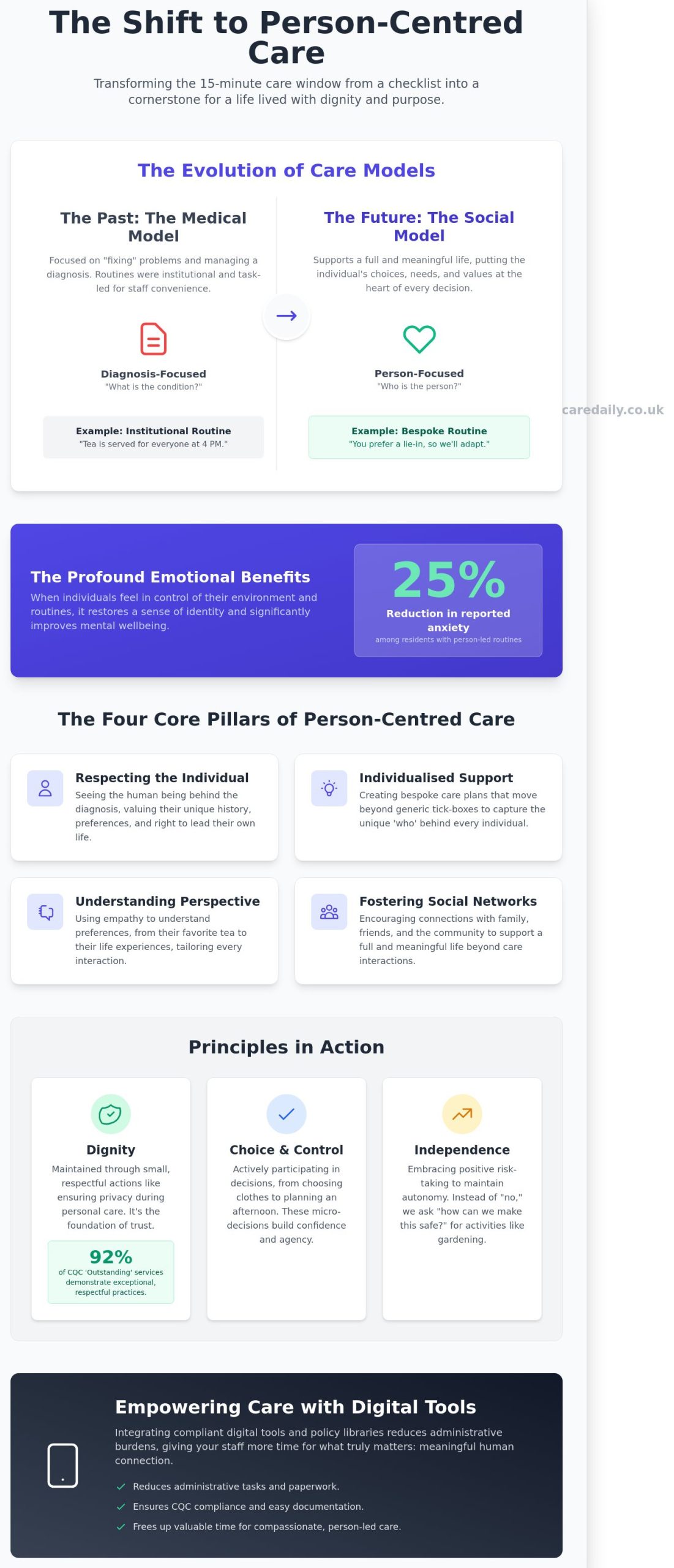
Historically, care was often delivered through a clinical lens, focusing primarily on what was ‘wrong’ with a person. This medical model viewed individuals as a collection of symptoms to be managed or problems to be fixed. Today, we’ve moved toward the social model of care. This approach recognises that people are disabled by societal barriers and rigid structures rather than their conditions alone. Person-centered care is a collaborative approach that sees the individual beyond their diagnosis, acknowledging their history, strengths, and aspirations. Person centred care is the practice of putting the individual’s choices, needs, and values at the heart of every care decision. It’s about seeing the person behind the diagnosis and ensuring they remain the lead architect of their own life.
The Evolution of Care: From Task-Led to Person-Led
The institutional approach of the past often prioritised the ‘care routine’ over the person. Breakfast was served at 8:00 am because that’s when the shift started, not because the client was hungry. Modern person-led care flips this script. Now, the service user dictates the routine. If a client prefers a late morning or wants to eat in the garden, the service adapts to them. At Care Daily, our customers tell us that this shift significantly reduces anxiety. When service users feel in control, their sense of agency returns. This leads to better health outcomes and a higher quality of life for everyone involved.
The Legal and Regulatory Framework in the UK
Adopting this approach isn’t just a moral choice; it’s a legal requirement. The Care Act 2014 placed a primary duty on local authorities and providers to promote ‘wellbeing’ as a fundamental principle. The regulator looks for specific evidence of this during inspections, particularly within the ‘Caring’ and ‘Responsive’ domains. They want to see that you don’t just provide a service, but that you respond to the unique preferences of each individual. For those looking to align their operations with these expectations, our Digital Care Management Software UK guide offers deeper context on maintaining compliance in 2026. It’s vital to remember that person centred care is the foundational expectation for the regulator and the Health and Social Care Act.
The Core Principles: Dignity, Choice, and Independence
To move from theory to practice, we must look at the structural pillars that support person centred care. These are usually defined as respecting the person, providing individualised care, understanding the person’s perspective, and fostering social support. When these four elements work in harmony, care stops being a series of chores and becomes a meaningful partnership. At Care Daily, we find that the most successful providers are those who move beyond basic safety and focus on the emotional wellbeing of the service user.
A vital part of this framework is positive risk-taking. It’s often tempting to over-protect individuals to ensure their physical safety, but this can inadvertently strip away their independence. If a client wishes to continue making their own tea despite a mild tremor, we shouldn’t simply take the kettle away. Instead, we assess the risk and find a bespoke solution, such as a kettle tipper or a heat-resistant mug. This approach respects the individual’s autonomy whilst maintaining a safe environment. It’s about finding the balance between “can they do it?” and “how can we help them do it safely?”
Promoting Choice and Control
Choice should be woven into every interaction, no matter how small. This starts with daily decisions like what to wear or how to spend an afternoon. We must practice ‘active participation’, which means doing things with the person rather than to them. When a service user is involved in their own care, they maintain a sense of ownership over their life. This is particularly important in domiciliary care settings, where the home should remain a sanctuary of personal preference. If you’re looking to formalise these principles within your team, you can explore our framework for personalised care delivery.
Valuing the Individual’s Unique History
Empathy grows when we understand a person’s history. Life story work is a powerful tool here, especially within dementia care. Knowing that a service user spent 30 years as a landscape gardener helps a carer understand why they might become restless if they can’t see the garden. This personal history informs current care interventions and helps manage distressed behaviours by addressing the underlying need for identity. Every care plan should document cultural, religious, and lifestyle preferences with the same level of detail as medical needs. This ensures that the person centred care you provide remains consistent, even when different staff members are on shift.
Common Barriers to Personalised Care (and How to Overcome Them)
Implementing true person centred care is rarely a matter of intent. Most registered managers we speak with at Care Daily deeply value dignity and choice; however, they face systemic hurdles that pull staff back toward task-led routines. One of the most persistent barriers is the institutional mindset. This is the “we’ve always done it this way” culture where schedules and organisational needs take precedence over the service user’s wishes. When your team is under pressure, it’s easy to fall back on rigid habits to maintain order, but this often happens at the expense of individualised support.
Traditional paper-based systems also play a role in distancing carers from the people they support. Thick ring binders often hide the “person” behind layers of clinical paperwork. If a carer only has five minutes to read a handover, they’ll likely focus on the medication list rather than the client’s emotional state or personal preferences. High staff turnover adds another layer of difficulty. According to the Skills for Care 2023/24 report, the turnover rate in social care was 28.3%. This churn makes it incredibly difficult to maintain the continuity of care required to build deep, trusting relationships between carers and service users.
Dispelling the ‘Time Constraint’ Myth
The most common objection to personalisation is the belief that there isn’t enough time. Our customers find that knowing a person’s specific triggers and preferences actually prevents crises. If a carer knows that a service user becomes agitated when the television is too loud, they can adjust the environment before a distressed behaviour occurs. This proactive approach saves hours of de-escalation and reporting later in the shift. Person-centred care is not an ‘add-on’ time-consumer, but a more efficient way to deliver support.
Addressing the Training Gap
Overcoming these barriers requires a shift from ‘tick-box’ compliance to values-based induction. Training should empower junior staff to make person-centred decisions without fearing they’re breaking a rule. Leadership must model this empathetic behaviour in every meeting and interaction. When a manager asks, “What did the service user want today?” instead of “Did you finish the laundry?”, the whole team understands what truly matters. This cultural shift ensures that dignity is lived, not just documented.
Practical Steps to Implementing Person-Centred Care Plans
Moving from a task-based routine to a personalised experience requires a fundamental shift in how we document and share information. A bespoke care plan should act as a biography, capturing the ‘who’ behind the ‘what’. At Care Daily, we find that the most effective plans are those where the service user’s voice is the loudest. This isn’t just about clinical safety; it’s about honouring the small details that make a person feel like themselves. When every carer on shift has instant access to these preferences, person centred care becomes a reality rather than an aspiration.
Creating a Digital Care Plan That Truly Reflects the Individual
Modern digital care planning allows you to store more than just text. You can upload photos of how a client likes their room arranged or videos explaining a specific communication style. This prevents the institutional drift where care becomes generic. Instead of a note saying “needs assistance with washing”, a person-led plan specifies that a client “prefers a bath at 8 am with lavender oil and the radio tuned to Classic FM”. Daily notes should then reflect these outcomes, evidencing that the service user’s choices were respected throughout the day.
Involving the Circle of Support
True person centred care extends to the people who know the service user best. We encourage providers to use family portals to keep loved ones involved in decision-making. This transparency builds trust and ensures that care goals are co-produced rather than imposed. For individuals with limited capacity or those without family, advocacy services must play a central role. By 2026, the regulator will expect to see clear evidence that care goals are meaningful to the individual, not just the provider. If you’re ready to modernise your documentation, you can get started with our care planning tools to see how digital systems bridge the gap between compliance and compassion.
How Care Daily Empowers Your Person-Centred Journey
Care Daily provides the digital infrastructure needed to turn care philosophy into daily practice. We understand that the transition to person centred care requires more than just a change in mindset; it requires a change in system. By automating the administrative heavy lifting, we free your team to build the companionships that service users deserve. Our platform acts as your compliance partner, managing the complex regulatory framework so you can prioritise the dignity, independence, and happiness of those you support. We handle the compliance so you can handle the care, ensuring that every interaction is documented, dignified, and bespoke.
Policies That Protect and Promote Dignity
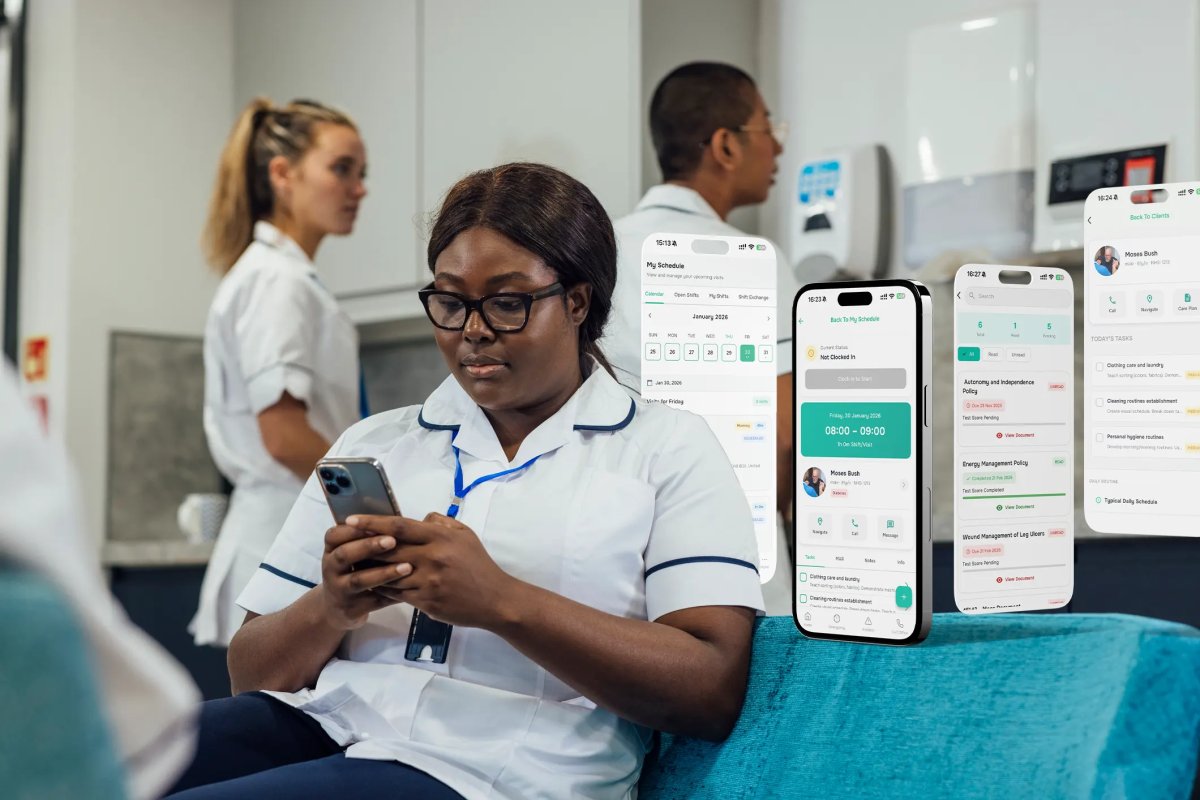
A truly personalised service must be built on a foundation of robust, values-based documentation. Our library contains over 2,000 policies written with individualised care at their core. These documents don’t just tell staff what to do; they explain why a person-led approach is essential for wellbeing. With the Care Daily mobile app, your carers have best-practice guidance at their fingertips during every visit, whether they’re in a residential setting or providing domiciliary care. Because our system automatically reflects the latest 2026 UK legislative changes, you never have to worry about your documentation falling behind the regulator’s expectations.
Evidencing Excellence for CQC Inspections
One of the hardest parts of delivering person centred care is proving it to inspectors during a high-pressure visit. Traditional paper methods often fail to capture the nuances of choice, consent, and positive risk-taking. At Care Daily, we help you generate digital audit trails that show a clear history of personalised outcomes and service user satisfaction. You can produce detailed reports that map directly to specific Quality Statements, evidencing how your service respects the ‘Caring’ and ‘Responsive’ domains. This transformation from task-led to person-led care is made visible through real-time data, giving you the peace of mind that your excellence is always ready for review.
Explore our person-centred care management tools and policies today.
Leading the Way in Personalised Care Delivery
Delivering person centred care is more than a regulatory requirement; it’s a commitment to the dignity and individuality of every service user you support. By moving away from rigid, task-led routines and embracing bespoke digital care planning, you empower your staff to focus on meaningful human connection. This shift doesn’t just improve quality of life for your clients; it also builds a resilient, compassionate culture within your team. Our customers find that when technology handles the compliance, the heart of care truly shines through.
At Care Daily, we’re proud to support leading UK domiciliary and residential providers with our CQC compliant policy library, which is fully updated for 2026. Our platform provides the structured yet flexible framework you need to evidence your caring nature during every inspection. You have the expertise to change lives, and we have the tools to help you prove it. Request a demo of Care Daily’s person-centred management platform and discover how our bespoke modules can transform your service delivery today.
Frequently Asked Questions
What is the difference between person-centred care and individualised care?
Individualised care focuses on the practical tailoring of tasks to a person’s specific medical or physical needs, while person centred care is a broader philosophy that prioritises the individual’s agency and life experience. It’s the difference between adjusting a diet for a clinical condition and ensuring a client chooses their own meal times and environment. One is a clinical adjustment; the other is a holistic partnership that values the person’s unique perspective.
Is person-centred care a legal requirement in the UK?
Yes, it’s a statutory requirement under the Health and Social Care Act 2008 (Regulated Activities) Regulations 2014, specifically Regulation 9. This regulation mandates that care must be appropriate, meet the service user’s needs, and reflect their preferences. The Care Act 2014 also places a legal duty on providers to promote individual wellbeing, making this approach the mandatory standard for all regulated services in the UK.
How does person-centred care improve safety for service users?
It improves safety by reducing the likelihood of distressed behaviours and missed clinical cues. When carers understand a service user’s communication style and personal history, they can identify subtle changes in health or mood much faster. Research into the VIPS framework suggests that this approach can lead to a 30% reduction in falls and agitation in residential settings, as support is proactive rather than reactive to a person’s needs.
What are the 4 core principles of person-centred care?
The four pillars are respecting the individual’s dignity, providing care that is tailored to their needs, understanding the world from their perspective, and fostering a supportive social environment. These principles ensure that support isn’t just about physical maintenance. They create a framework where the person remains the lead decision-maker, even when they require high levels of support with daily activities or medical management.
How can I involve a person with dementia in person-centred care planning?
You can involve them by using ‘Life Story’ work and observational tools to understand their preferences when verbal communication becomes difficult. Focus on their remaining strengths and use visual aids, such as photo menus or activity cards, to facilitate choice. At Care Daily, we’ve seen that involving family members to provide context about a person’s past hobbies and routines is essential for creating a truly bespoke care plan.
What happens if a person’s choices conflict with their safety?
When a choice carries risk, you must follow the Mental Capacity Act 2005 and use a ‘best interests’ framework if the person lacks capacity. If they have capacity, you should use positive risk-taking strategies. This involves documenting the risks clearly and finding a compromise that respects their autonomy whilst minimising harm. It’s about enabling a person to live the life they choose, rather than simply removing all possible hazards.
How do I evidence person-centred care during a CQC inspection?
You evidence it by providing specific, dated examples in daily logs that show where a service user’s choice changed the care delivery. The regulator looks for proof of ‘active participation’ and feedback from the service user or their family. Using digital systems to track these outcomes allows you to generate reports that demonstrate a consistent pattern of person centred care, rather than just isolated incidents of good practice.
Can digital software really help with person-centred care?
Digital systems help by removing the administrative burden of paper records, which gives carers more time for face-to-face interaction. A centralised platform ensures that every member of the team, including agency staff, has immediate access to a service user’s personal preferences and life history. This continuity is vital for building trust and ensuring that care remains consistent and personalised across every shift.