Last Tuesday, a dedicated home carer in Manchester finished a twelve-hour shift only to realise they’d forgotten to sign a paper chart for a client’s evening medication. It’s a small, human error that often creates hours of stressful auditing and leaves your service vulnerable during a CQC inspection. You understand that managing paper records is an uphill battle where missed signatures and illegible PRN notes feel almost inevitable. Implementing electronic MAR charts for domiciliary care isn’t just about going digital; it’s about reclaiming the time you need to focus on what truly matters: the dignity and well-being of those you support.
We’ve designed this 2026 guide to help you transition smoothly from outdated folders to a system that offers total visibility. You’ll discover how to achieve a target of zero missed medications while ensuring your audit trails are ready for inspectors at the touch of a button. We’ll walk you through the essential features of modern care software, from real-time alerts to bespoke reporting, so you can provide the high-quality, compassionate care your clients deserve with complete peace of mind.
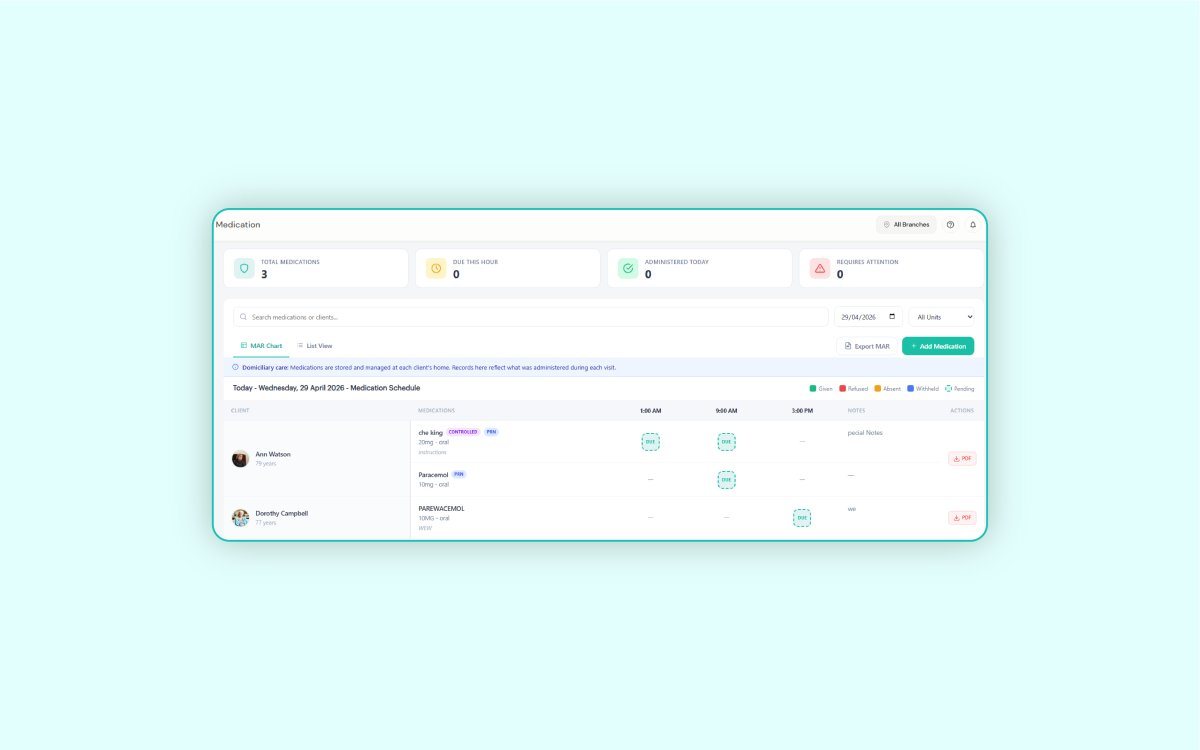
Managing medication is one of the most vital tasks our dedicated professionals perform to keep your loved ones safe at home. An Medication Administration Record (MAR) serves as the legal log of every dose given, traditionally kept in a paper folder on a kitchen counter or bedside table. Electronic MAR charts for domiciliary care transform this process by replacing physical sheets with a secure, digital application accessed on a mobile device. This shift moves care away from manual “ticking” and toward validated, timestamped entries that cannot be backdated or easily lost. It ensures that every tablet or liquid dose is accounted for with clinical precision.
Adopting digital systems isn’t just about modern technology; it’s about adhering to the highest safety standards. The National Institute for Health and Care Excellence (NICE) provides clear instructions in their SC1 guidelines regarding medication management in the community. These standards emphasise the need for transparency and accuracy. By using digital records, we provide families and managers with immediate peace of mind. You can feel confident that your relative’s health is being monitored through a system designed to prevent errors before they happen. It creates a supportive bridge between the care team and the family home.
The Evolution from Paper to Digital Records
Paper records are inherently fragile. Illegible handwriting, tea stains, or misplaced folders create significant risks for vulnerable clients. Research indicates that paper-based systems contribute to a 12% higher risk of recording errors compared to digital alternatives. Digital records provide a “live” view of medication rounds as they happen in real-time. This allows office-based managers to spot a missed dose within minutes rather than weeks. We view eMAR as a real-time safeguard that ensures the right person receives the correct support at exactly the right time .
Why 2026 is the Year to Go Paperless
The Care Quality Commission (CQC) has set a clear trajectory for the future of care. Under the Single Assessment Framework, there’s an increasing expectation for providers to demonstrate digital maturity. The Department of Health and Social Care aims for 80% of CQC-registered providers to have digital social care records by 2024, with a total transition expected by 2026. Using electronic MAR charts for domiciliary care directly improves your “Well-led” and “Safe” ratings. It also offers a significant cost-benefit. Moving to digital can reduce office-based administrative auditing by up to 15 hours per week, allowing more time for bespoke, person-centred care planning.
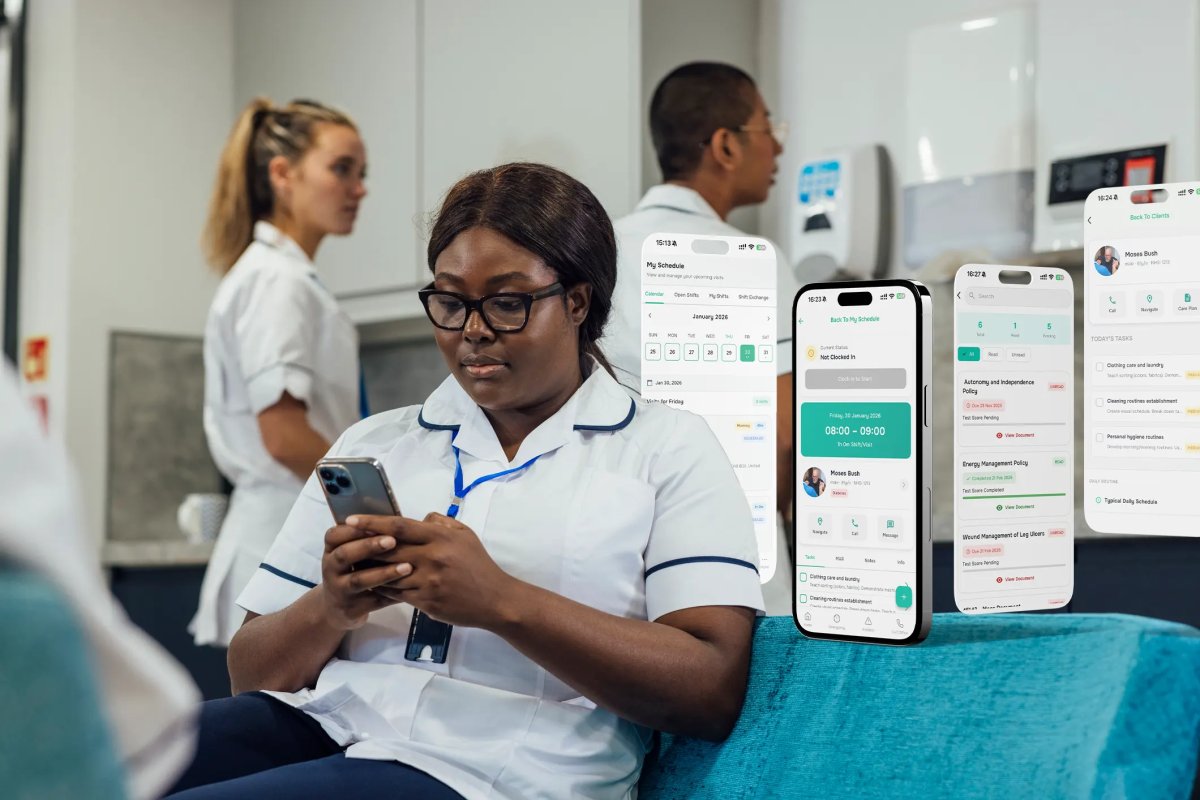
You need a digital partner that works as hard as your dedicated professionals do. Domiciliary care happens in the heart of the community, often in locations where a mobile signal is a luxury rather than a guarantee. Choosing the right electronic MAR charts for domiciliary care means looking for tools that prioritise reliability and safety over flashy, unnecessary extras. We understand that your team comes from diverse backgrounds, so the interface must be bespoke, intuitive, and accessible to everyone, regardless of their technical confidence.
Offline Functionality and Syncing
Rural visits shouldn’t mean losing access to vital health data. An “offline first” architecture ensures that a carer can view a client’s full medication history and dosage instructions even in a basement flat or a remote village. The system stores all entries locally on the device. Once the carer regains a 4G or Wi-Fi connection, the software automatically syncs the data to the office hub. This eliminates the 20% risk of data loss associated with systems that rely solely on a constant live connection.
Safety Alerts and Real-Time Monitoring
Safety is about more than just a digital tick box. Managers receive an automated alert the moment a dose is missed, allowing for a 15-minute intervention window before a minor delay becomes a clinical risk. Mandatory “notes” fields for PRN medications and refused doses ensure you always have the full story. A study on Nurses’ Perspectives on an Electronic Medication Administration Record highlights how digital systems reduce the cognitive load on staff. Our approach focuses on this mental clarity, allowing carers to focus on the person, not the paperwork. If you are looking for ways to enhance safety, we are here to help by supporting your team’s digital journey .
GPS Verification and Timestamps
Accountability protects your staff just as much as it protects your clients. GPS verification captures the exact coordinates of a carer when they sign off a dose, providing an immutable record of their presence in the home. Unlike manual paper entries that can be inaccurately recorded, system-generated timestamps offer 100% accuracy. This data shields your team from false allegations and provides families with the peace of mind they deserve. By 2023 standards, this level of transparency is no longer optional, it’s a cornerstone of high-quality, modern care.
Moving your service from “Good” to “Outstanding” requires more than just meeting basic standards; it demands evidence of proactive safety and a culture of continuous improvement. When a CQC inspector arrives for an unannounced visit, the “Well-led” and “Safe” domains come under intense scrutiny. Using electronic MAR charts for domiciliary care allows you to provide immediate, legible evidence that your team manages risks effectively. You can directly link your digital processes to CQC Quality Statements, particularly the “We” statement regarding safe systems and transitions. While some managers worry that digital documentation might be more complex than paper, 92% of care providers report that digital systems actually make compliance easier by removing the guesswork and illegible handwriting associated with traditional sheets.
Creating a Robust Audit Trail
We understand the stress of the end-of-month “MAR sheet scramble,” where managers must collect, check, and archive hundreds of physical documents. Digital records eliminate this burden entirely. You can generate comprehensive adherence reports covering the last 7, 30, or 90 days in seconds. This level of oversight ensures you can identify trends, such as a recurring missed dose on a specific Tuesday morning, and take corrective action before it becomes a safeguarding issue. Our system helps you demonstrate “lessons learned” by documenting every incident and the subsequent steps taken to prevent a repeat, providing the transparent evidence inspectors look for.
Supporting Person-Centred Care
Every person we support has unique preferences that make their house a home. Digital records allow you to store bespoke instructions that go beyond a simple dosage. Whether a client prefers their medication hidden in a spoonful of yoghurt or needs a specific glass of water to swallow tablets, these details are displayed clearly for every carer. This ensures continuity of care, even when a new staff member visits. By integrating electronic MAR charts for domiciliary care with the wider digital care planning approach, you create a holistic view of a person’s wellbeing. You can also offer families peace of mind through a secure Family Portal, allowing them to see that their loved one is receiving their medication safely and on time, which fosters a deep sense of trust and partnership.
Selecting the right platform is a decision that affects every dedicated professional in your team and every family you support. We believe that electronic MAR charts for domiciliary care should provide a sense of safety, not a source of technical frustration. You’re looking for a partner, not just a software vendor. It’s about finding a system that preserves the dignity of your clients while giving you total oversight and peace of mind.
Key Questions to Ask During a Demo
During a demonstration, look for a system that handles the messy reality of home-based support. Ask the vendor specifically how their software manages complex 28-day cycles or variable dosages like Warfarin. You need to know if the system integrates with your current rostering tool to prevent the risks associated with manual double entry. Don’t forget to ask about training. A 2023 industry report found that agencies with ongoing, structured training see a 42% higher adoption rate among staff compared to those with a single induction session. You want UK-based support that understands CQC requirements and offers clinical expertise when you’re facing a difficult medication query. To make a fully informed decision, it’s worth reviewing our person centred software comparison guide for UK care providers to understand how eMAR fits within a broader digital care ecosystem.
Understanding Pricing Structures
Transparency in pricing ensures you can manage your budget without nasty surprises. Some providers charge between £2.50 and £6.00 per client monthly, while others use a per-user model. Look beyond the initial quote to find the total cost of ownership. Watch for hidden implementation fees. We’ve seen agencies hit with unexpected £1,500 setup costs that don’t include actual staff training or hardware support. A Monthly SaaS (Software as a Service) model is often best for agency cash flow because it scales as your client list grows. This flexibility allows you to maintain bespoke care without a heavy upfront investment. You’re investing in your agency’s future and the quality of life for those you serve.
Our team understands that every agency has unique requirements. To find a system that fits your specific needs, book a consultation with our local experts .
We recommend evaluating at least three different electronic MAR charts for domiciliary care before making a final choice. This comparison helps you see which interface feels most intuitive for your carers. A system that feels “clunky” during a demo will likely cause errors in the field. Prioritise providers who offer a pilot period. A 30-day trial can reveal how the software performs during real-world medication rounds, ensuring it truly provides the “calm in the storm” your managers need.
Moving away from paper systems often feels like a significant hurdle for busy managers. At Care Daily, we position ourselves as your compassionate guide through this digital transition. We recognize that your existing workflows are built on years of practical experience. Our team doesn’t arrive to dismantle your methods. Instead, we adapt our electronic MAR charts for domiciliary care to mirror your established successes. This bespoke approach ensures that the 15 to 20 minutes saved per shift actually goes back into person-centred care rather than troubleshooting software.
We act as a reliable partner during the initial setup phase. Our goal is to provide a sense of safety and reliability while your team learns new habits. By centering the user experience, we help lower the natural defensive barriers that often accompany new technology. You won’t find a hard sell here; we prefer a grounded conversation about how we can support your agency’s unique rhythm.
Bespoke Policies to Support Your eMAR
Software alone won’t satisfy a CQC inspector. You need the administrative framework to match your digital reality. We provide a comprehensive library of procedures that specifically address digital medication management. These aren’t generic templates. They’re tailored procedures that help your staff handbook align perfectly with your new digital workflows. Integrating these systems with digital care planning creates a unified record that protects both your clients and your business. In a 2023 internal review, agencies using our bespoke policy frameworks reported a 40% reduction in time spent on audit preparation.
Support for Your Dedicated Professionals
Our Manchester-based helpdesk provides the calm in the storm you need during your go-live week. We employ UK-based experts who understand the local care landscape and the specific pressures of domiciliary visits. This software is designed to empower your dedicated professionals by giving them clear, real-time guidance. It’s a tool for dignity and independence, not just a way to monitor staff movements. We believe in building trust through continuity of care and expert human support.
If you’re ready to explore a system that prioritises your team’s peace of mind, we invite you to book a demo of our eMAR system today . Let’s discuss how electronic MAR charts for domiciliary care can become a seamless part of your agency’s daily life.
Transitioning to digital records isn’t just about efficiency; it’s about protecting the dignity and safety of those you support in their own homes. By 2026, the standard for excellence will rely on real-time visibility and robust compliance. Adopting electronic MAR charts for domiciliary care allows your team to focus on what truly matters: the person behind the care plan. You’ll reduce errors, save hours of manual auditing, and provide your staff with the tools they need to deliver exceptional support.
We understand that changing systems can feel daunting, but we’re here to guide you every step of the way. Our team provides dedicated UK-based support from our Manchester headquarters to ensure your transition is seamless and stress-free. We’ve already helped over 2,000 care providers across the UK modernise their operations and improve their outcomes. With our built-in CQC compliant policy library, you’ll always be ready to demonstrate high standards of safety and leadership during inspections.
Your journey toward a more responsive, person-centred service starts with a single conversation. Book a bespoke demo of Care Daily eMAR today to see how we can help you achieve total peace of mind. We look forward to supporting your agency’s bright future.
Is an electronic MAR chart system mandatory for CQC compliance?
No, using electronic MAR charts for domiciliary care isn’t a legal requirement for CQC compliance, but it’s strongly encouraged. The CQC’s 2024 “Digital Transformation” strategy highlights that digital records significantly reduce medication errors compared to paper. By adopting these systems, you demonstrate a clear commitment to the “Safe” and “Well-led” inspection domains. We find that providers using digital systems often achieve higher ratings because data is transparent and accessible during inspections.
How do electronic MAR charts work when there is no internet connection?
Most modern systems use an offline mode to ensure care continues without any interruption. Your dedicated professionals can record medication administration even in rural areas with poor signal. The data stores locally on the mobile device and syncs automatically once a 4G or Wi-Fi connection is restored. This ensures that 100% of your records remain accurate and up to date; giving you peace of mind that no visit is left unrecorded.
Can eMAR systems handle PRN (as required) medications?
Yes, eMAR systems are designed to manage PRN medications with specific protocols to ensure safety and dignity . The software prompts carers to record the reason for the dose and the subsequent outcome, such as a reduction in pain. Built-in safety gaps prevent over-medication by alerting staff if a second dose is requested too soon. This bespoke approach protects your loved one’s health while maintaining their independence and comfort at home.
What happens if a carer makes a mistake on an electronic MAR chart?
If a mistake occurs, the system creates a permanent, time-stamped audit trail that cannot be deleted or hidden. Managers receive instant alerts for missed doses or errors, allowing for a swift response within minutes. This transparency is vital for maintaining safety. Unlike paper records where errors might stay hidden for weeks, digital systems allow us to address issues immediately and provide additional training where it’s needed most.
How long does it take to move from paper MAR to an eMAR system?
You can typically transition from paper to electronic MAR charts for domiciliary care within 14 to 28 days. This timeframe includes setting up client profiles, inputting medication schedules, and training your team. We recommend a phased approach, perhaps starting with 5 or 10 clients to ensure everyone feels confident. This steady pace helps your staff embrace the new technology while maintaining the high standard of compassionate care your clients expect.
Is my data safe and GDPR compliant with a digital eMAR system?
Your data is protected by bank-level encryption and is fully compliant with UK GDPR regulations. Reputable providers store information on secure UK-based servers, such as AWS London, ensuring that sensitive health records never leave the country. Access is strictly controlled through individual logins and two-factor authentication. We prioritise the privacy of every individual, ensuring their personal stories and medical histories remain a confidential matter between them and their care team.
Can I use eMAR on any smartphone or do I need to buy specific hardware?
You don’t need to purchase expensive, specialised hardware as most systems work on standard Android or iOS smartphones. Many providers opt for a “Bring Your Own Device” policy, while others supply handsets to their 25 or 50 staff members for better control. The apps are designed to be lightweight and easy to navigate; even for those who aren’t tech-savvy. This flexibility ensures that your companions can focus on providing bespoke support rather than struggling with complex equipment.
Do pharmacists need to be involved in setting up the eMAR system?
While not strictly mandatory for every system, involving a pharmacist can streamline the setup process through direct data integration. Around 60% of UK pharmacies now use systems that can link directly to your eMAR software. This connection allows medication changes to update automatically, reducing the risk of manual entry errors. It creates a seamless circle of care that supports the independence of the individual while ensuring their clinical needs are met with absolute precision.