
What if the most significant risk to your service users’ safety is the simple ballpoint pen used during every medication round? You likely understand the heavy knot of anxiety that forms when a routine audit reveals a missed signature or a misplaced paper chart just days before a CQC inspection. It’s a stressful reality for many UK care providers; in fact, medication errors remain a primary factor in safety-related "Inadequate" ratings. We believe your team deserves better than the constant fear of human error and the exhausting hours spent on manual audits. This guide explains how an emar system replaces those outdated paper trails with clinical precision, ensuring every dose is accounted for and every resident’s dignity is protected. We’ll show you how to achieve real-time oversight and stress-free compliance, potentially reducing your administration errors by up to 90%. You will learn the exact steps to transition your home into a safer, more efficient environment where technology serves the heart of your service and the well-being of those in your care.
Key Takeaways
-
Learn how digital medication rounds using handheld devices streamline workflows and reduce the risk of human error at the point of care.
-
Discover why switching from paper MAR charts to an emar system is essential for maintaining CQC compliance and reclaiming time for person-centred care.
-
Identify the critical features your digital solution needs for 2026, including essential offline functionality for domiciliary care and rural UK locations.
-
Explore how our bespoke approach to digital implementation supports your staff through a compassionate and stress-free transition.
-
Understand how modernising your records provides families with peace of mind while protecting the dignity and independence of those in your care.
Table of Contents
-
Understanding the Basics: What is eMAR in the UK Care Sector?
-
Paper MAR Charts vs. eMAR: Why Digital is the New Standard for Safety
-
Transitioning to Digital: How Care Daily Supports Your eMAR Journey
Understanding the Basics: What is eMAR in the UK Care Sector?
Your peace of mind starts with knowing that your loved one receives their medication safely and accurately. In the UK care sector, emar (Electronic Medication Administration Record) has become the gold standard for ensuring this safety. It’s a digital system that replaces traditional paper charts, providing a real-time, transparent record of every dose administered in domiciliary, residential, and nursing care settings. We’ve seen how this technology transforms care from a reactive process into a proactive, person-centred service that prioritises dignity and health.
The Meaning of eMAR and its Legal Standing
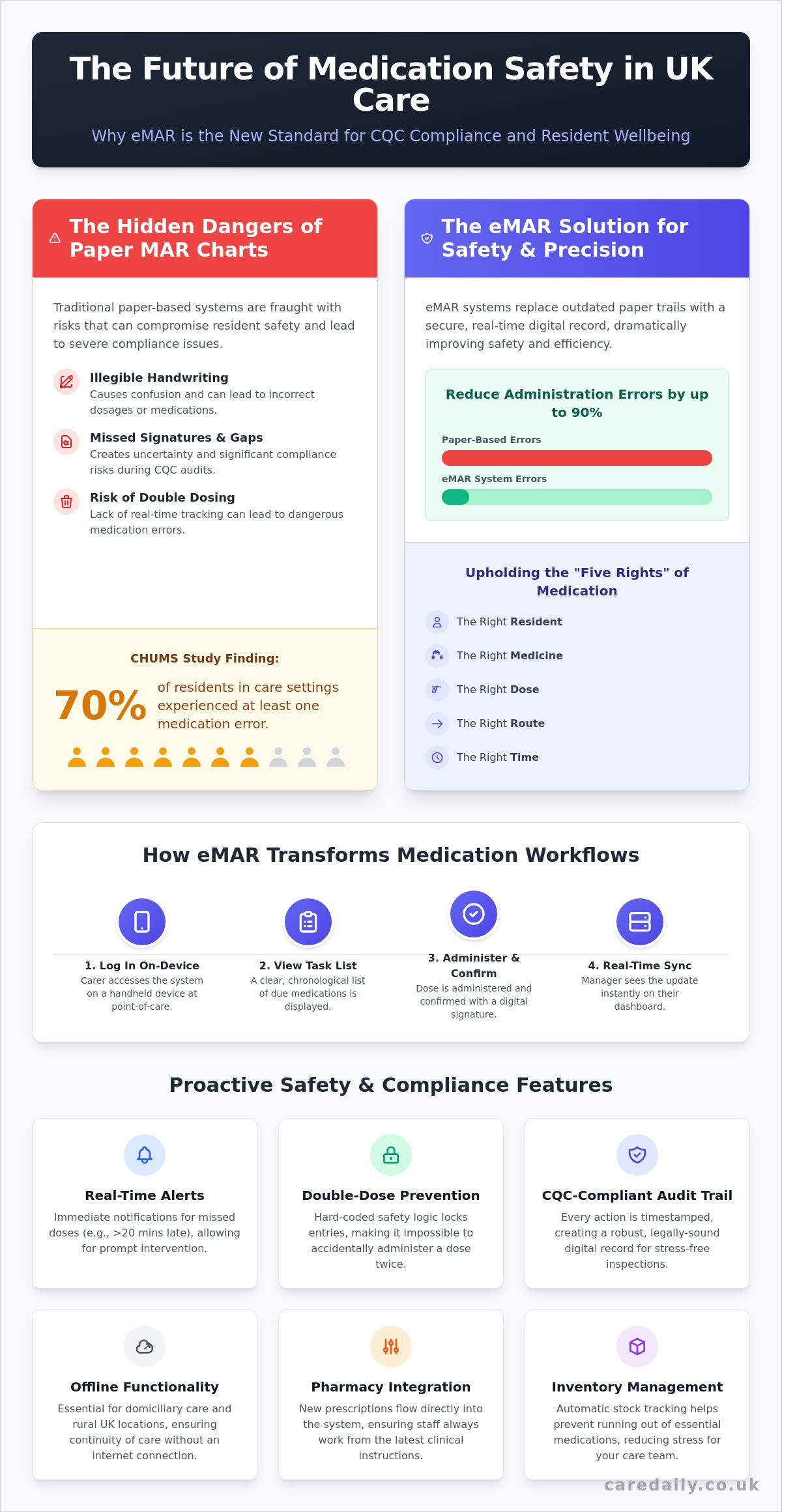
An eMAR system is far more than just a digital checklist; it’s the digital equivalent of a legal document required by the Care Quality Commission (CQC). By integrating with a broader Electronic Health Record (EHR), it ensures that every action is recorded with a timestamped digital signature. This creates a robust audit trail that holds everyone accountable. It specifically supports the "Five Rights" of medication: the right resident, the right medicine, the right dose, the right route, and the right time. This bespoke approach ensures your family member’s unique needs are met every single day. Our companions use these records to maintain continuity of care, ensuring no detail is overlooked during shift changes or home visits.
Why the UK Care Sector is Moving Away from Paper
Paper records are often fraught with hidden dangers. Illegible handwriting or "missing signatures" on a paper MAR chart can lead to missed doses or dangerous double-dosing. The risks are real. Research from the CHUMS study (Care Home Use of Medicines Study) found that 70% of residents in care settings experienced at least one medication error. These mistakes often stem from the limitations of physical paperwork that can’t provide alerts or prevent errors before they happen. Transitioning to emar helps eliminate these risks entirely. Digital systems alert our dedicated professionals if a dose is missed, allowing for immediate intervention. This shift provides a "calm in the storm" for families, replacing the uncertainty of paper with the reliability of instant, digital oversight. It allows us to focus on the person, not the paperwork.
How eMAR Systems Transform Medication Management Workflows
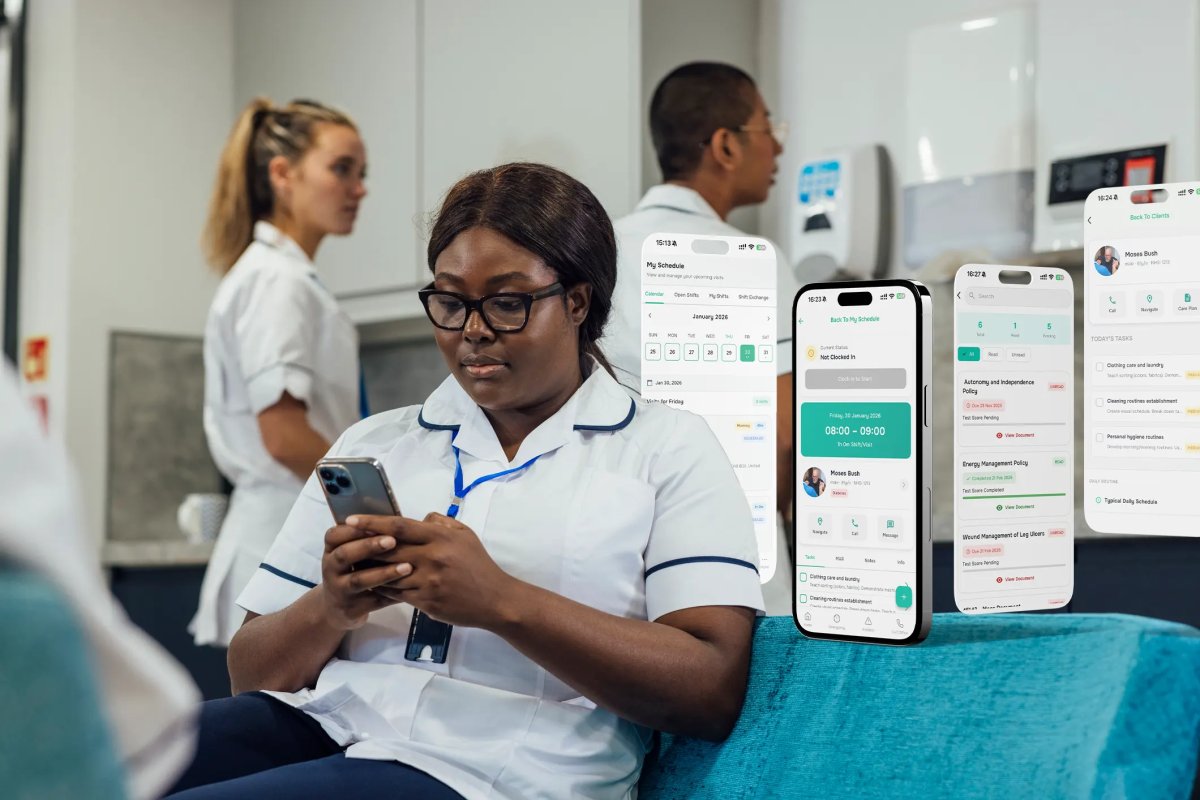
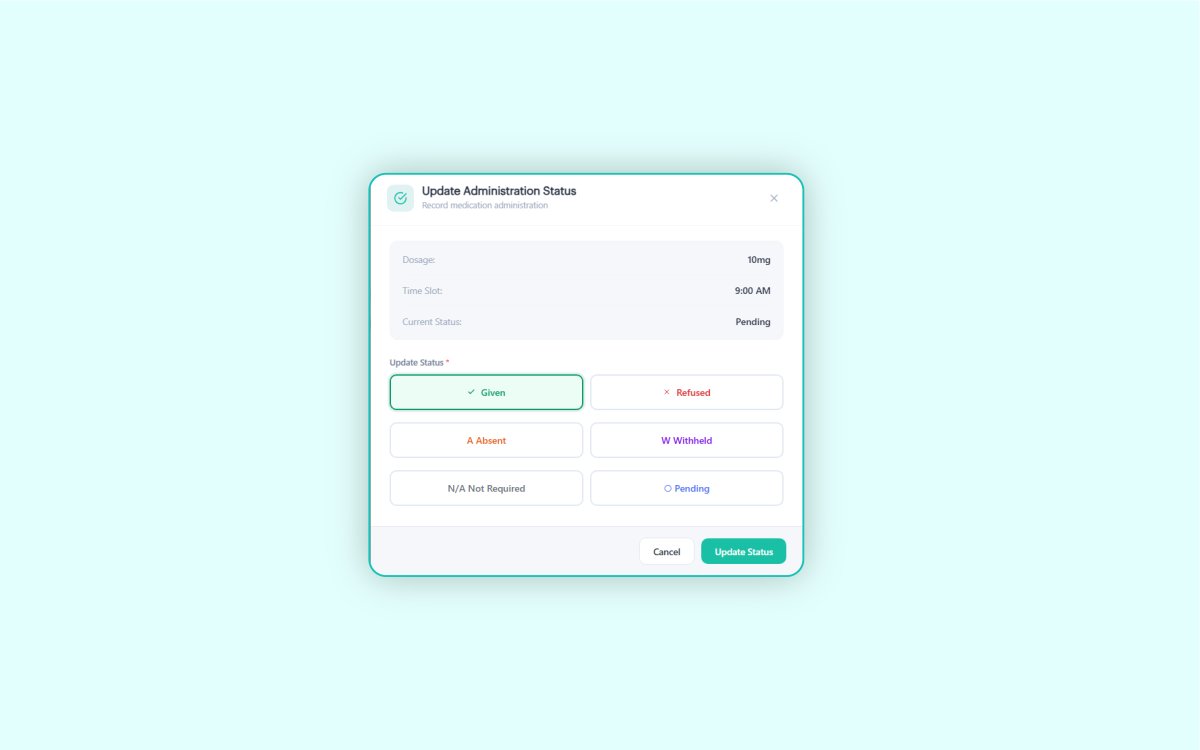
We know that managing medication rounds can feel like a high-stakes balancing act. Transitioning to an emar system replaces the cumbersome paper folder with a streamlined, digital sequence that guides carers through every step. A typical round begins when a professional logs into a handheld device or mobile app. The screen displays a clear, chronological list of residents, highlighting exactly which medications are due at that specific time. This point-of-care recording ensures that data is entered at the bedside, eliminating the risk of forgetting vital details during the walk back to a central office.
The system synchronises in real-time. When a carer confirms a dose, a manager sees that update instantly from their own dashboard. This level of transparency is a cornerstone of modern, high-quality care. Research into the Benefits and drawbacks of electronic health record systems suggests that while digital transitions require initial staff training, they significantly reduce the 12% error rate often found in manual transcription. Integration with community pharmacies further simplifies the process. When a GP authorises a new prescription, it flows directly into the digital record, ensuring staff always work from the most current clinical instructions.
Real-Time Alerts and Proactive Safety Nets
Safety is our priority. If a carer misses a scheduled dose by more than 20 minutes, the system triggers an immediate alert on the manager’s device. This proactive approach prevents minor delays from becoming missed treatments. Hard-coded safety logic also makes it physically impossible to double-dose a resident. If a colleague has already administered a tablet, the system locks that entry for the prescribed window. This provides families with immense peace of mind, knowing their loved one is protected by multiple layers of digital security. You can explore our bespoke care options to see how we prioritise these safety standards every day.
Inventory and Stock Management Features
Running out of essential medication is a stress no care team should face. An emar system maintains an automatic stock countdown for every item in the cabinet. If a resident starts a 28-day cycle, the system tracks every individual tablet used. Once stock levels hit a pre-set threshold, such as 7 days remaining, it automatically flags a reorder request to the pharmacy. This precision reduces medication waste by approximately 15% across UK care settings. It prevents over-ordering and identifies expiring batches before they become unusable. It’s a calmer, more efficient way to manage the home’s resources while maintaining the resident’s dignity and health.
Paper MAR Charts vs. eMAR: Why Digital is the New Standard for Safety
Traditional paper charts often create a heavy administrative burden that pulls your team away from meaningful interaction with residents. We’ve found that managers can spend upwards of 15 hours every month simply auditing paper records for gaps or illegible signatures. This is the hidden cost of paper. It isn’t just about the price of stationery; it’s about the lost time that could be spent providing bespoke care. Moving to an emar system transforms this workflow by automating the checks that previously took hours of manual labour.
Digital systems excel where paper fails, particularly with complex PRN (as needed) medications and variable dosages. While a paper chart might rely on a handwritten note in a small margin, an emar platform provides clear, guided prompts. It ensures that your staff don’t administer a second dose of paracetamol too soon, as the system tracks the exact timing of previous administrations automatically. If you’re worried about the transition to technology, you’ll find that these systems are designed with simplicity in mind. Most carers find they’re more confident within just two shifts because the software acts as a safety net, not a complication. For providers looking to modernise their entire approach to records, understanding digital care planning alongside eMAR adoption creates a truly joined-up approach to compliance and quality.
Reducing Medication Errors and Improving Safety
Safety is the cornerstone of everything we do in care. Transcription errors between a GP’s instructions and a handwritten MAR chart account for a significant portion of medication mishaps. Digital records eliminate this risk by syncing information directly. To provide extra peace of mind, these systems display high-resolution photos of the service user and the specific tablet being administered. This visual verification ensures the right person gets the right medicine every time. A 2016 Review of Clinical Effectiveness and Safety demonstrates how such digital interventions significantly lower the risk of adverse drug events. We also ensure best practice by making notes mandatory for any refused medication, so you always have a complete clinical picture.
Improving CQC Inspection Outcomes and Ratings
Preparing for a CQC inspection used to mean weeks of stressful preparation and digging through archives. With digital records, you can generate a comprehensive audit report at the touch of a button. This level of transparency directly supports your "Safe" and "Well-led" ratings. Instead of showing an inspector a folder of paper, you’re presenting a real-time, digital trail of every action taken. This proves that your organisation fosters a culture of learning and openness. When an error is caught by the system before it happens, it’s recorded as a "near miss," allowing you to demonstrate to inspectors exactly how you’ve improved your processes to protect those in your care.
Key Features to Look for in a CQC-Compliant eMAR Solution
Choosing the right software is a significant step toward safeguarding the independence of those you support. By March 2024, the Department of Health and Social Care set a clear target for 80% of CQC-registered providers to adopt digital social care records. As we approach 2026, your emar system must do more than just digitise paper. It needs to provide a safety net for both your staff and your clients. Security is paramount; ensure any platform you choose offers 256-bit encryption and full GDPR compliance to protect sensitive health data.
We understand that a diverse workforce brings varied levels of technical confidence. A 2023 skills survey found that roughly 31% of social care workers require additional support with digital tools. Your chosen interface should feel like a helpful companion, not a hurdle. Look for clear layouts, colour-coded alerts, and large buttons that make administration simple even during a busy shift. This clarity reduces stress for your team and ensures every person receives their bespoke care without delay. Pairing your eMAR solution with the right person centred software creates a single source of truth that empowers your team to deliver continuity of care without the friction of managing disconnected digital systems.
Offline Functionality and Accessibility
Connectivity shouldn’t dictate the quality of care. Our rural communities often face "not-spots" where mobile signal is non-existent. A "Cloud-first, Offline-always" feature is essential for domiciliary visits. This technology allows a carer to record medication administration on a tablet or smartphone without an active internet connection. The app stores the data securely on the device. Once the carer reaches a Wi-Fi zone or a 4G signal, the system syncs the data automatically. This prevents the loss of vital records and ensures the digital record remains accurate and up to date. For home care providers specifically, electronic MAR charts for domiciliary care offer specialised features that address the unique challenges of mobile medication management.
Integration with Pharmacy and Care Planning
True efficiency comes from a single source of truth across your entire organisation. Your emar solution should integrate directly with your digital care plans and staff rosters. When these systems talk to each other, you eliminate the need for repetitive manual data entry, which can reduce transcription errors by up to 90% based on 2024 industry benchmarks. Pharmacy API integrations allow for real-time prescription updates. This means your team always works with the most current information, providing families with much-needed peace of mind. To see how these tools can transform your service, you can explore our bespoke digital care solutions today.
Transitioning to Digital: How Care Daily Supports Your eMAR Journey
Moving away from traditional paper records feels like a monumental shift for any care team. We understand that your primary focus is the people you support, not the software you use. At Care Daily, we act as your compassionate guide through this digital evolution. We don’t just hand you a login and leave you to it; we walk beside you to ensure your transition to emar is seamless, safe, and stress-free.
Staff Training and Winning "Hearts and Minds"
Change often triggers anxiety, particularly when it involves sensitive medication data. We focus on winning "hearts and minds" by demonstrating how our platform makes the right thing the easy thing to do. Our interface is designed to be intuitive, often reducing the time spent on medication administration by 30 minutes per shift. To keep your team confident, we provide an extensive library of over 2,000 updated policies and procedures. This ensures your staff always have access to the latest CQC-aligned guidance, turning a daunting task into a source of professional pride and clinical safety.
Creating a Bespoke Implementation Plan
Every care setting has its own rhythm, so a "one size fits all" approach simply won’t suffice. We build a bespoke implementation plan that manages everything from the initial data migration to your very first "live" medication round. Our commitment to continuity of care means we work in the background to ensure your residents never experience a gap in support during the software setup. By switching, providers frequently see a 90% reduction in missed signatures within the first 30 days of use. It’s time to provide your team with the tools they deserve. Book a demo with Care Daily to see eMAR in action and take the first step toward a more secure future.
Embracing digital records is about more than just technology; it’s about protecting the dignity and safety of those in your care. We provide the expert, grounded support you need to make this change with total peace of mind. Your journey toward better care starts with a single, supported step. We are here to ensure that step is the right one for your staff, your business, and most importantly, your residents.
Take the Next Step Toward Excellence in Medication Safety
Transitioning to a digital approach is about more than just efficiency; it’s about protecting the dignity and safety of those you support. By replacing outdated paper charts with a modern emar system, you eliminate the risks of illegible handwriting and missed doses that often lead to safeguarding concerns. This shift ensures your team can focus on what they do best; providing compassionate, person-centred care that helps residents maintain their independence.
We understand that change can feel daunting for busy domiciliary and residential providers. That’s why Care Daily provides a bespoke path to digital transformation. You’ll gain access to our extensive CQC-compliant policy library, featuring over 2,000 documents to keep your service inspection-ready. If you ever need a hand, our expert team provides dedicated UK-based support directly from our Manchester centre. We’re here to ensure your transition is smooth, giving you the peace of mind that your medication management is both safe and compliant.
[Discover how Care Daily’s eMAR can transform your care service
](https://www.caredaily.co.uk/company/demo-booking) You’ve got the vision to improve your care service, and we’re ready to help you make it a reality.
Frequently Asked Questions
Is eMAR mandatory for CQC compliance in 2026?
No, using an emar system isn’t strictly mandatory by law, but the CQC expects 80% of social care providers to adopt digital records by 2024 to meet modern safety standards. We know that digital systems provide the transparency and accuracy required for a "Good" or "Outstanding" rating. By moving away from paper, you ensure your service remains compliant with the latest NHS England Digitising Social Care programme requirements.
Can eMAR work without an active internet connection?
Yes, most modern systems include an offline mode that allows staff to record medication even in areas with poor signal. Data saves locally on the device and syncs automatically once a 4G or Wi-Fi connection is restored. This ensures that your dedicated professionals can continue their rounds without interruption, providing peace of mind that no dose is missed due to technical hitches in the home.
How much time does eMAR save care staff on average?
Digital systems save care staff approximately 15 minutes per medication round by removing the need for manual signing and complex paper tallying. For a standard 30-bed care home, this equates to 60 hours of saved administrative time every month. We believe this time is better spent on person-centred support, allowing your team to focus on the dignity and companionship that residents truly value.
Does eMAR link directly to my local pharmacy?
Yes, your system links directly to the pharmacy via a secure interface to streamline the ordering and prescription process. This integration reduces transcription errors by 90% because medication details are sent and confirmed digitally. It ensures that the right bespoke medication is always in stock, which helps maintain the continuity of care that is so vital for your loved ones’ health and stability.
How does an eMAR system handle PRN (as needed) medication?
The system manages PRN medication by requiring staff to record a specific reason for administration and a follow-up note on its effectiveness. It automatically tracks the time between doses to prevent accidental overdosing or giving medication too soon. This structured approach provides a clear audit trail, ensuring that "as needed" support is given safely and only when it’s truly required to maintain a service user’s comfort.
What happens if a staff member makes a mistake on an eMAR chart?
If a mistake occurs, the system records an immediate alert and creates a permanent audit trail that cannot be deleted or obscured. Managers receive a notification within 60 seconds, allowing for a rapid professional response to ensure the individual’s safety. While paper records can be messy, digital charts provide a clear, honest account of every action, which is essential for maintaining professional standards and trust within your team.
Is eMAR suitable for domiciliary care agencies with remote workers?
Yes, emar is perfectly suited for domiciliary care because it works on mobile devices used by remote workers visiting clients in their own homes. Managers can monitor medication administration in real time from a central office, seeing updates the moment a carer completes a visit. This connectivity ensures that even when staff are working independently, they are never truly alone in their responsibilities to the people they support.
How secure is service user data in an eMAR system?
Your data is protected by AES 256-bit encryption and is stored on UK-based servers that comply with GDPR and the NHS Data Security and Protection Toolkit. Access is restricted to authorised personnel only, meaning sensitive health information is far more secure than it would be in a physical folder or a paper file. We prioritise this security to give families total peace of mind regarding their privacy and the safety of their personal records.