

What if the next time the CQC calls, your first instinct isn’t to panic, but to smile? We know that for many care managers, the thought of an unannounced visit feels like a heavy weight. It’s a pressure that has only intensified since the full rollout of the Single Assessment Framework in late 2024. You likely worry that a "Requires Improvement" rating could overshadow the bespoke, compassionate care your team provides every day. It’s easy to feel buried under a mountain of digital evidence and documentation. Our comprehensive cqc inspection checklist is here to act as your calm in the storm, turning complex regulations into a manageable, step-by-step plan.
You deserve the peace of mind that comes from knowing your service is truly inspection-ready. We’ll help you master the 2026 standards so you can lead your team with quiet confidence. This guide offers a clear roadmap to ensure your records are compliant and your staff are ready to shine during their interviews. We’ll explore exactly how to organise your evidence and support your dedicated professionals, helping you move from anxiety to an "Outstanding" result.
Key Takeaways
-
Master the transition to the CQC’s Single Assessment Framework and learn how to navigate the shift towards continuous, "live" data monitoring.
-
Utilise our comprehensive cqc inspection checklist to audit your service across the five core pillars, ensuring your medication and safeguarding records meet the highest standards.
-
Discover why digital evidence is now essential for inspectors and how to create a robust, time-stamped audit trail that eliminates the risks of paper-based systems.
-
Prepare your team for "the call" with a clear 30-minute response plan designed to keep your staff calm and your documentation instantly accessible.
-
Learn how integrated care planning and policy libraries can help you stay ahead of legislative changes and confidently evidence "Outstanding" levels of care.
Table of Contents
Understanding the CQC Single Assessment Framework in 2026
Being a registered manager in 2026 is a demanding role that requires both clinical precision and a heart for service. You might feel the weight of the new regulatory landscape, but you don’t have to carry it alone. The Care Quality Commission (CQC) has fully transitioned to the Single Assessment Framework (SAF), moving away from the old schedule of once-every-three-years inspections. This new era focuses on agility and real-time oversight.
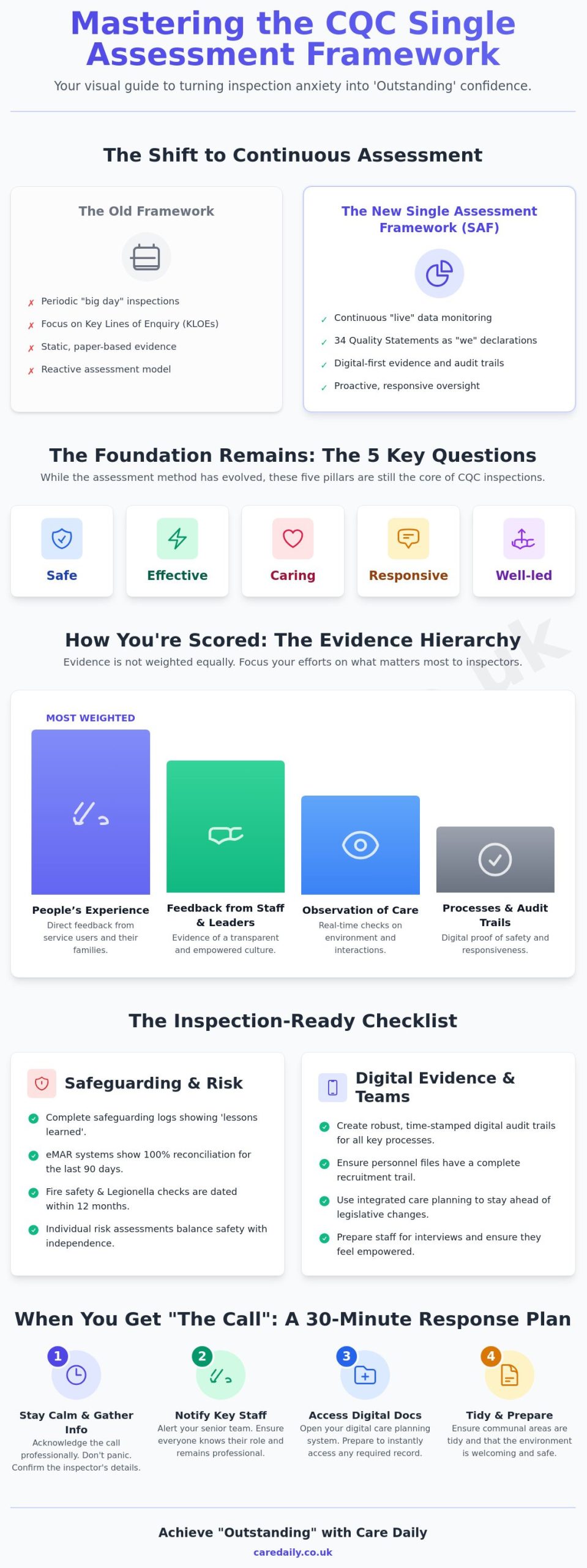
The regulator now prioritises continuous monitoring over periodic "big day" visits. They use "live" data feeds, digital records, and frequent provider assessments to build a real-time picture of your service. This shift means your cqc inspection checklist is no longer a document you dust off once a year; it’s a daily roadmap for excellence. The 34 Quality Statements have replaced the old Key Lines of Enquiry (KLOEs). These statements act as "we" declarations that describe what high-quality, person-centred care looks like in practice. While the system is complex, it’s designed to be more responsive to the bespoke needs of those you support, ensuring their dignity remains at the centre of every decision.
The 5 Key Questions: Still the Foundation
The core of the assessment remains built upon five essential pillars: Safe, Effective, Caring, Responsive, and Well-led. These questions haven’t changed, but the way you prove your compliance has. Each question now maps directly to specific evidence categories, ensuring that your "Well-led" rating is backed by digital audit trails and staff feedback rather than just a well-organised physical folder. In 2026, the CQC prioritises how you use data to improve daily life for those in your care. For a comprehensive breakdown of how these pillars work together, our guide on understanding the 5 CQC domains provides detailed insight into the new framework requirements.
The Evidence Categories Inspectors Care About
To maintain your rating and provide peace of mind to families, you must understand the evidence categories the CQC uses to score your service. These are not weighted equally, and understanding the hierarchy is vital for your cqc inspection checklist.
-
People’s experience: This is the most heavily weighted category in 2026. It focuses on direct, unfiltered feedback from those receiving care and their families.
-
Feedback from staff and leaders: Inspectors look for a culture of transparency where staff feel empowered to speak up.
-
Observation: Real-time checks on the care environment and the quality of interactions between companions and clients.
-
Processes and digital audit trails: Your electronic monitoring systems must show a clear history of safety and responsiveness.
We know the pressure of management can feel like a storm, but we are here to help you find the calm. By breaking the 34 statements into manageable daily habits, you can ensure your service doesn’t just pass an inspection, but truly thrives.
The Definitive CQC Inspection Checklist: 5 Pillars of Readiness
We understand that the lead-up to an inspection can feel daunting for even the most experienced managers. Your cqc inspection checklist shouldn’t just be a list of tasks; it’s a roadmap for maintaining the dignity and safety of those you support. The 2026 framework requires evidence that you meet the CQC Single Assessment Framework quality statements, which prioritise real-time outcomes and lived experiences over static paperwork. This shift means your evidence must show how your service functions on its best and most challenging days.
Safeguarding and Risk Management
Safety starts with proactive oversight and a culture that doesn’t fear transparency. Ensure your safeguarding logs are complete and, more importantly, show clear evidence of lessons learned following any incident. You’ll need to demonstrate that medication management protocols are robust, with eMAR systems showing 100% reconciliation for the last 90 days. Check that environmental risk assessments, including fire safety and Legionella checks, are dated within the last 12 months. Every individual care risk assessment should balance safety with independence, ensuring residents aren’t restricted unnecessarily.
Personnel Files and Staffing Ratios
Inspectors will scrutinise your recruitment trail to ensure you’re protecting the vulnerable people in your care. Every file must contain a clear DBS check, two verified references, and current right-to-work documentation. Beyond the paperwork, staff rostering must reflect safe dependency levels rather than just budget constraints. We recommend auditing your rosters monthly to ensure that "continuity of care" is a reality where service users see familiar faces. Providing evidence of monthly supervisions and annual appraisals gives the proof that your team is well-led and supported.
Policies, Procedures, and Governance
Your governance structure is the backbone of your service. Having cqc compliant care policies and procedures is the vital first step, but your team must live these values daily. Ensure your Statement of Purpose is current as of 2026 and reflects your actual service delivery. Use the following points to bolster your "Well-led" and "Caring" evidence:
-
Implement a "You Said, We Did" board to show how service user feedback has directly changed your practice.
-
Audit your care plans to ensure they focus on person centred care, highlighting bespoke goals for each individual’s independence.
-
Review your continuous improvement plan to show how you’ve addressed previous audit failures or near-misses.
-
Verify that dignity and respect are woven into daily notes, moving away from institutional language.
If you’re feeling unsure about your current level of preparation, our specialist advisors can help you bridge the gap between simple compliance and true excellence.
Digital Evidence: Creating a Robust Audit Trail
In 2026, relying on bulky ring binders is no longer just an administrative burden; it’s a significant risk. CQC inspectors now view paper logs as a red flag during assessments. Paper lacks the real-time transparency required to meet the "Well-led" criteria. Digital systems create an unalterable, time-stamped record of every interaction. This ensures your cqc inspection checklist reflects the reality of your care delivery. When a carer logs a visit on their phone, the GPS and time data provide absolute proof of attendance. It gives you peace of mind that nothing is missed.
From Paper to Digital: The 2026 Standard
Paper records often suffer from illegible handwriting or missing signatures, which accounted for 34% of documentation-related breaches in recent years. You can eliminate these human errors by using digital care management software UK to automate your compliance. These platforms prompt carers to complete specific tasks before they can close a log, ensuring every box is ticked correctly. "An audit trail is not just a list of tasks; it is the story of your commitment to safety." This digital narrative proves you’re proactive rather than reactive, providing a clear window into the daily life of your service.
Showcasing Outcomes through Data
Inspectors look for evidence that you "close the loop" when things go wrong. It’s the difference between recording an event and learning from it. If a client has a fall, your digital system should show the incident report, the immediate medical response, and the updated care plan within 24 hours. You can use eMAR systems to demonstrate 100% medication compliance, or highlight the Family Portal to prove active engagement with loved ones. Using a digital cqc inspection checklist ensures you have these metrics at your fingertips during an interview.
-
eMAR Accuracy: Instant alerts for missed doses prevent errors before they happen, showing a commitment to safety.
-
Responsiveness: Digital incident reporting shows the path from a fall to a revised risk assessment, proving you listen and act.
-
Family Engagement: The Family Portal provides a transparent window into the care process, building deep trust with relatives.
Presenting these metrics via a live dashboard shows you have a firm grip on your service’s safety and effectiveness. It transforms the inspection from a stressful interrogation into a professional demonstration of your high standards. You aren’t just telling the inspector you’re doing a good job; you’re showing them the data that proves it.
The Countdown: What to Do When You Get "The Call"
When the notification call arrives, your first 30 minutes are critical for setting a calm, professional tone. You should immediately alert your Nominated Individual and your senior leadership team. This isn’t a time for panic; it’s a time for coordinated action. We recommend using a pre-prepared cqc inspection checklist to delegate immediate tasks, such as tidying communal areas and ensuring the visitor log is ready for signing.
Your next step involves a physical walkthrough of the service. You need to see what the inspector sees. Check that your "CQC Rating" poster is displayed prominently in your entrance hall, as required by the Health and Social Care Act 2008. Look for the small things that demonstrate high standards, like updated notice boards and clear signage. This visual audit helps you feel in control before the inspector even steps through the door.
Empowering Your Staff Team
Your team members are the heart of your service. They provide the bespoke support that makes a difference to people’s lives. Organise a ten-minute "Compliance Huddle" to reassure them. You don’t want them to feel interrogated. Instead, empower them to speak about their work with pride. We often suggest asking quick-fire mock questions during their shift, such as "How do you ensure Mrs. Smith’s dignity during personal care?"
Remind your staff that "I don’t know, but I know where to find it" is a valid and safe answer. This shows the inspector that your team understands your systems and knows how to access vital information. This transparency builds trust and demonstrates a culture of openness.
The Final Document Sweep
Efficiency with paperwork signals a well-managed service. You must ensure your policies and procedures in health and social care are the most recent versions, specifically those updated since March 2026. Your evidence folder, whether digital or physical, should be organised by the five key questions: Safe, Effective, Caring, Responsive, and Well-led.
Check the last 3 months of your incident logs and medication administration records (MAR charts). Having these documents ready prevents delays and allows the inspector to focus on the high quality of your care. Using a cqc inspection checklist during this sweep ensures nothing small, like a missing signature on a staff meeting minute, is overlooked.
If you need support managing your service’s compliance journey, contact our team today for expert guidance.
Achieving "Outstanding" with Care Daily
We know the pressure you feel when an inspection window opens. It isn’t just about passing; it’s about showcasing the heart of your service. Care Daily helps you transform your cqc inspection checklist from a source of anxiety into a roadmap for excellence. Our platform ensures you’re prepared for the 2026 legislative shifts today. By automating policy updates, we keep your service aligned with the latest CQC Single Assessment Framework requirements. You won’t have to worry about outdated documentation when an inspector walks through the door.
Safe staffing is more than just a number on a rota. It’s about having the right skills in the right place at the right time. Our integrated rostering and care planning tools provide the objective evidence inspectors look for. You can prove, using data from the last 52 weeks, that your staffing levels consistently meet the bespoke needs of your clients. This real-time visibility allows you to spot compliance gaps in minutes. If a training certificate expires or a care note is missed, you’ll see it on your dashboard before the inspector does.
Your Digital Compliance Partner
Our "Set and Forget" policy subscriptions act as a silent guardian for your business. We manage the complex legislative updates triggered by the Health and Care Act 2022, allowing you to focus on your residents and staff. To support the "Caring" domain, our platform enables the creation of truly bespoke care plans that reflect the individual’s voice and dignity. Whether you are a Manchester-based provider or operating nationally, our UK-based support team is always a phone call away. We understand the local landscape and the specific challenges faced by UK care managers in 2024.
Ready for Your Next Inspection?
Moving from a static cqc inspection checklist to a culture of continuous excellence is a significant journey. You’ve already done the hard work of building a compassionate team and providing high-quality support. We are simply here to help you prove it. You deserve the peace of mind that comes with knowing your compliance is handled. We invite you to join us for a "Stress-Free Compliance" consultation to see how we can lighten your administrative load.
You’re doing incredible work every single day. Let us provide the digital foundation that lets your "Outstanding" quality shine through during every assessment. You’ve built a sanctuary for those in your care; we’ll help you protect it.
**Book a demo of Care Daily’s compliance tools ** today and take the first step toward a more confident, prepared future.
Securing Your Outstanding Rating Under the 2026 Framework
Preparing for the CQC’s Single Assessment Framework is a journey of continuous improvement rather than a one-off event. You’ve now explored how to master the 5 Pillars of Readiness and why a digital audit trail is vital for modern compliance. By integrating a live cqc inspection checklist into your daily routine, you ensure that the high standards of dignity and safety you provide are always visible to inspectors. It’s about creating a culture where "Outstanding" care is simply the way you work every day.
We’re here to help you navigate these regulatory changes with confidence and ease. Our Manchester-based experts support managers across the country, providing over 2,000 CQC-compliant policies that are currently used by top-rated UK care providers. We focus on the technical details so you can focus on your residents. You deserve the peace of mind that comes from knowing your documentation is as robust as your clinical care.
Download our 2026 CQC Readiness Toolkit and Policy Guide to bridge the gap between compliance and excellence. Your commitment to quality makes a difference; we’re proud to stand by your side as you prepare for the future of care.
Frequently Asked Questions
How much notice does the CQC give for an inspection in 2026?
Under the 2026 Single Assessment Framework, you’ll likely receive very little notice, often as short as 48 hours for home care services. Care homes frequently face unannounced visits where the inspector arrives at the door at 9:00 am. This approach ensures the CQC sees your service in its natural state, allowing them to witness the genuine, compassionate care your team provides to every individual every day.
What are the 5 key questions the CQC will ask?
The CQC assesses every care provider against five core questions: is the service safe, effective, caring, responsive, and well-led? These five pillars are the foundation of your cqc inspection checklist and guide the inspector’s observations throughout their visit. We focus on these areas to ensure every person we support maintains their dignity and receives a bespoke care experience that truly meets their unique emotional and physical needs.
Can I fail a CQC inspection if I still use paper records?
You won’t fail an inspection simply for using paper records, but the CQC now expects providers to demonstrate high levels of data security and real-time accessibility. Since 2024, the Department of Health and Social Care has pushed for a 100% uptake of Digital Social Care Records across the sector. Moving away from paper makes it much easier to prove your continuity of care and ensures your records are always audit-ready.
What happens if the CQC finds a "Requires Improvement" area?
If the CQC identifies an area that "Requires Improvement," you’ll need to submit a detailed action plan within 28 days of receiving your draft report. This plan must outline the specific steps you’ll take to reach a "Good" rating and address any breaches in regulations. The CQC typically schedules a follow-up inspection within 6 to 12 months to ensure you’ve implemented these changes and restored peace of mind for your families.
How often do CQC policies and procedures need to be updated?
You should review and update your policies at least once every 12 months to ensure they align with the latest Health and Social Care Act regulations. If a significant incident occurs or legislation changes, such as the 2023 updates to Liberty Protection Safeguards, you must update your documents immediately. Regular reviews keep your staff informed and ensure the home-based support you provide remains safe, professional, and compliant with current standards.
What is a "Mock CQC Inspection" and should I do one?
A mock inspection is a trial run of the assessment process conducted by an internal manager or an external consultant to find gaps in your service. We recommend performing these every 6 months to identify any hidden risks before the real inspectors arrive. It’s a vital part of your cqc inspection checklist that helps your team feel prepared and confident, turning a potentially stressful event into a calm opportunity to showcase your excellence.
What are the 34 Quality Statements?
The 34 Quality Statements are the new benchmarks that replace the old Key Lines of Enquiry under the CQC’s Single Assessment Framework. These statements are written from a provider’s perspective, such as "we foster a positive culture," and focus on specific outcomes for the people you support. They ensure that every aspect of your service prioritises the person’s independence and follows a consistent, high-standard care model that the CQC can easily measure. Understanding how these statements map to the 5 CQC domains is essential for building a comprehensive evidence portfolio.
Do I need a specific room for the CQC inspector?
You don’t have a legal obligation to provide a specific "CQC room," but offering a private, quiet space is highly beneficial for a smooth inspection process. Providing a dedicated area with a desk and reliable Wi-Fi allows the inspector to review sensitive documents and interview staff members without interruptions. It creates a professional environment that demonstrates you’re organised and ready to facilitate a thorough review of your care service.