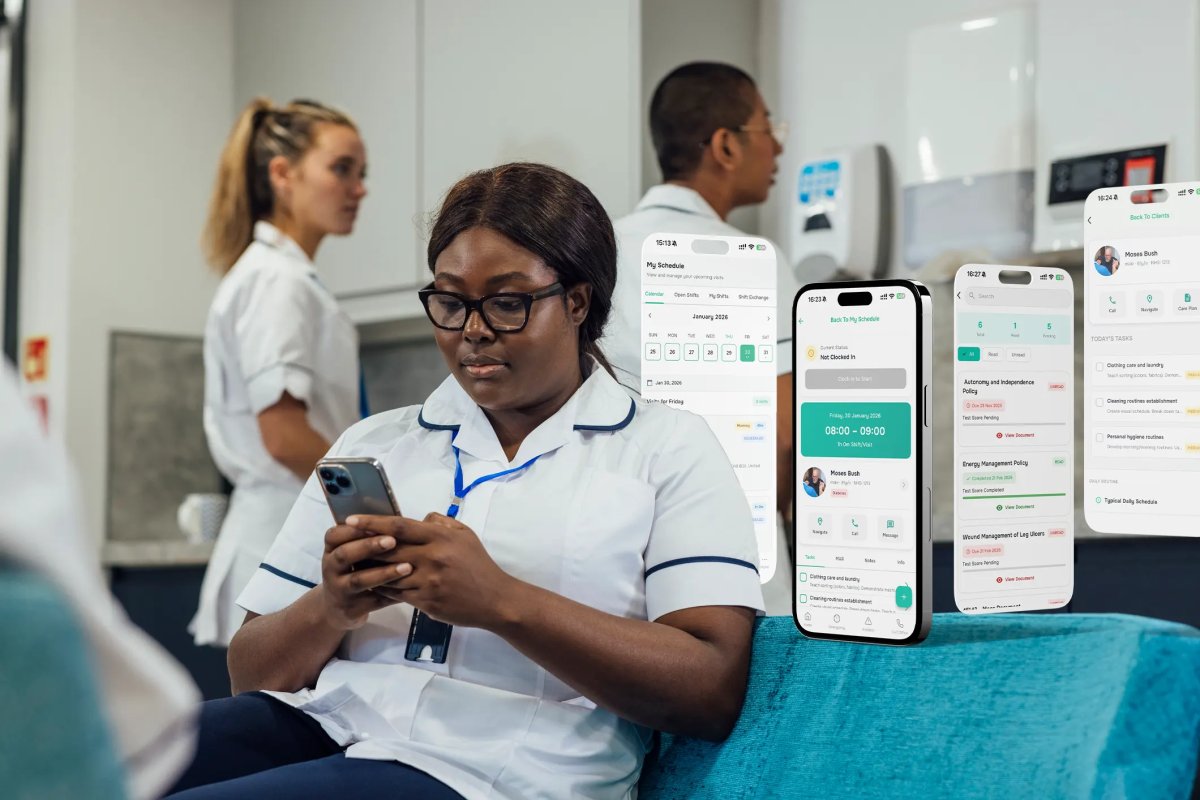

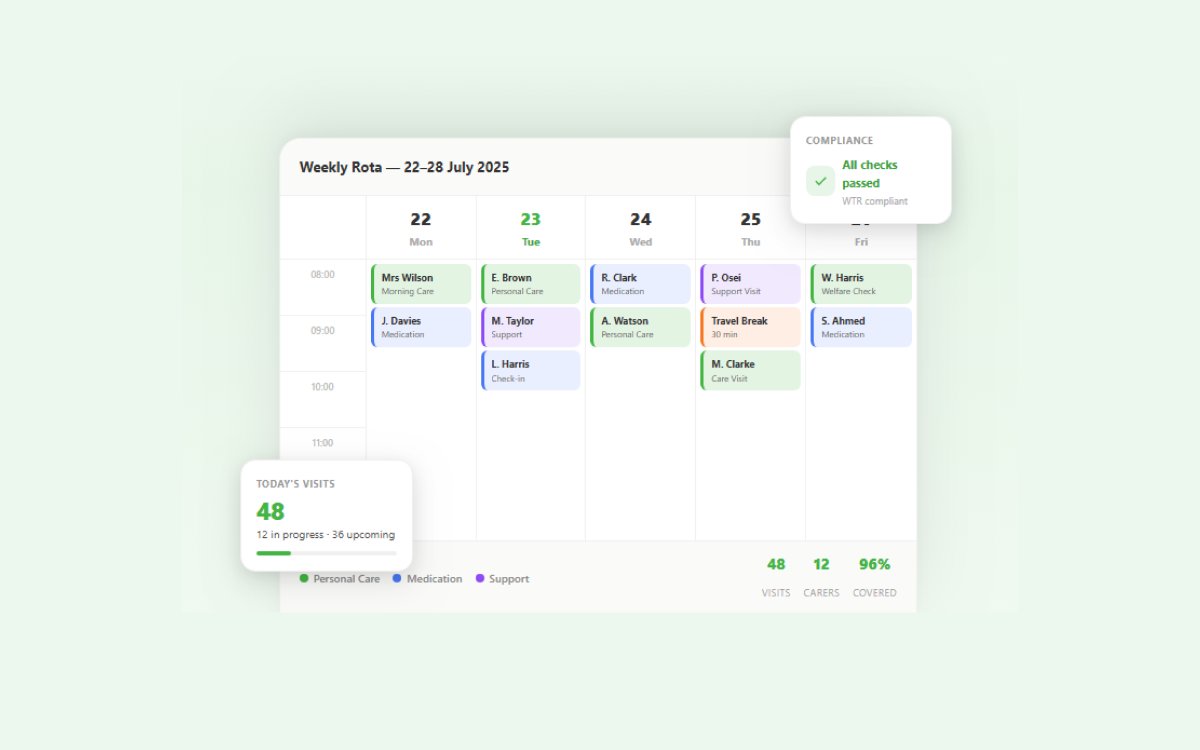
For many small domiciliary care agency managers, the Sunday evening ritual is all too familiar: a complex Excel spreadsheet, a stack of paper timesheets, and the daunting task of building next week’s roster. This manual process is not just time-consuming; it creates risks that can impact compliance, staff morale, and the quality of care. The right care rostering software for small agencies offers a more sustainable path, one that replaces administrative fatigue with control, clarity, and the capacity to focus on what truly matters—your clients and your team.
A well-chosen system can transform your operations, helping you remain CQC-compliant, significantly reduce administration, and guarantee the continuity of care that builds trust with families. It’s about reclaiming your time and embedding quality into every scheduled visit.
Why Manual Rostering is Failing Small UK Care Agencies in 2026
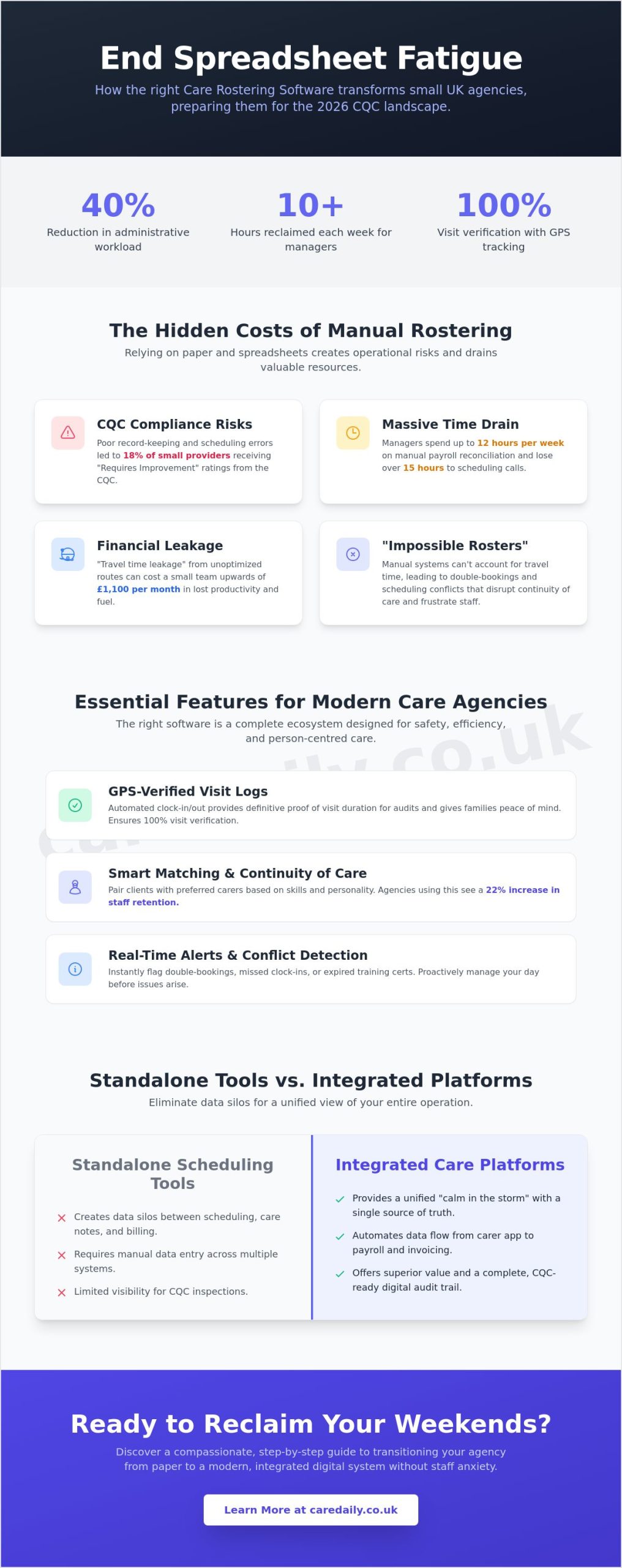
Rostering in social care is far more than just a calendar. It is the operational blueprint for delivering safe, effective, and person-centred support. As the CQC’s regulatory landscape evolves, relying on spreadsheets and paper diaries is becoming increasingly untenable. This "spreadsheet fatigue" introduces manual errors that can lead to missed visits, incorrect pay, and a lack of real-time oversight. For an inspector, these small gaps can raise questions about whether your service is consistently well-led.
Furthermore, manual systems often fail to account for the true cost of service delivery. Travel time between visits is a common point of financial leakage, where non-specialised tools cannot accurately calculate or optimise routes, leading to wasted fuel, excess mileage claims, and carers feeling rushed. (Employee scheduling software)
The Hidden Costs of Paper and Excel
The most immediate cost of manual rostering is time. The hours spent reconciling carer timesheets with scheduled visits, calculating pay variations for weekends or bank holidays, and manually generating invoices could be reinvested in staff training, client reviews, or business development. Paper-based systems also struggle to provide the instant reassurance that families now expect. When a client’s family member calls to check if a carer has arrived, a paper system leaves you without a definitive, real-time answer, undermining confidence in your service.
Perhaps most critically, manual methods can lead to "impossible rosters," where travel time is underestimated or ignored entirely. This not only breaches working time regulations but also places immense pressure on your carers, contributing to burnout and high staff turnover.
Meeting CQC Standards with Digital Evidence
Under the CQC’s Single Assessment Framework, providers must supply evidence that their service is Safe and Effective. Digital care rostering software provides this evidence automatically. Every GPS-verified clock-in, every digital note, and every completed task creates an immutable audit trail. This digital log offers clear proof of visit times, duration, and the care delivered, which is invaluable during an inspection.
This evidence becomes the foundation of your compliance. When your rosters are directly linked to digital care plans and risk assessments, you can demonstrate that scheduling decisions are informed by the client’s specific needs. This aligns your operational practice with the principles laid out in your CQC compliant care policies and procedures , creating a golden thread between policy and practice.
Essential Features of Care Rostering Software for Small Agencies
Large, enterprise-level systems are often cluttered with features that a small agency will never use. The key is to identify the tools that solve your most pressing problems: saving time, ensuring continuity, and safeguarding your staff. For a small team, the focus should be on simplicity, reliability, and powerful core functionality.
The absolute non-negotiables include a user-friendly mobile app for carers with GPS clock-in and clock-out, intelligent conflict detection to prevent double-bookings or qualification mismatches, and tools that actively promote continuity of care. This means the software should help you match specific carers to clients based on skills, history, and personal preferences, not just availability.
Smart Matching and Continuity of Care
Continuity of care is fundamental to building trust and delivering a truly person-centred service. Effective software allows you to create "preferred carer" settings for each client, ensuring that familiar faces are prioritised during scheduling. This consistency is vital for clients with dementia, anxiety, or complex communication needs. By matching carer skills and even languages to client requirements, the software helps you uphold service user dignity and respect their choices. Our customers tell us that this feature not only improves client satisfaction but also reduces carer stress, as it allows them to build meaningful professional relationships.
Real-Time Alerts and Incident Management
One of a manager’s biggest fears is a missed visit. Modern rostering software acts as a safety net. Real-time alerts can notify you if a carer is running late or has not clocked into a scheduled visit, allowing you to intervene before a problem occurs. This proactive approach is a hallmark of a well-led organisation. Integrating incident reporting directly into the carer’s mobile app further strengthens safeguarding. It empowers staff to log concerns or events as they happen, with all information flowing directly into the central system for immediate review, rather than waiting for a paper form to be handed in at the end of a shift.
Standalone Scheduling vs. Integrated Care Management Platforms
When searching for a solution, you will encounter both standalone scheduling tools and fully integrated care management platforms. Whilst a cheap, standalone rostering app might seem appealing, it often creates more work in the long run. By keeping your rosters in one system and your client records, care plans, and medication logs in another, you create "data silos." This means staff must enter the same information in multiple places, increasing the risk of errors and wasting valuable time.
The "Small Agency Myth" is that integrated software is too complex or expensive. In reality, a unified system that connects staff rostering in social care directly to billing and payroll is far more efficient. It eliminates the manual data entry required to process wages and invoices, saving hours of administrative work each month.
The Problem with "Bolt-On" Compliance
Effective care delivery depends on the seamless flow of information. Rostering cannot happen in a vacuum; it must be directly informed by the client’s most current care plan and risk assessments. When a roster is built without direct access to this information, there is a risk that a carer could be scheduled for a task they are not qualified for. For example, if a client’s medication management needs change, an integrated system can flag this to the scheduler instantly. A standalone tool cannot. Using generic HR or scheduling software for a specialised care environment simply doesn’t provide the necessary clinical and regulatory safeguards.
Total Cost of Ownership (TCO) for Small Agencies
When evaluating software, it’s important to look beyond the monthly subscription fee and consider the Total Cost of Ownership. An integrated platform delivers a return on investment that a standalone tool cannot match. The time saved by automating invoicing and payroll exports can easily amount to hundreds of pounds per month. More importantly, an integrated system acts as a form of "compliance insurance." During a CQC inspection, the ability to produce a complete, interconnected digital record of care with a few clicks is invaluable. At Care Daily, we scale our pricing to ensure that even the smallest providers can access the benefits of a fully integrated system.
How to Transition to Digital Rostering Without Staff Pushback
For carers who are used to paper-based systems, the move to a digital platform can feel daunting. It is essential to approach the transition with empathy and a clear plan. Acknowledge the anxieties some staff may have and frame the change as a way to make their jobs easier and safer, not just to increase oversight. Focus on the benefits for them: no more paper timesheets, instant access to client information, and clearer communication.
A phased rollout over a few weeks can ensure business continuity and prevent overwhelm. The goal is to guide your team compassionately, not to enforce change without support.
-
The "Audit and Clean" Phase: Before you import any data, take the opportunity to clean it up. Verify that all staff contact details, qualifications, and availability are current. Check that client addresses and preferences are accurately recorded. This ensures you are building your new digital system on a foundation of reliable information. This is also the perfect time to identify one or two "Tech Champions" within your team—enthusiastic individuals who can help support their colleagues through the change.
-
Training with Empathy: One-size-fits-all training does not work. For less tech-savvy staff, organise brief, one-on-one sessions where they can learn at their own pace. Use a "safe space" approach, encouraging them to ask any question without fear of judgment. Focus on the three or four core functions they will use every day, such as clocking in, reading care plans, and adding notes. Highlighting the simplicity of the mobile app interface will build their confidence quickly.
CareDaily: The Bespoke Solution for Small UK Care Agencies
At Care Daily, we understand the unique pressures faced by small care agencies in the UK. Our platform was designed specifically to reduce the administrative burden on managers and support CQC compliance from the ground up. We provide more than just software; we offer a complete care management and policy compliance system tailored to the needs of providers like you.
What makes our approach to care rostering software for small agencies unique is the deep integration with our library of over 2,000 CQC-compliant policies and procedures. This ensures your operational activities are always aligned with regulatory best practice, giving you, your staff, and the families you support true peace of mind.
Software Plus Policy: A Unique Hybrid
With CareDaily, your rosters are pre-mapped to legislative and regulatory requirements. Our system doesn’t just schedule a visit; it connects that visit to the specific policies that govern the care being delivered. When regulations change, we update the relevant policies in your library, helping you stay current without needing to become a compliance expert yourself. This hybrid model provides a powerful framework for demonstrating that your service is consistently Safe and Well-Led, supporting your goals for achieving excellence with digital social care records providers.
Support That Feels Local
We know that when you need help, you want to speak to someone who understands your business and the UK care sector. Our support team is based in Manchester, offering personalised onboarding and ongoing assistance. We see ourselves as your partners, not just your provider. Our team adopts a "Companion" mindset, working alongside you to ensure the software is configured perfectly for your agency’s specific needs.
[Book a discovery call to see how CareDaily fits your small agency.
](https://www.caredaily.co.uk/company/demo-booking)
Frequently Asked Questions
Is care rostering software worth it for an agency with fewer than 10 staff?
Absolutely. For a small team, the time savings are proportionally even more valuable. Automating scheduling, payroll, and compliance reporting frees up the manager to focus on growth, quality, and staff support, which is critical in a small agency where they wear many hats.
How does digital rostering help with CQC inspections?
It provides a clear, real-time, and auditable digital trail of all care activity. Inspectors can easily see evidence of visit times, care notes, and medication administration, which directly supports the "Safe," "Effective," and "Well-Led" key questions.
Can I manage both domiciliary and residential care on one rostering system?
Yes, flexible platforms like CareDaily are designed to handle various care settings. You can manage staff shifts within a care home and coordinate domiciliary care visits from the same system, providing a unified view of your operations.
What happens if my staff refuse to use a mobile app for clocking in?
This is a common concern. The key is empathetic training that focuses on the benefits for carers (e.g., accurate pay, no paperwork). A phased rollout led by internal "Tech Champions" can build confidence. Most modern apps are very intuitive, and staff typically adapt quickly once they see how much easier it makes their work.
Does the software handle complex pay rates and bank holidays automatically?
Yes, a key benefit of specialist care rostering software is its ability to manage complex pay structures. You can set different rates for weekdays, weekends, evenings, and bank holidays, and the system will calculate pay accurately, saving hours of manual work.
How long does it take to get a small agency set up on CareDaily?
With a dedicated onboarding team to guide you, a small agency can be up and running in a matter of weeks. The process includes data migration, system configuration, and bespoke training for your administrative staff and carers.
Is my data secure and GDPR compliant on a cloud-based platform?
Reputable UK-based providers use secure, GDPR-compliant data centres. Cloud-based platforms are often more secure than storing sensitive data on a local office computer, with robust measures for data protection, encryption, and backups.
Can I integrate my existing care policies into the rostering software?
Some platforms may allow this, but a key advantage of CareDaily is its integrated library of over 2,000 professionally written and regularly updated policies. This ensures your documentation is always aligned with current regulations, removing the burden of manual policy management.