

With the domiciliary care vacancy rate reaching 12.3% in early 2026, have you found yourself spending more time filling gaps in the roster than actually growing your business? It is a common frustration amongst registered managers who feel buried under the paperwork required for the CQC’s Single Assessment Framework whilst trying to manage the challenges of running a domiciliary care agency in a tightening economy. At Care Daily, our customers tell us that the pressure of the £12.71 National Living Wage and shrinking local authority margins can make even the most dedicated provider feel overwhelmed.
We believe that providing exceptional support shouldn’t come at the cost of your own wellbeing or financial stability. This guide promises to help you master these complexities by identifying operational risks and implementing proactive, digital-first solutions. We will explore how to automate your invoicing, stabilise your workforce through smarter rostering, and build a robust evidence trail that leads towards an Outstanding rating. By the end of this article, you’ll have a clear roadmap to move from reactive firefighting to a model of calm, clinical excellence.
Key Takeaways
- Learn how to navigate the CQC’s Single Assessment Framework by moving away from manual documentation that often fails under the pressure of unannounced inspections.
- Discover how to address the core challenges of running a domiciliary care agency by improving carer retention through better communication and smarter rostering.
- Identify the hidden costs of paper-based errors and administrative inefficiency that are currently shrinking your operational margins.
- Understand why transitioning to digital systems like eMAR and automated scheduling is essential for maintaining safety and long-term business resilience in 2026.
Navigating Regulatory Compliance and the Evidence Burden
The pressure to maintain a compliant service often leaves Registered Managers feeling isolated and anxious. Under the regulator’s Single Assessment Framework, inspectors no longer rely on a single snapshot of your service during a visit. Instead, they require a continuous stream of evidence that proves you’re meeting their standards every day. This shift has intensified the challenges of running a domiciliary care agency, as static paper folders simply cannot keep pace with the demand for real-time data. Whilst models of Home care in the United States often focus on varied state-level mandates, the UK system is increasingly moving towards a rigorous, evidence-led “Hard Gate” approach. Regulatory evidence is the bridge between care delivery and inspection success. When an inspector calls without warning, having to hunt through dusty lever-arch files for a specific risk assessment is a recipe for stress and potential failure.
Maintaining a Compliant Policy and Procedure Library
Relying on generic templates is a significant risk in 2026. Legislative shifts, such as the March 2025 updates to the Care Certificate regarding learning disabilities and autism, mean your documents must be living entities. At Care Daily, our customers tell us that manually updating a library of over 2,000 policies is nearly impossible for a busy team. Using domiciliary care policies that update automatically ensures your team always follows the latest guidance. It protects your service from the legal pitfalls of using outdated procedures that no longer reflect current best practices or safety standards.
Preparing for the Single Assessment Framework
The transition from Key Lines of Enquiry (KLOEs) to “We Statements” requires a change in mindset. You need to demonstrate how your service users experience care, not just that you have a policy in place. Digital care notes provide the perfect audit trail for this. By capturing real-time evidence of medication administration and incident reporting, you create a transparent record of safety. This digital-first approach allows you to spot trends before they become issues, moving your agency from a state of reactive panic to one of quiet, confident compliance. It transforms evidence from a burden into a powerful tool for service improvement.
Overcoming Workforce Instability and Carer Retention
Recruiting and keeping dedicated staff remains one of the most significant challenges of running a domiciliary care agency today. Data from Skills for Care published in early 2026 shows that whilst the overall social care turnover rate has dipped slightly to 28.3%, the vacancy rate in domiciliary care sits at a staggering 12.3%. This gap places immense pressure on your existing team, often leading to a cycle of burnout and further departures. With the National Living Wage rising to £12.71 in April 2026, the financial competition for labour is fierce, but our customers tell us that pay is only part of the story. Carers often leave because they feel isolated, unheard, or physically exhausted by poorly planned schedules.
Creating a culture of support requires moving beyond transactional management. When you provide your team with the right tools, you demonstrate that you value their time and professional expertise. We find that agencies who prioritise transparent communication and emotional security see far higher levels of loyalty. It is about building a partnership where the carer feels as supported as the client they are visiting. You can explore our care management tools to see how a more connected team can transform your retention rates.
Optimising Rosters and Reducing Travel Stress
Travel time is a hidden stressor that can quietly erode a carer’s take-home pay and morale. If a roster is disjointed, a worker might spend hours zig-zagging across a region for very little reward. According to the latest state of the adult social care workforce report, logistical frustrations are a primary driver for staff leaving the sector entirely. By using intelligent staff rostering, you can create logical, fair runs that minimise travel and eliminate the “split-shift” problem. This respect for their work-life balance is a powerful retention tool.
Improving Carer Engagement Through Digital Tools
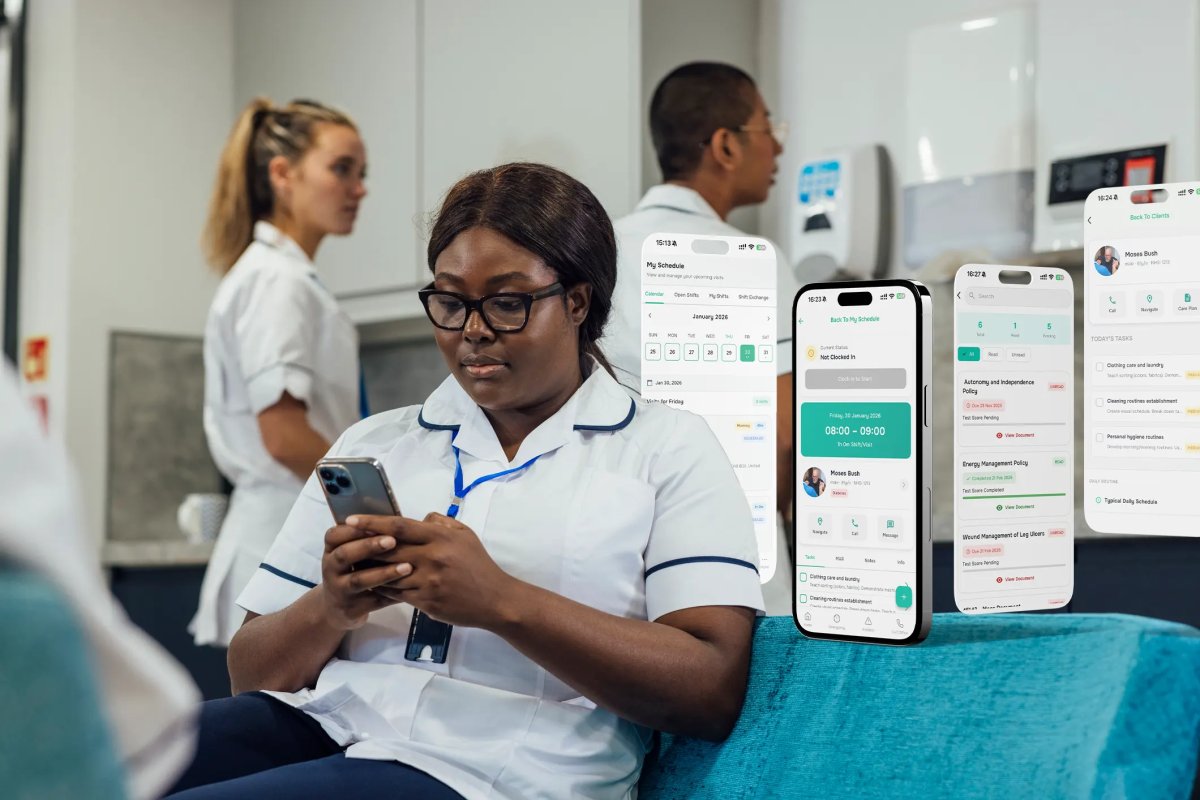
Administrative frustration is a common complaint amongst frontline staff. Asking a carer to navigate a 50-page paper care plan at the start of a 30-minute visit is impractical and stressful. Mobile-first digital care plans allow your team to access service user history and specific preferences instantly on their phones. This immediate access to information empowers them to provide highly tailored care with confidence. When carers can report incidents or receive positive feedback through a digital platform, they feel more engaged with the wider organisation’s mission.
Managing the Financial Squeeze and Operational Margins
Financial sustainability in 2026 requires more than just a full roster of clients. Whilst the demand for social care continues to rise, the gap between local authority fee rates and the actual cost of delivery remains a significant hurdle. One of the most persistent challenges of running a domiciliary care agency is balancing the books whilst maintaining high-quality care standards. At Care Daily, we find that many providers focus heavily on recruitment but overlook the silent costs of administrative inefficiency. Paper-based errors or manual data entry can quickly erode already thin margins, making it difficult to reinvest in your team or equipment.
Rapid growth can also be a double-edged sword. Scaling your agency without robust systems often leads to a breakdown in communication and a spike in overheads. We have seen agencies struggle when they take on more complex packages without a clear view of their financial forecasting. Protecting your business requires a transition to data-driven management where every decision is backed by accurate, real-time figures. You can get started with our financial management tools to gain better control over your agency’s margins.
Reducing Administrative Overhead with Automation
How much time does your office team spend on manual timesheet reconciliation? If you are still using paper logs, you are likely losing hours every week to human error and double-checking. Automating the link between your staff rosters and payroll eliminates these mistakes and ensures your team is paid correctly the first time. The financial benefit of invoicing and payroll integration is clear. It reduces the need for a large back-office team and allows you to focus resources on frontline care delivery where they matter most.
Accurate Billing and Contract Management
Ensuring that every minute of care delivered is accurately billed is essential for survival. This becomes increasingly complex when managing funding splits between local authorities, NHS Integrated Care Boards, and private payers. Digital systems track exactly when a carer arrives and leaves, providing an indisputable record for billing purposes. This level of detail doesn’t just improve your immediate cash flow. It also provides the evidence you need to negotiate better rates with commissioners. When you can prove the complexity and duration of the care you provide with hard data, you are in a much stronger position to ask for fair compensation.
Transitioning to Digital Care Management for Long-Term Resilience
Transitioning from manual processes to a digital framework is often viewed as a daunting mountain to climb. However, the “wait and see” approach to digitisation is no longer a viable strategy in 2026. The regulator’s focus on real-time evidence means that paper-based systems are becoming a liability rather than a familiar comfort. One of the persistent challenges of running a domiciliary care agency is ensuring that documentation is both accurate and accessible at the moment of care. At Care Daily, we find that agencies who embrace digital tools early don’t just improve their compliance; they build a more resilient business that attracts tech-savvy staff who are tired of outdated administrative burdens.
Digital tools aren’t just about replacing paper; they’re about enhancing the safety and quality of the support you provide. By moving to eMAR systems, you create a safety net that protects both your clients and your carers. This transition allows you to focus on the human element of care, knowing that the technical foundations of your service are secure and auditable. It’s a shift from reactive management to a model of proactive, person-centred excellence that benefits every service user in your care.
Implementing eMAR and Digital Care Planning
Eliminating paper MAR sheets is one of the most immediate ways to improve safety within your agency. Manual records are prone to illegible handwriting, missed signatures, and delayed updates, all of which represent significant risks during an inspection. Digital systems provide real-time alerts for missed visits or medication anomalies, allowing your office team to intervene before a mistake becomes a serious incident. These platforms also allow you to create person-centred care plans that evolve alongside the client. When a service user’s needs change, their digital record can be updated instantly, ensuring every carer has the most current information at their fingertips.
Leveraging Data for Continuous Improvement
Data is your most powerful tool for driving service quality. By using digital audits, you can identify subtle trends in falls, skin integrity, or behavioural changes that might be missed in a paper file. This allows for earlier clinical interventions and better outcomes for your clients. For private pay clients, a “Family Portal” acts as a major differentiator, providing relatives with peace of mind through transparent, real-time updates on their loved one’s wellbeing. Ultimately, using granular data to prove the effectiveness of your interventions is exactly how you demonstrate the “well-led” and “effective” criteria required to achieve an Outstanding rating.
Empowering Your Agency for the Years Ahead
Managing the various challenges of running a domiciliary care agency doesn’t have to feel like a constant battle against time and red tape. By embracing a digital-first approach, you can transform your back-office efficiency whilst providing your carers with the emotional security and practical tools they need to thrive. We’ve explored how accurate data and automated systems don’t just protect your margins; they build a foundation for an Outstanding rating and a more sustainable workforce.
At Care Daily, we’re proud to be trusted by 500+ UK care providers who use our platform to simplify their daily operations. Our comprehensive eMAR and rostering tools work in harmony with a CQC compliant policy library updated for 2026, ensuring you stay ahead of the regulator’s evolving requirements. You can book a personalised demo of Care Daily to see how we solve these challenges and help you reclaim your time. You’ve already taken the first step by identifying where your service can grow, and we’re here to help you turn those operational hurdles into a blueprint for clinical excellence.
Frequently Asked Questions
What are the most common reasons domiciliary care agencies fail in the UK?
Financial instability and poor regulatory compliance are the primary reasons for agency failure. Many providers find that the gap between local authority fee rates and the £12.71 National Living Wage makes it difficult to maintain a healthy margin. Without digital oversight, hidden costs like manual timesheet errors can quickly escalate. We find that agencies also fail when they cannot provide the continuous stream of evidence required by the regulator’s Single Assessment Framework.
How can I improve my CQC rating from “Requires Improvement” to “Good”?
To move your rating to “Good”, you must demonstrate a proactive approach to safety and leadership. This involves moving away from paper records and using digital systems to track incidents, medication, and risk assessments in real time. The regulator now places a high value on how you use data to identify trends and improve care outcomes. Showing that you’ve acted on feedback from service users and staff is essential for proving your service is well-led.
How does digital care management software help with staff retention?
Digital care management software improves retention by reducing the administrative burden on your carers. One of the major challenges of running a domiciliary care agency is staff burnout caused by poor communication and disjointed scheduling. By providing instant access to care plans and eliminating manual paperwork, you empower your team to focus on support. Our customers tell us that accurate, automated payroll and fair rostering are the most effective ways to build staff loyalty.
What policies are mandatory for a new domiciliary care agency in 2026?
New agencies must have a robust set of policies covering safeguarding, medication, and data protection. In 2026, you also need mandatory documentation for the regulator’s “Hard Gate” registration process, including a detailed business plan and financial forecasts. Your policies must incorporate the March 2025 updates to the Care Certificate regarding autism and learning disabilities. We provide a library of over 2,000 policies to ensure your agency meets every legislative requirement from day one.
Can I use digital MAR charts for domiciliary care services?
Digital MAR charts are highly effective for domiciliary care and are preferred for their superior safety features. Unlike paper sheets, eMAR systems provide your office team with instant alerts if a dose is missed or recorded incorrectly. This allows for immediate intervention, which is vital when carers are working remotely in service users’ homes. It creates a transparent, auditable record that significantly reduces the risk of medication errors and improves your compliance standing.
How do I manage travel time and mileage for my carers efficiently?
Efficient travel management relies on using intelligent staff rostering to group client visits geographically. This prevents carers from spending unnecessary time on the road and ensures your agency remains profitable. Digital systems automatically calculate travel time and mileage between appointments, providing accurate data for both invoicing and payroll. By reducing travel stress and ensuring fair pay for every mile, you directly address one of the most common causes of staff turnover in the sector.