
In 2026, your business plan is far more than a financial forecast; it is the primary evidence that your agency can deliver safe, person-centred care under the regulator’s Single Assessment Framework. At Care Daily, we find that many providers feel overwhelmed by the prospect of registration or struggle to find a domiciliary care business plan template UK that truly reflects modern standards. You might worry about the risk of rejection or feel unsure how to project your financials when you haven’t yet supported your first client. It’s a common concern, but one that shouldn’t stand in the way of your vision for high-quality care.
We’ve designed this guide to help you master every essential component of a professional plan, ensuring you can launch with confidence and meet every regulatory expectation from day one. You’ll learn how to build a document that satisfies inspectors and provides a clear roadmap for operational efficiency. We will explore how to create realistic 24-month financial projections and demonstrate how digital systems form the backbone of a modern, compliant agency. By the end of this article, you’ll have the clarity needed to turn your professional goals into a sustainable, thriving reality.
Key Takeaways
- Understand why the regulator views your business plan as essential evidence of your management competence and long-term financial sustainability.
- Utilise a comprehensive domiciliary care business plan template UK to clearly articulate your care philosophy and the specific responsibilities of your Registered Manager.
- Learn how to integrate a digital strategy that uses care management software to reduce administrative burdens and enhance service user safety.
- Master the details of financial forecasting by accurately accounting for National Living Wage increases, carer travel time, and essential office overheads.
- Discover how to set a sustainable pricing strategy that balances competitive market rates with the need to provide high-quality, consistent support.
Why Your Domiciliary Care Business Plan is the Key to CQC Registration
When you begin the journey of launching an agency, your business plan acts as your most persuasive piece of evidence. The regulator doesn’t just look for a list of goals; they look for proof that you possess the management competence to run a safe service. A high-quality domiciliary care business plan template UK should do more than secure a bank loan. It must demonstrate that you understand the complex regulatory environment of domiciliary care in the UK. Without this level of detail, new providers often face significant registration delays or even outright rejected applications.
Using a generic template is a common pitfall that we see often. Whilst these documents cover basic marketing and sales, they frequently fail to address the specific safety and quality standards required in health and social care. A care-specific plan shows the regulator that you aren’t just starting a business, but building a sustainable pillar of support for your local community. It bridges the gap between commercial ambition and clinical safety, proving you have a grip on the nuances of the sector.
Meeting the Single Assessment Framework Requirements
Your plan needs to be the foundation for the regulator’s Single Assessment Framework. It should explicitly detail how you will remain Safe, Effective, Caring, Responsive, and Well-led. At Care Daily, we find that the “Well-led” criteria is often where new managers struggle most during the application process. To satisfy this, your roadmap should include clear quality assurance measures and a commitment to digital oversight. Implementing digital care planning from day one shows that you have the systems to monitor service user outcomes in real time, which is a powerful indicator of a well-managed service.
Proving Financial Viability to the Regulator
The regulator has a statutory duty to ensure your business won’t collapse and leave vulnerable clients without support. You must include a detailed 12-month cash flow forecast that accounts for the 2026 National Living Wage of £12.71 per hour. Your plan should also document your “Statement of Financial Viability,” proving you have sufficient contingency funds and appropriate insurance cover. This financial transparency reassures the regulator that your agency is built on stable ground; it’s about protecting the continuity of care for every service user you intend to support.
Core Sections of a Domiciliary Care Business Plan Template
A robust domiciliary care business plan template UK starts with an Executive Summary that acts as your agency’s “elevator pitch.” This isn’t just a dry recap of your goals. It’s the space where you articulate your specific care philosophy and your commitment to preserving service user autonomy. Following this, your Company Overview should detail your legal structure, whether you’re a private limited company or a social enterprise, alongside the professional credentials of your Registered Manager and Nominated Individual.
Market Analysis is where you prove your commercial viability. You need to balance local authority commissioning data with the growing demand for private pay services. Whilst generic guides like the Business Gateway business plan template provide a solid foundation for any startup, your care plan must dive deeper into the local health landscape. This includes a detailed “Services Provided” section that specifies your target service user groups, such as those living with dementia or complex physical disabilities. A tailored SWOT analysis will then help you understand local competitor saturation and identify where existing providers might be failing to meet community needs.
Defining Your Service User Group and Market Position
Success depends on your ability to research local demographics within your specific borough. You must ask whether you’re targeting the elderly or if there’s a lack of support for younger adults with learning disabilities. Identifying gaps in local provision, such as specialist complex care or night sits, allows you to establish a unique selling point (USP) rooted in person-centred care principles. This level of specificity shows the regulator and potential investors that you aren’t just guessing; you’re responding to a genuine social need with a tailored solution.
The Management Team and Organisational Structure
Your organisational structure must document the qualifications and experience of your leadership team. It’s vital to show a clear path for growth, outlining when you’ll hire coordinators, supervisors, and field lead carers as your service user base expands. At Care Daily, we find it’s most effective to link these roles directly to your digital care management software UK. This ensures every team member, from the office to the domestic setting, operates within a framework of total oversight and safety. If you’re ready to build these foundations, you can explore our compliance tools to see how they fit into your operational roadmap.
Operational Strategy: Technology and Policy Compliance
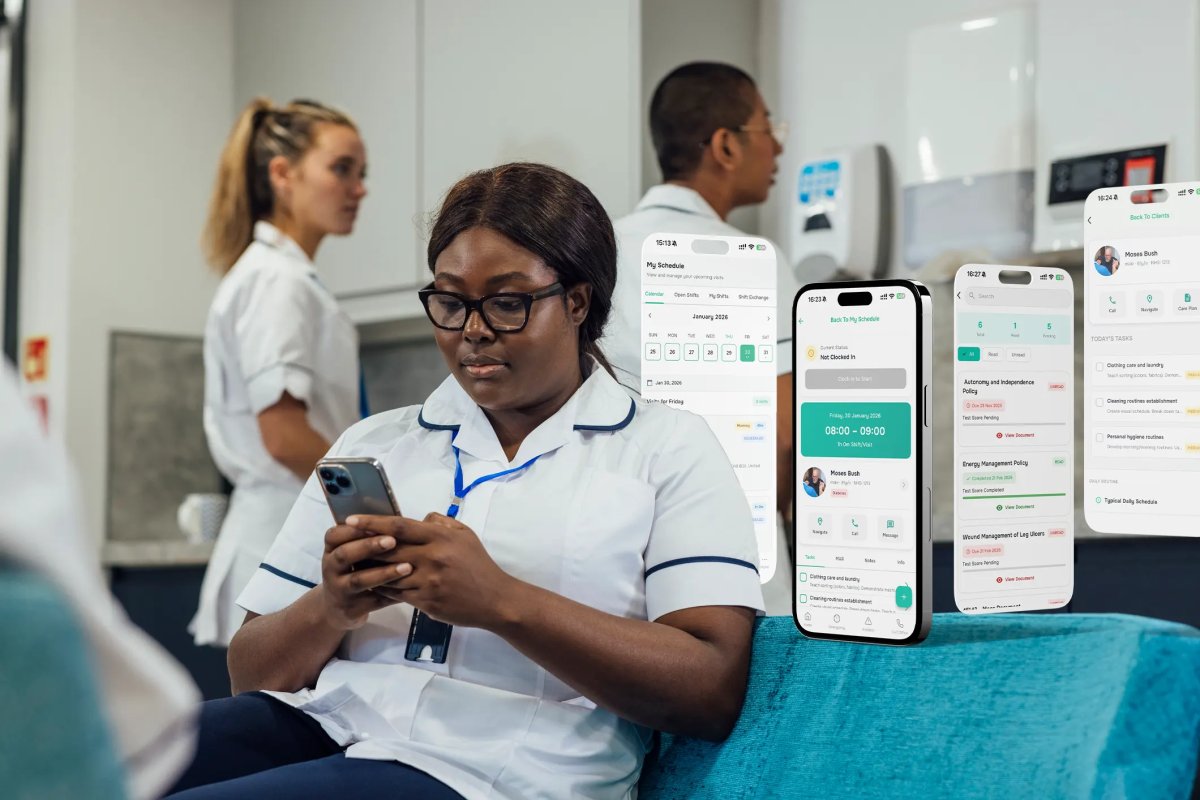
In 2026, a static paper-based plan is no longer sufficient for a modern agency. Your domiciliary care business plan template UK must include a dedicated “Digital Strategy” section to prove you can meet the regulator’s data-driven expectations. Implementing digital care planning does more than modernise your office; it actively reduces administrative overhead and enhances service user safety by providing real-time visibility into care delivery. We’ve seen that providers who embrace technology from the start are better equipped to achieve high ratings because they can evidence quality outcomes at the touch of a button.
Your operational strategy should also detail a robust recruitment and training plan. This must account for the updated Care Certificate standards introduced in March 2025, which now require mandatory awareness of learning disabilities and autism. By documenting how you will attract, vet, and retain skilled carers, you show the regulator that you have a sustainable workforce strategy. A high-quality policy and procedure library acts as the foundation for this work, ensuring every team member follows consistent, safe practices in every domestic setting.
Choosing Digital Systems for Efficiency and Safety
Safety is the cornerstone of any care service. Incorporating an eMAR system into your business plan demonstrates a proactive approach to medication safety and auditing. This technology significantly reduces the risk of missed doses and provides an immediate digital trail for inspectors. Digital rostering is equally vital; it ensures visit consistency and prevents the “missed calls” that often lead to safeguarding concerns. At Care Daily, we find that providers who plan for these digital systems early save significantly on long-term admin costs whilst providing a more reliable service for their clients.
Building a Robust Policy and Procedure Library
Your business plan must reference a comprehensive set of “live” policies that guide your daily operations. These are not documents to be filed away; they must be updated constantly to reflect legislative changes. Essential policies to include in your roadmap are:
- Safeguarding and Whistleblowing
- Complaints and Feedback Management
- Infection Prevention and Control
- GDPR and Data Security
- Safe Recruitment and DBS Checking
- Emergency Contingency Planning
Using professionally written templates rather than starting from scratch ensures that your documentation is legally sound and meets the latest regulatory requirements. This approach allows you to focus your energy on delivering person-centred support rather than getting bogged down in technical writing. To ensure your agency is built on a foundation of total compliance, you can start your compliance journey today with our library of over 500 tailored templates.
Financial Forecasting and Sustainability for Care Agencies
Financial forecasting is the engine that drives your agency’s long-term sustainability. When completing a domiciliary care business plan template UK, you must account for the rising operational costs of 2026. This includes staff wages, employer National Insurance, and the legal requirement to pay for travel time between calls. Whilst office overheads like rent and utilities are predictable, your biggest variable is your workforce. You need to ensure your margins are healthy enough to absorb these costs without compromising the quality of support provided in the domestic setting.
Pricing your services is a delicate balancing act. You must remain competitive within your local authority’s framework whilst ensuring you can afford a “Care Wage” premium to attract and retain the best talent. Unlike other sectors where break-even points are based on unit sales, domiciliary care relies on the volume of billable hours versus the fixed costs of your office team and compliance software. A dedicated marketing budget is also essential; it allows you to reach private pay clients who often provide the higher margins necessary for business growth.
Revenue Models: Commissioning vs Private Pay in Your Domiciliary Care Business Plan Template UK
Local authority contracts offer high volume and stability, but margins are often tight and subject to strict commissioning limits. Private pay clients typically offer higher margins, though they require more intensive marketing and a highly tailored service approach to attract. At Care Daily, we find that a “mixed economy” model is often the safest route to financial resilience. You can project income by estimating the average weekly care hours per service user; our customers tell us that starting with an assumption of 12 to 15 hours for basic support is a grounded starting point for most forecasts.
Staffing Costs and Recruitment Strategies
Staffing is your primary investment and your most significant risk. As of April 2026, the National Living Wage is £12.71 per hour, but many successful providers choose to pay a premium to reduce turnover. Your forecast must include the £38 fee for enhanced DBS checks, plus umbrella body admin fees which typically range from £10 to £15. Don’t forget to factor in uniforms and the cost of the initial 16-standard Care Certificate induction training. Aligning your recruitment roadmap with your projected service user intake ensures you don’t pay for idle staff or turn away referrals due to lack of capacity. If you’re ready to see how digital tools can help you manage these costs, you can view our pricing and software options.
Mastering these financial details is the final step in creating a domiciliary care business plan template UK that stands up to scrutiny. By balancing compassionate care with commercial discipline, you can build an agency that is both compliant and profitable for years to come.
Building Your Foundation for 2026 and Beyond
Launching a care agency is a deeply rewarding commitment to your local community. By focusing on a robust domiciliary care business plan template UK, you’ve already taken the first step toward building a service that prioritises both safety and person-centred care. We’ve explored how your plan serves as vital evidence for the regulator, proving that your agency is well-led and financially stable from the outset. You now understand that modern operations require a digital-first approach to ensure every service user receives consistent, high-quality support in their own home.
At Care Daily, we’re here to support you through every stage of this journey. We offer a library of 500+ professionally written templates that are fully aligned with the latest regulator frameworks. These documents are trusted by care managers across the country to provide a stable foundation for their policies and procedures. You don’t have to navigate these complex requirements alone; we can provide the tools you need to succeed. Download our CQC-compliant domiciliary care policy templates to kickstart your business plan and take the next step with confidence. We look forward to seeing your agency thrive.
Frequently Asked Questions
Does the regulator provide a business plan template for new providers?
The regulator does not provide a specific business plan template for new providers. They expect you to develop a bespoke document that demonstrates your unique care philosophy and management competence. Whilst they offer guidance on the information they need to see, using a professional domiciliary care business plan template UK helps ensure you don’t miss the critical compliance details required for a successful registration.
How long should a domiciliary care business plan be for a startup?
A comprehensive startup plan usually spans between 20 and 30 pages. It needs to be long enough to cover your market research, operational strategy, and three year financial projections in detail. Quality is always more important than quantity; a concise document that clearly explains how you’ll keep service users safe is far more effective than a lengthy one filled with generic industry filler.
What is a financial forecast for a care agency and why do I need one?
A financial forecast is a detailed projection of your agency’s expected income and expenditure over a specific period, usually 12 to 24 months. You need one to prove to the regulator that your business is sustainable and won’t suddenly close, leaving vulnerable clients without support. It must account for the 2026 National Living Wage of £12.71 per hour and employer contributions to remain realistic.
Do I need a business plan to secure a bank loan for my care business?
Yes, a business plan is essential if you intend to secure a bank loan or private investment. Lenders use this document to assess the level of risk involved in your startup and to see if your revenue model is viable. They’ll look closely at your break-even point and your strategy for attracting private pay clients to ensure you can meet your repayment obligations.
How often should I update my domiciliary care business plan?
You should ideally review and update your domiciliary care business plan template UK at least once a year. It’s also vital to refresh the document whenever there’s a significant change in legislation, a rise in the National Living Wage, or if you decide to expand your service user groups. Regular updates ensure your operational roadmap stays aligned with the current regional care landscape.
What are the most common mistakes in care agency business plans?
The most common mistakes include overestimating how quickly you can recruit carers and failing to factor in the cost of staff travel time. Many new providers also forget to include a digital strategy, which is now a core expectation under the regulator’s Single Assessment Framework. At Care Daily, we find that plans which rely on manual, paper based auditing often struggle to prove management oversight during the registration process.