

If your documentation hasn’t evolved since the CQC fully transitioned to its Single Assessment Framework in late 2023, you’re likely managing a legacy of risk rather than a culture of care. Keeping your domiciliary care policies and procedures up to date is a daunting task, and we know how exhausting it feels to stare at a mountain of paperwork while trying to keep your focus on the dignity of the people you support. It’s difficult to feel truly confident when you’re worried a single outdated paragraph could lead to a "Requires Improvement" rating during your next unannounced inspection.
We’ve created this comprehensive guide to help you master your compliance for 2026, giving you the peace of mind that your agency is both safe and compassionate. You’ll find a clear, actionable checklist covering everything from bespoke safeguarding protocols to the latest digital record-keeping standards required for the year ahead. This toolkit ensures your staff aren’t just ticking boxes, but are delivering the high-quality, person-centred support that defines your service. We’ll walk through the essential updates needed to keep your agency running smoothly and your clients feeling secure in their own homes.
Key Takeaways
-
Learn how to align your service with the CQC "Well-led" domain by establishing robust domiciliary care policies and procedures that ensure safety and transparency.
-
Discover how to categorise your documentation into logical clinical "buckets," making it easier for your dedicated professionals to provide bespoke, person-centred support.
-
Access our ultimate checklist of mandatory documents, specifically designed to help you navigate your next inspection with total confidence and peace of mind.
-
Understand the vital importance of regular review cycles to ensure your policy library remains compliant with the latest UK legislative changes and healthcare standards.
-
Explore how to future-proof your agency with professionally written resources that protect the dignity of your clients and the long-term integrity of your care team.
Table of Contents
What are Domiciliary Care Policies and Procedures?
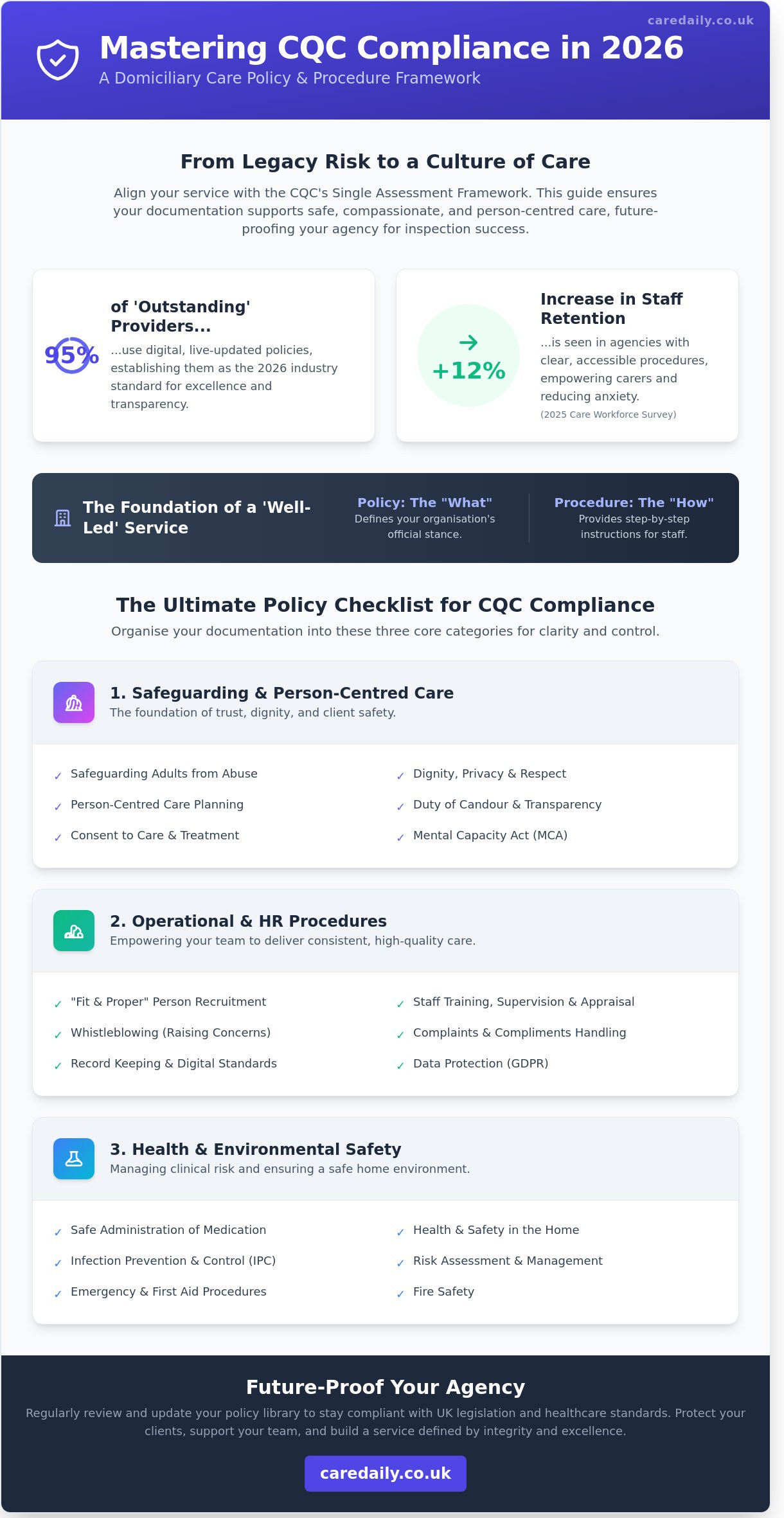
At its heart, What is Domiciliary Care? It’s a commitment to supporting independence within the sanctuary of one’s own home. To deliver this safely, every agency relies on domiciliary care policies and procedures. These documents are the operational DNA of your service. A policy defines the "what," such as your organisation’s official stance on safeguarding or medication. The procedure outlines the "how," providing the step by step instructions a carer must follow during their visit.
Robust documentation is the foundation of the CQC "Well-led" domain. When an inspector visits, they look for evidence that your leadership is effective and your culture is transparent. By 2026, digital, live-updated policies have become the industry standard for the 95% of providers rated "Outstanding." This level of detail offers families vital peace of mind. It transforms care from a series of random tasks into a structured, reliable service that protects both the client and the professional.
The Legal Framework in 2026
Compliance is the baseline of safety. The Health and Social Care Act 2008 (Regulated Activities) Regulations 2014 remains the primary legislation, but the way we meet these standards has evolved. While you can find templates online, the CQC expects your domiciliary care policies and procedures to be bespoke. Generic documents don’t account for the specific risks of your local area or the unique health needs of your clients. Since the 2025 regulatory updates, inspectors focus heavily on how policies are actually lived out in daily practice, rather than just how they look in a folder. Many providers are now exploring professional domiciliary care policies and procedures for sale to ensure their documentation meets these exacting standards.
Policies as a Tool for Staff Empowerment
Clear instructions shouldn’t feel restrictive. They provide a safety net for your dedicated professionals. When a carer knows exactly how to handle a medication error or a sudden change in a client’s condition, their confidence grows. Key benefits include:
-
Reduced Anxiety: Staff feel supported when they have clear guidelines to follow in difficult situations.
-
Better Retention: Data from the 2025 Care Workforce Survey showed that agencies with accessible, clear procedures saw a 12% increase in staff retention.
-
Consistency: Whether a client lives in a rural village or a city flat, they receive the same high standard of dignified care.
Ultimately, well-understood policies lead to positive client outcomes. When your team understands the "why" behind their actions, they provide care that is compassionate, legal, and deeply personal.
Essential Policy Categories for CQC Compliance
We recommend organising your documentation into logical "buckets" to prevent management fatigue. This structure ensures that your domiciliary care policies and procedures remain accessible and easy to update. A well-ordered system projects a sense of calm and reliability, reflecting the high standard of care you provide. Your policies should act as a compass for your team, providing the grounded, expert guidance needed to handle complex situations with compassion.
By categorising your documents, you create a framework that supports both your staff and the families who rely on you. This clarity is essential for maintaining a "Good" or "Outstanding" CQC rating. We focus on three core areas: clinical care, people management, and environmental safety. These categories ensure that every aspect of the individual’s journey is covered, from the first assessment to daily home-based support. Understanding how these categories align with the five CQC domains can help you structure your documentation more effectively for the Single Assessment Framework.
Safeguarding and Person-Centred Care
Safeguarding is the foundation of trust between a provider and a family. We believe every person has the right to live free from harm while maintaining their independence. Your policies must reflect The Ultimate Domiciliary Care Policies and Procedures Checklist, ensuring that dignity and privacy are respected in every visit. Transparency is equally crucial. A robust Duty of Candour procedure ensures that if things go wrong, you communicate openly with families, fostering a culture of honesty.
Operational and HR Procedures
Your carers are more than just staff; they are dedicated professionals and companions. Recruitment policies must be rigorous to ensure every individual is "fit and proper" for their role. It is essential to create a safe space for whistleblowing, as 2024 data shows that services with open-door cultures have significantly higher staff retention rates. Complaint handling shouldn’t be feared. Instead, view every piece of feedback as a valuable opportunity to refine your bespoke support and improve quality of life.
Health and safety protocols must extend into the home to ensure it remains a safe sanctuary. This involves managing environmental risks, such as trip hazards or infection control, to provide total peace of mind for loved ones. If you need help tailoring these documents to your specific service, a bespoke care assessment can provide the clarity you need to move forward with confidence.
The Ultimate Domiciliary Care Policies and Procedures Checklist
You need a robust framework to ensure every companion provides safe, compassionate support in the sanctuary of a client’s home. Your domiciliary care policies and procedures aren’t just paperwork; they’re the foundation of trust between your agency and the families you serve. By aligning your documents with the UK Domiciliary Care Regulations, you create a sanctuary of safety for clients and a clear roadmap for your dedicated professionals.
Mandatory Care Delivery Policies
These documents focus primarily on the "Safe" and "Effective" CQC domains. They ensure clinical competence is met with genuine human warmth and precision.
-
Medication Management: You must include detailed eMAR (Electronic Medication Administration Record) procedures. Digital logging reduces administration errors by up to 45% compared to traditional paper systems.
-
Infection Prevention and Control (IPC): Detail specific protocols for the home environment. This includes hand hygiene, correct PPE usage, and safe waste disposal in a domestic setting.
-
End of Life Care: This policy prioritises dignity through advanced care planning. It ensures a bespoke approach to a client’s final wishes and spiritual needs.
-
Moving and Handling: Manual handling accounts for roughly 24% of all social care workplace injuries. Your policy must mandate annual practical training and individualised risk assessments for every home.
Governance and Safety Policies
Governance ensures your agency remains "Well-led" and "Responsive" even during unexpected challenges or system failures.
-
Data Protection and GDPR: Secure every piece of sensitive health information. Ensure your digital platforms use end-to-end encryption for all personalised care plans and staff records.
-
Business Continuity: You need a specific plan for emergency scenarios like extreme weather or tech outages. This ensures continuity of care for vulnerable clients when the unexpected happens.
-
Incident and Accident Reporting: Create a digital audit trail for every event. Logging "near misses" as well as accidents allows you to learn and improve, rather than just reacting to crises.
-
Lone Working: Your staff are your greatest asset. Implement GPS check-ins or "buddy systems" to protect carers as they move between appointments in the community.
To maintain compliance in 2026, strict version control is vital for your domiciliary care policies and procedures. Every document should feature a clear header with a version number, the date of the last review, and the scheduled date for the next update. We recommend a full audit of your document library every 12 months. This structured approach provides the peace of mind that your agency is always prepared for a CQC inspection and, more importantly, provides the highest quality of life for those in your care.
Managing and Updating Your Policy Library
Creating your domiciliary care policies and procedures isn’t a one-time task. It’s the start of a living commitment to your clients and your team. A "set and forget" approach is dangerous because the UK care landscape shifts rapidly. If your manuals haven’t been touched since January 2025, they likely miss the latest CQC Quality Statements or updated Health and Safety Executive guidelines. This gap doesn’t just risk a lower inspection rating; it compromises the safety of the people you support in their own homes. For agencies struggling to keep up with these constant changes, investing in professionally written domiciliary care policies and procedures for sale can provide the robust foundation needed for ongoing compliance.
We’ve seen that clear communication is the bridge to better care. When you update a procedure, don’t just send an email. Use your team meetings to explain the "why" behind the change. This helps your dedicated professionals understand how the new rule protects their clients’ dignity and independence. It transforms a dry administrative update into a meaningful improvement in service quality.
The Annual Review Cycle
We recommend moving away from a single, stressful yearly audit. Instead, schedule 45-minute "deep dives" on the first Tuesday of every month. Focus on one specific area, such as medication management or safeguarding. You should invite at least two frontline companions and one service user to provide feedback. This collaborative approach ensures your rules reflect real-world care. Documenting these sessions provides clear proof of proactive governance for your next CQC inspection.
Moving from Paper to Digital
Paper folders are a legacy of the past that create unnecessary friction. They lead to lost pages, coffee stains, and version confusion. Data from 2024 showed that 82% of domiciliary providers rated "Outstanding" have transitioned to digital policy libraries. Digital systems allow you to push instant updates to your entire workforce’s mobile devices. Your staff can check a procedure while on a home visit, ensuring they always have the right information at their fingertips. This transition builds peace of mind for both your staff and the families who trust you. Understanding how to implement CQC compliant care policies and procedures within a digital framework can significantly streamline your transition and ensure your documentation meets the latest Quality Statements.
To see how we can help you streamline your documentation and improve quality, explore our bespoke care management support today.
Future-Proofing Compliance with Care Daily
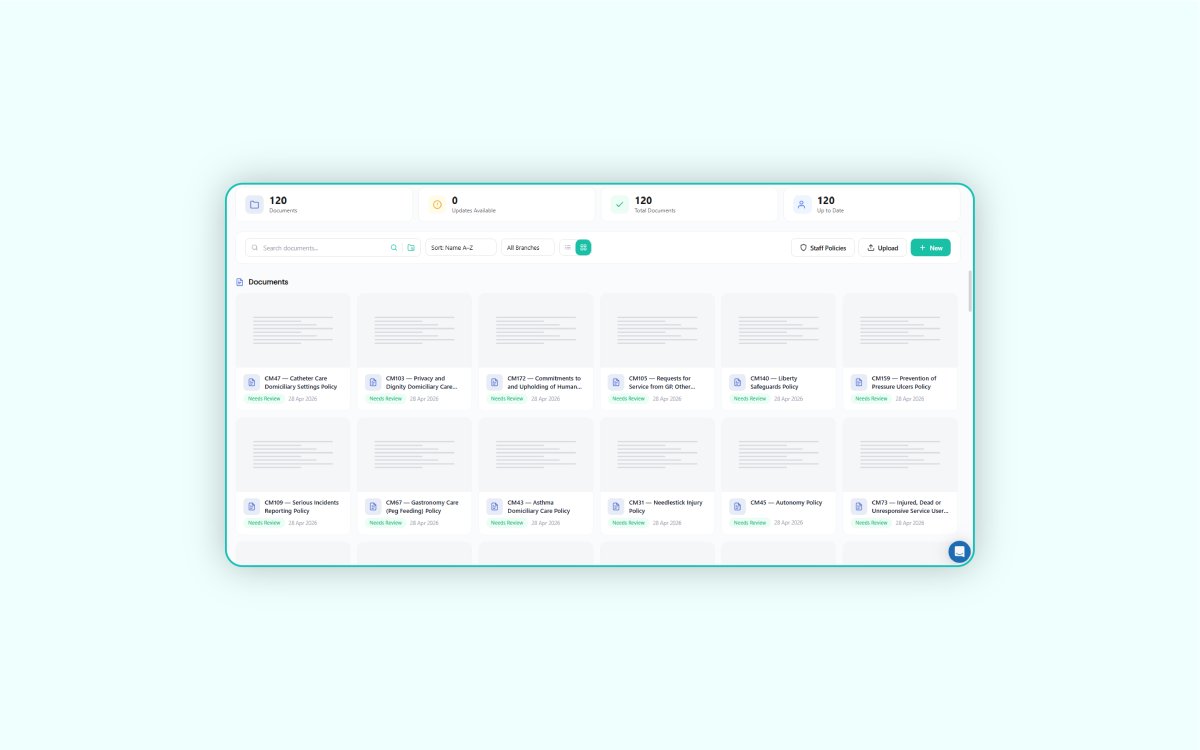
Managing a modern agency requires more than just clinical skill. It demands a robust digital infrastructure that grows with you. Our Care Daily Policy Library provides over 2,000 professionally written documents designed to keep your service safe and compliant. You won’t have to worry about manual updates when regulations shift. We push automatic updates to your system as soon as legislative changes occur. This ensures your domiciliary care policies and procedures remain current for the 2026 standards without you lifting a finger.
By integrating these documents directly with your digital care planning and rostering, you eliminate the disconnect between written rules and daily practice. This synergy reduces administrative tasks by roughly 12 hours every week for a typical branch manager. It gives you back the time needed to focus on the human side of care. We believe that technology should serve the carer, not the other way around. Our platform acts as a calm, reliable partner in an often turbulent regulatory environment.
Bespoke Solutions for Domiciliary Providers
Every person you support is an individual. Your documentation should reflect that same level of care. You can easily customise our templates to mirror your agency’s unique values and bespoke approach to home-based support. If you’re currently managing 50 or more paper files, we’ll guide your transition to digital records with dedicated professional support. Our team provides hands-on training to ensure your staff feel confident using the new system from day one. This move protects your data and preserves the dignity of those you serve.
Achieving Peace of Mind for Your Next Inspection
Preparing for a CQC inspection shouldn’t cause sleepless nights. You can use our compliance tools to generate instant reports that demonstrate your service’s safety and effectiveness. Digital reading logs provide clear proof that 100% of your staff have engaged with the latest domiciliary care policies and procedures. This transparency is vital for achieving a ‘Good’ or ‘Outstanding’ rating under the Single Assessment Framework. It’s about showing the heart and the evidence behind your operations. Book a demo to see our CQC-compliant policy library in action and secure your peace of mind today.
Securing Your Service’s Future and Peace of Mind
Managing a care service is a significant responsibility. You’re balancing the safety of your staff with the dignity and independence of those you support every single day. As we look toward 2026, maintaining robust domiciliary care policies and procedures isn’t just a regulatory hurdle; it’s the foundation of your commitment to excellence. We know that the CQC landscape changes quickly. Staying ahead of these shifts can feel overwhelming when you’re prioritising daily care and the well-being of your clients.
Our team has supported UK care providers for over 5 years, helping them navigate the complexities of compliance with confidence. We provide access to over 2,000 CQC-compliant policy templates that reflect the latest standards. Every document includes automatic legislative updates, so you’ll never have to worry about your library falling behind. It’s about giving you the time to focus on what truly matters: the people in your care. You deserve a system that works as hard as you do. For those looking to ensure their service is fully prepared for regulatory scrutiny, our comprehensive CQC inspection checklist for 2026 provides the step-by-step guidance needed to approach any inspection with confidence.
Download our CQC Compliance Checklist and explore our Policy Library to start future-proofing your service today. You’re doing vital work for your community, and we’re here to help you every step of the way.
Frequently Asked Questions
How often should domiciliary care policies and procedures be reviewed?
You should review your domiciliary care policies and procedures at least every 12 months to ensure they remain compliant with the Health and Social Care Act 2008. It’s also vital to update them immediately if the Care Quality Commission (CQC) issues new guidance or if a safety incident occurs within your service. Keeping these documents current protects your clients and ensures your dedicated professionals provide the safest home-based support possible.
What are the mandatory CQC policies for a new domiciliary care agency?
To register in 2026, you must have at least 15 core policies including Safeguarding, Medication Management, and Recruitment. These documents must align with the CQC’s Quality Statements which replaced the old Key Lines of Enquiry in 2024. Having a bespoke Safeguarding policy ensures that your team understands exactly how to protect the dignity and independence of every individual you support.
Can I use generic policy templates for my care agency?
You can use templates as a starting point, but the CQC requires you to tailor them to your specific service. Generic documents often fail inspections because they don’t reflect your unique local area or your specific staff structure. We suggest personalising every procedure to reflect the bespoke care you provide, ensuring that your promise of continuity of care is backed by actual, workable plans.
How do I prove to the CQC that staff have read the policies?
You can provide evidence through digital signature logs or completed competency quizzes that show a 100% pass rate. Inspectors look for more than just a signature; they often interview dedicated professionals to ensure they actually understand the procedures. Using a digital system allows you to track that every member of your team has engaged with the latest updates, giving you peace of mind during an unannounced visit.
What is the difference between a policy and a procedure in social care?
A policy is your agency’s commitment to a specific standard, like ensuring client dignity, while a procedure is the step-by-step guide on how to achieve it. For example, your Medication Policy states you’ll manage drugs safely, but the procedure lists the six specific steps for recording a dose on a MAR chart. This clarity helps your team provide reliable, home-based support without any confusion or hesitation.
Do I need different policies for care in Scotland or Wales compared to England?
Yes, because care is regulated by different bodies: the CQC in England, the Care Inspectorate in Scotland, and Care Inspectorate Wales. Each nation has its own distinct standards, such as the Health and Social Care Standards in Scotland. You must ensure your domiciliary care policies and procedures reference the specific 2026 legislation relevant to your location to remain legally compliant and provide the best local expertise.
How can digital care management software help with policy compliance?
Digital platforms automate the review cycle and alert you the moment a policy becomes overdue for its 12-month check. These systems allow your team to access the latest procedures on their mobile devices while they are out providing care, ensuring they always have the right information at their fingertips. It’s a modern way to maintain the safety and quality of life for your clients while reducing administrative stress.
What happens if our agency is found to have outdated policies during an inspection?
If the CQC finds your policies are outdated, they may issue a Requires Improvement rating or a formal Warning Notice under Section 29 of the Health and Social Care Act. In 2023, several agencies faced fines exceeding £2,000 for failing to maintain accurate records. Keeping your documents updated isn’t just a legal chore; it’s a vital part of protecting the sanctuary of your clients’ homes.