

What if the secret to a stress-free inspection wasn’t found in a frantic weekend of filing, but in the small, digital footprints your team leaves every day? At Care Daily, we understand the pressure of trying to translate high-quality, person-centred care into the rigid documentation a regulator requires. It’s easy to feel overwhelmed by the volume of prompts, especially whilst the CQC transitions from the familiar Key Lines of Enquiry to the new Single Assessment Framework. Finding the right CQC KLOEs evidence examples can feel like chasing a moving target when your priority is simply looking after your clients.
We’ve listened to our customers’ concerns about being downgraded due to paperwork gaps, so we’ve put together a practical guide to help you stay ahead. You’ll discover how to align your daily records with the 34 Quality Statements that now define excellence under the regulator’s new assessment model. We’ll provide a clear checklist of evidence for every key question, giving you the confidence to show how your service excels. From digital care plans to real-time incident reporting, we’ll explore how an organised approach to compliance makes the next inspection a celebration of your hard work rather than a source of anxiety.
Key Takeaways
- Understand the shift from traditional Key Lines of Enquiry to the new Single Assessment Framework and how this changes your day-to-day approach to gathering evidence.
- Identify specific CQC KLOEs evidence examples for the ‘Safe’ and ‘Effective’ questions, including digital eMAR records and ‘lessons learned’ from incident logs.
- Learn how to document the ‘voice’ of the service user to provide clear proof of person-centred care that meets the ‘Caring’ and ‘Responsive’ criteria.
- Explore how to organise your compliance records into a digital audit trail that gives you confidence and clarity during any regulatory assessment.
- Discover the benefits of a centralised policy library to ensure your staff are consistently following the latest best-practice guidelines.
Understanding the 5 CQC Key Questions and the Role of Evidence
The Care Quality Commission (CQC) organises every assessment around five fundamental questions. These ask if a service is safe, effective, caring, responsive to people’s needs, and well-led. Although the regulator transitioned to the Single Assessment Framework (SAF) in early 2024, the spirit of the original Key Lines of Enquiry still deeply informs the prompts inspectors use today in 2026. Evidence is the bridge between the care you provide and the rating you receive; it must prove both legal compliance and, more importantly, positive outcomes for your service users.
Inspectors rely on a process called triangulation to verify the quality of your service. This means they don’t just look at a single document; they compare your written records against their own observations and the feedback gathered from clients, families, and your staff. When you are looking for CQC KLOEs evidence examples, it’s vital to focus on records that show a direct link between a staff action and an improvement in a client’s quality of life. At Care Daily, our customers tell us that having a centralised, easily accessible evidence base is what turns inspection dread into a moment of professional pride.
The Move from Paper to Digital Evidence Trails
The era of the bulky, overstuffed ring-binder is ending. Modern inspections increasingly favour real-time digital dashboards that offer a transparent view of daily operations. Physical folders are often static and difficult to update, whereas a digital document library ensures your team is always working from the most recent, approved policies. Date-stamped records are particularly powerful because they prove that your service is well-led and proactive rather than reactive. This “always-ready” digital evidence base allows you to demonstrate consistency over months and years, rather than just in the weeks leading up to an assessment.
How Inspectors Use Evidence to Determine Ratings
The difference between a “Good” and an “Outstanding” rating often comes down to the depth of your documentation. The regulator uses 34 Quality Statements to assess performance, focusing on “We” statements that describe your commitments as a provider. We often see “Inadequate” ratings in reports where the actual care delivered was high, but the “lack of evidence” made it impossible for the inspector to verify safety or effectiveness. By using robust CQC KLOEs evidence examples within your care planning system, you ensure that every interaction, from a medication check to a person-centred activity, is captured as a permanent record of your excellence.
Demonstrating Safety and Effectiveness: Practical Evidence Examples
Proving your service is safe begins with showing how you handle the unexpected. A regulator doesn’t expect a service to be incident-free; they expect a service that learns. For example, your incident logs should detail not just the event, but a clear “lessons learned” section that led to a change in practice or a revised risk assessment. When gathering CQC KLOEs evidence examples, ensure your recruitment files are impeccable, containing up-to-date DBS checks and verified right-to-work documentation for every carer. This baseline of safety is strengthened when you can demonstrate robust medication management through digital systems that prevent missed doses before they occur.
Effectiveness is about more than just completing tasks; it’s about the quality of the initial assessment and the ongoing monitoring of health. We recommend involving the client and their family from the very first meeting to ensure the care plan is truly co-produced. Rather than relying solely on training certificates to prove staff competence, use supervised practice observations to show that your team can apply their knowledge in a domestic setting. This provides tangible evidence that your staff don’t just know the theory but can deliver high-quality support safely.
Proving Safety through Risk Management and eMAR
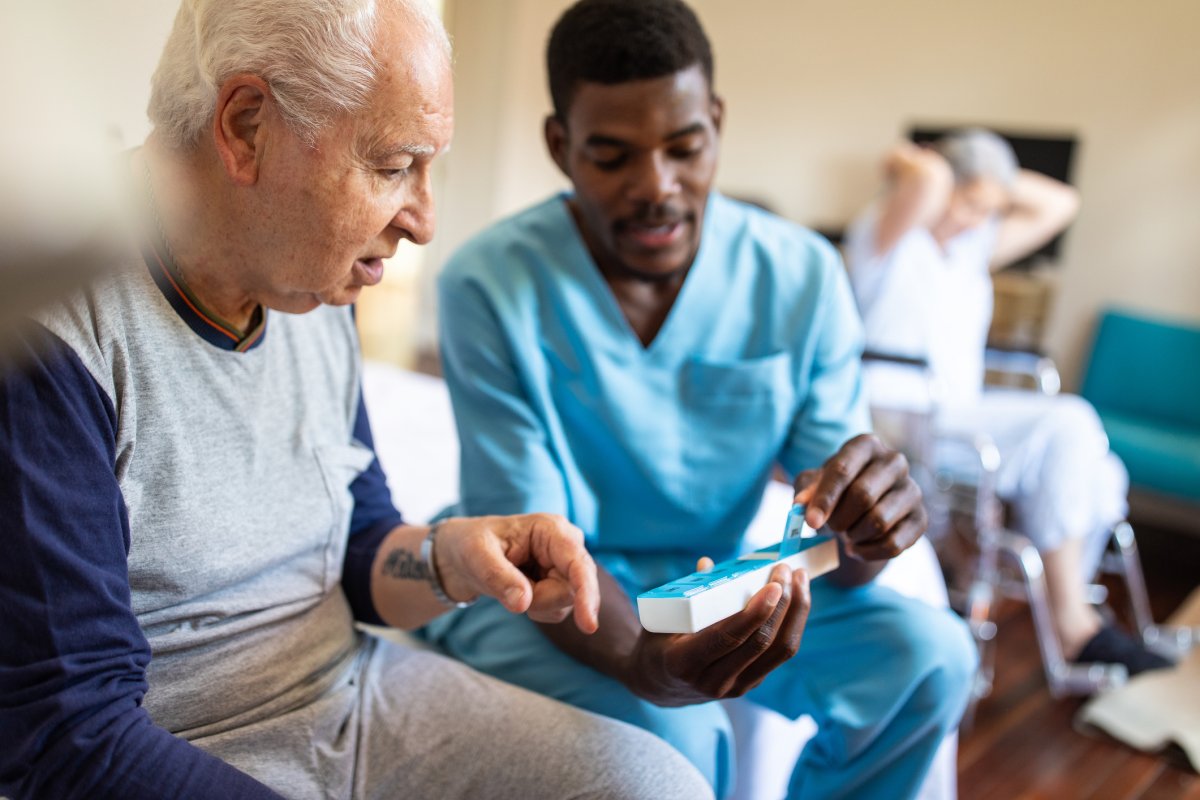
Digital MAR charts provide a definitive audit trail, allowing you to show 100% compliance or immediate, documented responses to alerts. Our customers often use “near-miss” reporting to prove a proactive safety culture. By documenting these events, you show you’re identifying risks before they cause harm. Equally important is evidencing how you balance safety with a client’s autonomy. Environmental risk assessments shouldn’t just list hazards; they should record the collaborative decisions made to support a service user’s right to take positive risks within their own sanctuary.
Evidencing Effective Care and Evidence-Based Outcomes
To prove effectiveness, your records must show that care is based on the latest evidence and leads to real results. Using digital care planning allows you to demonstrate how a care plan is a living document, updated the moment a client’s needs shift. For instance, if you’re monitoring nutrition and hydration, your evidence should highlight the specific health interventions triggered by a change in a service user’s weight or fluid intake. This proves your team follows current legislation and NICE guidelines in practice, rather than just on paper. If you’re looking to streamline this process, you might find it helpful to explore how a structured compliance platform can help.
Evidencing the Human Side: Caring, Responsive, and Well-led
Whilst safety and effectiveness form the bedrock of your service, the regulator looks for the heart of your care through the Caring and Responsive questions. Proving that your team is compassionate requires moving beyond task-based records. We find that the most effective CQC KLOEs evidence examples for these categories are those that capture the unique voice and preferences of the service user. Rather than a daily note stating “client supported with breakfast”, an Outstanding-rated service might record “supported Margaret to prepare her favourite poached eggs, respecting her wish for a slower morning routine.”
Being responsive means showing how you listen and adapt. Your evidence should include a clear log of how complaints or suggestions were handled, but crucially, it must show the loop being closed. If a family member suggested a change to the visit timing, your records should document that change and the subsequent improvement in the client’s wellbeing. This proactive approach proves you aren’t just meeting a contract; you’re responding to a human being. It demonstrates that your service is flexible enough to put the individual first.
Documenting Compassion and Personalised Care
Recording “soft” evidence is often the hardest part of compliance. We encourage our customers to digitise thank-you cards and family feedback, attaching them directly to staff or client records as tangible proof of impact. Dignity is evidenced by the language used in daily notes; staff should describe clients as active participants in their care, not passive recipients. This is especially vital in end-of-life care planning, where you must prove that cultural, spiritual, and personal wishes are not only recorded but strictly honoured during the most sensitive times.
Proving Leadership and Continuous Improvement
A well-led service is transparent and collaborative, guided by a Statement of Purpose that acts as a living document rather than a forgotten file. Your evidence base should include minutes from staff meetings that demonstrate a genuine “Freedom to Speak Up” culture, where carers feel safe to raise concerns or suggest better ways of working. Inspectors look for proof of partnership working, so keep records of your communications with GPs, district nurses, and local authorities. These interactions prove you are part of a wider professional network dedicated to the health of your service users.
To ensure your service remains at this high standard, regular audits of medication, health and safety, and care plans are essential. These shouldn’t be tick-box exercises; they must result in clear action plans that show you are constantly striving for better. If you need help structuring your compliance records to reflect this level of leadership, you can start building your digital evidence trail today.
Organising Your Evidence: Best Practices for an Outstanding Rating
Achieving an Outstanding rating isn’t about doing more work in the final week before an inspection; it’s about organising your daily actions into a coherent story of care. To move from compliance to excellence, you must first map your existing policies and records against the five key questions. This ensures there are no blind spots in your documentation. We recommend implementing a digital policy library to guarantee that every carer is accessing the most up-to-date, best-practice guidelines at the point of care.
Proactive managers don’t wait for the regulator to arrive. Instead, they conduct regular “mock inspections” using the regulator’s own prompts to identify gaps early. You can further strengthen your “Caring” evidence by using a family portal to gather real-time feedback, creating a constant stream of positive testimonials and suggestions. Finally, review your data trends monthly. By identifying patterns in falls, medication errors, or missed calls, you can mitigate risks before they become significant issues. This structured approach ensures you always have a wealth of CQC KLOEs evidence examples ready for review.
Creating a Robust Digital Audit Trail
In the eyes of the regulator, if it isn’t written down, it didn’t happen. This cardinal rule makes a robust digital audit trail indispensable. Unlike paper records, which can be misplaced or illegible, digital systems automatically log the time, date, and the specific carer responsible for every action. This level of accountability is incredibly persuasive during an assessment. When an inspector visits, you can present your evidence through a clear, searchable dashboard, proving your service is transparent and well-governed without the need to hunt through dozens of folders.
Streamlining Compliance with Care Daily
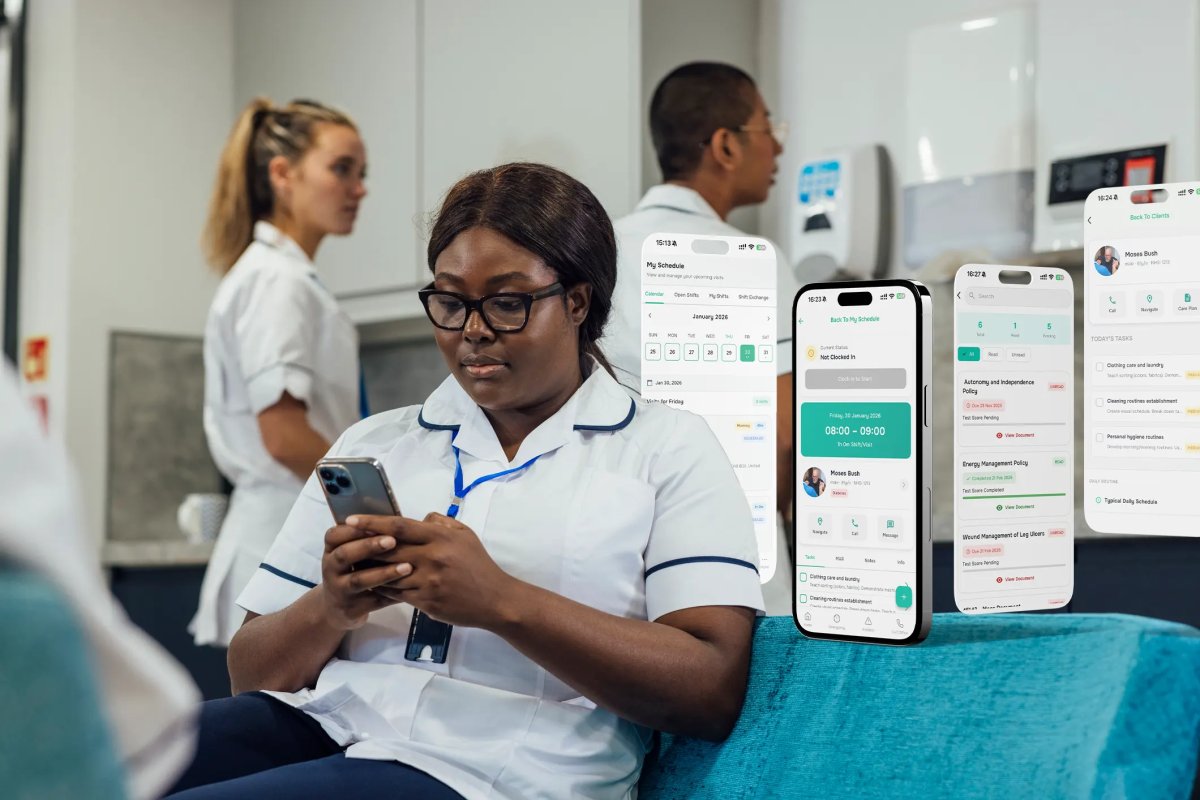
At Care Daily, we’ve designed our platform to act as a unified evidence base, seamlessly integrating care planning, eMAR, and staff rostering. This connectivity means that a single update in a care plan is reflected across the entire service, ensuring total consistency. Our library of CQC compliant policies provides a professional framework that helps you meet the “Well-led” criteria with ease. Care Daily helps managers save 10+ hours a week on compliance admin whilst improving audit accuracy. By digitising your CQC KLOEs evidence examples, you create a safer, more responsive environment where the focus remains exactly where it should be: on the wellbeing of your clients.
Building a Future of Continuous Compliance
Preparing for the regulator doesn’t have to be a source of anxiety when your daily operations are built on a foundation of transparency and care. By moving away from static, paper-based records and embracing a digital-first approach, you transform compliance from a periodic hurdle into a constant reflection of your team’s hard work. We’ve explored how practical CQC KLOEs evidence examples, from real-time eMAR alerts to person-centred daily notes, create a robust audit trail that speaks for itself during an assessment.
At Care Daily, we support over 1,000 UK care providers in maintaining these high standards through our integrated platform. With access to over 2,000 professionally written policies designed specifically for CQC, Ofsted, and CIW compliance, you can feel confident that your service is always aligned with the latest best-practice guidelines. You deserve a system that works as hard as you do, allowing you to focus on what truly matters: the comfort and dignity of your service users.
Book a demo to see how Care Daily organises your CQC evidence automatically and take the first step towards a more organised, stress-free future for your care service.
Frequently Asked Questions
What is the difference between KLOEs and Quality Statements?
Quality Statements are the building blocks of the current Single Assessment Framework, having replaced the old Key Lines of Enquiry prompts in early 2024. Whilst the five key questions remain unchanged, these 34 “We statements” describe the specific standards the regulator expects you to meet. When you are gathering CQC KLOEs evidence examples today, you should map your records against these statements to ensure your documentation reflects the new assessment model.
Can I use paper records as evidence for a CQC inspection in 2026?
You can still use paper records, but the regulator is increasingly moving towards a model of continuous, digital-first assessment. Physical folders make it much harder to provide the real-time data and trend analysis that inspectors now look for to verify quality. Digital evidence provides a clear, date-stamped audit trail that is easier to share during remote assessments and proves your service is consistently well-led.
How many evidence examples do I need for each KLOE?
There is no fixed number of examples required, but you must provide enough proof to satisfy the regulator across their six new evidence categories. This includes people’s experiences, staff feedback, and your internal processes. We find that providing three distinct types of evidence for each Quality Statement, such as a care record, a staff observation, and a client testimonial, creates a strong, triangulated case for excellence.
What does ‘Outstanding’ evidence look like compared to ‘Good’?
‘Good’ evidence proves that you meet the required standards and keep people safe, whereas ‘Outstanding’ evidence shows innovation and exceptional outcomes. To achieve the highest rating, your records must demonstrate how your service goes above and beyond, perhaps by using data to proactively prevent health relapses. It proves that your care is not just compliant but truly aspirational and deeply tailored to every individual’s sanctuary.
How do I prove that my service is ‘Well-led’ if I am a new manager?
New managers can prove a service is well-led by demonstrating a clear grip on audits and staff support systems from the moment they take over. You should present a robust record of your initial service review, your subsequent action plan, and minutes from your first team meetings. This shows the regulator that you are proactive and have a clear, professional vision for the service, regardless of your length of tenure.
Is family feedback considered valid evidence for a CQC rating?
Family feedback is a vital source of evidence and is formally categorised under the “people’s experience” category by the regulator. Capturing these testimonials is essential for your CQC KLOEs evidence examples because they provide independent verification of your caring and responsive nature. Whether it’s a thank-you card or a digital survey, this feedback proves that your support has a tangible, positive impact on the lives of your service users.