

Did you know that 31% of care services are currently rated as Requires Improvement for the Well-led key question? It is a sobering statistic that often reflects the immense pressure you face from local authority commissioners and the challenge of maintaining staff morale after a difficult inspection. At Care Daily, we understand that this label does not define the heart of your service, yet knowing how to improve CQC rating from requires improvement is essential for protecting your reputation and ensuring the long-term stability of your care setting.
We recognise the frustration of knowing your team provides wonderful support whilst struggling to evidence it through outdated, paper-based systems. This guide provides the strategic and practical steps you need to move toward a Good or Outstanding rating under the new 2026 sector-specific frameworks. We will explore the shift back to 24 Key Lines of Enquiry (KLOEs), the reintroduction of Rating Characteristics, and how to build a proactive governance culture that satisfies the regulator’s move toward professional judgment and continuous assessment.
Key Takeaways
- Transitioning from paper-based systems to digital audit trails provides the real-time oversight needed to eliminate the inconsistent record-keeping that often triggers a negative assessment.
- Discover the strategic and practical steps for how to improve CQC rating from requires improvement by aligning your service with the regulator’s 2026 sector-specific frameworks.
- Learn why embedding a proactive culture amongst your carers is essential for satisfying the “Well-led” quality statement and ensuring sustained compliance.
- Understand how to use digital care management tools to perform internal mock inspections, ensuring your service remains ready for the regulator’s continuous assessment model.
Understanding the Requires Improvement Rating in the Single Assessment Framework
A “Requires Improvement” rating indicates that whilst your service may be meeting some needs, it is not consistently safe, effective, or well-led. Under the current assessment model, this rating often stems from a lack of robust oversight. At Care Daily, we frequently see that managers know their service is high-quality, but they lack the digital evidence to prove it to the Care Quality Commission (CQC). This disconnect is often formalised as a breach of Regulation 17 regarding Good Governance. Data shows that 31% of services were rated as Requires Improvement for the “Well-led” question, and every single one of those services also failed to meet the standards of Regulation 17.
When you receive this rating, your immediate priority is the Improvement Action Plan (IAP). This document is your first opportunity to demonstrate to the regulator that you have heard their concerns and are taking decisive action. It is the foundation of how to improve CQC rating from requires improvement, acting as a clear roadmap for your team and the inspectorate alike. By late 2026, the regulator will have transitioned back to 24 sector-specific Key Lines of Enquiry (KLOEs), but your ability to provide a structured response remains the most vital part of your recovery.
The SAF Evidence Categories You Must Master
The regulator assesses your service through six distinct evidence categories. These include people’s experience, feedback from staff and leaders, feedback from partners, observation, processes, and outcomes. We find that “Processes” are often the weakest link for services stuck in the RI trap. If your audits are paper-based or your domiciliary care policies are not regularly reviewed, you cannot prove that your care is consistent. Mapping your recovery actions to these six categories ensures you leave no stone unturned during your next assessment. This structured approach makes it easier for inspectors to see the tangible changes you have implemented.
The Emotional Impact of an RI Rating on Your Service
Receiving a poor report is undeniably stressful for you and your carer team. It is natural to feel a sense of frustration or even defeat, but your leadership is what will carry the service forward. We suggest being transparent with your service users and their families. Explain the specific areas identified for improvement and the steps you are taking to address them. By reframing the rating as a catalyst for positive change, you can turn a difficult moment into a shared mission for excellence. This honesty builds a bridge of trust with families that is far stronger than silence or defensiveness.
Strengthening Governance through Digital Audit Trails
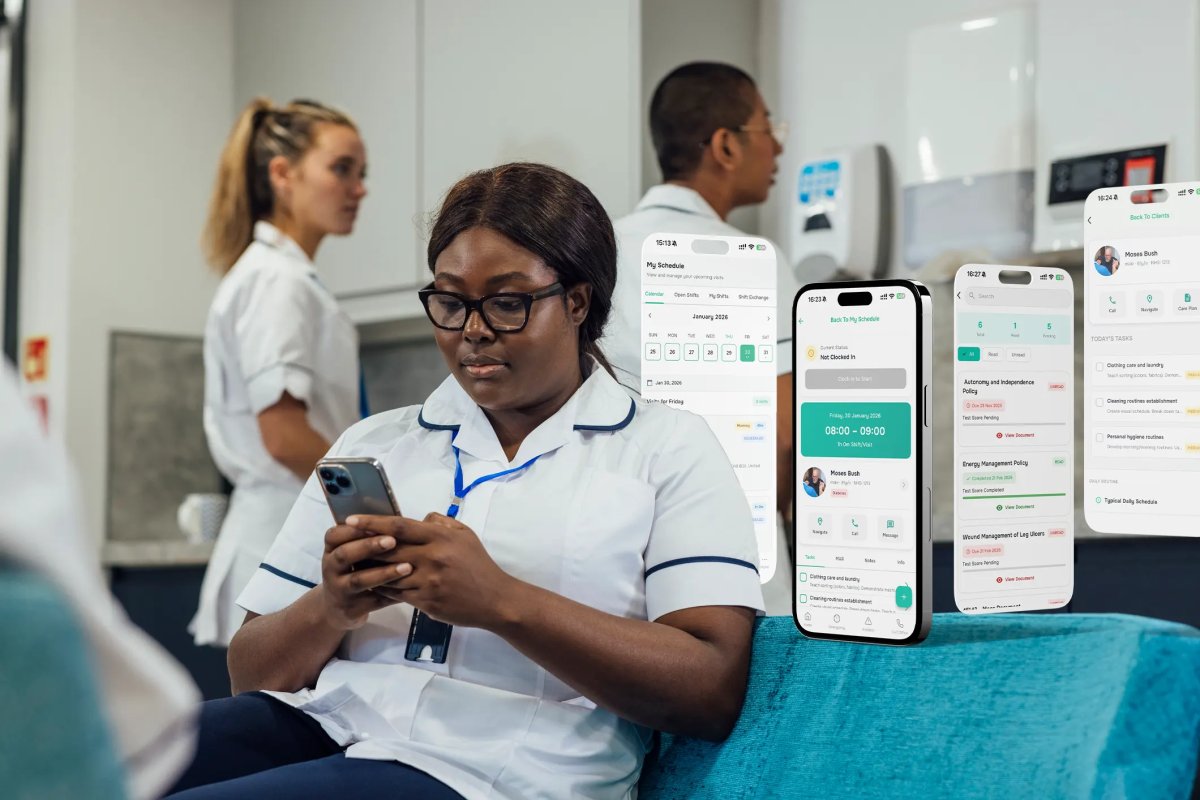
Good governance is the heartbeat of a high-quality care service. In the context of modern regulation, it means having total, real-time oversight of every care visit and clinical intervention. Whilst many managers still rely on physical files, paper-based systems often lead to the “inconsistent records” that are a hallmark of negative reports. These manual systems make it difficult to spot patterns of concern until it’s far too late. At Care Daily, we find that the most successful managers use digital systems to identify gaps in care before an inspector ever steps foot in the building. This shift from reactive to proactive oversight is a fundamental part of your recovery journey.
A “live” audit trail acts as your primary evidence, proving that care was delivered exactly as planned. It moves your governance from a static binder to a dynamic, breathing record of your commitment to safety. If you’re ready to move away from the risks of paper, you can explore our compliance tools to see how they support your journey back to a Good or Outstanding rating.
How to Improve CQC Rating from Requires Improvement with Proactive Auditing
Retrospective audits are often a case of closing the stable door after the horse has bolted. If you only spot a missed signature or a late visit three weeks after the event, the risk to the service user has already occurred. Real-time digital monitoring allows you to act immediately. By using “exception reporting,” your management dashboard only flags what is missing or late, letting you focus your limited time on high-risk areas. Your essential digital record checklist should include:
- Real-time digital care planning and risk assessments.
- Electronic incident and accident logs with clear follow-up actions.
- Staff training and competency records that flag upcoming expiry dates.
- Daily notes that demonstrate person-centred outcomes.
- Staff rostering that ensures the right skills are in the right place.
Evidencing Safe Medication Management
Medication management is frequently where the “Safe” domain falls down during an assessment. Errors in administration or poor record-keeping can quickly lead to a downgrade. An eMAR system provides an unalterable record, showing exactly who administered a medication and at what time. If a dose is missed, the system alerts you instantly. This allows you to “close the loop” by documenting exactly why it happened and what corrective action was taken. This level of transparency and accountability is precisely what the regulator looks for when judging whether a service is well-led and safe.
Embedding a Culture of Continuous Improvement
A positive culture is not something that happens by accident; it is built through deliberate, daily actions. In our experience at Care Daily, we find that a rating of Requires Improvement often stems from a reactive management style where problems are solved only after they occur. To satisfy the “Well-led” quality statement, you must demonstrate a shift toward a proactive, learning culture. This means moving away from simply telling staff what to do and instead involving them in the solution. When your team understands how to improve CQC rating from requires improvement as a shared goal rather than a management directive, the quality of care naturally rises.
Documenting this culture is just as important as living it. Every staff meeting, supervision, and team huddle should be recorded as evidence of your commitment to continuous improvement. The regulator wants to see that you are not just fixing past mistakes but are actively seeking ways to enhance the service user experience. This transparency builds trust with your team and provides the “Well-led” evidence that inspectors often find lacking in paper-heavy services.
Five Steps to Re-engaging Your Carer Team
Rebuilding morale after a difficult inspection is a significant challenge for any manager. We suggest these five steps to get your team back on track:
- Step 1: Transparently share the inspection findings and your vision for reaching a “Good” rating, ensuring every carer feels their role is vital to this journey.
- Step 2: Assign “Quality Champions” amongst your staff to lead on specific evidence categories, such as medication safety or person-centred planning.
- Step 3: Implement regular, meaningful supervisions that focus on the quality of care and personal development rather than just ticking off task lists.
- Step 4: Use digital tools to reduce the administrative burden, giving your carers more time to focus on building relationships with service users.
- Step 5: Foster a “no-blame” environment where staff feel safe reporting near-misses, allowing the service to learn and grow from every incident.
Gathering and Using Service User Feedback
The regulator places immense weight on the lived experience of those you support. Whilst annual surveys have their place, they often fail to capture the real-time sentiment of your service. We recommend moving toward more frequent, informal feedback loops. By using a family portal, you can create a transparent environment where relatives feel involved in the care journey. This digital partnership allows you to gather feedback continuously, rather than waiting for a formal review.
Once you have this feedback, the “You Said, We Did” model is an excellent way to evidence responsiveness. If a family suggests a change to a mealtime routine or a specific activity, document the suggestion and the subsequent action taken. Presenting a log of these improvements to an inspector proves that your service is truly person-centred and responsive to the needs of those you support. To see how our platform can help you capture and evidence this vital feedback, book a personalised demo today.
Sustaining Change: Preparing for Your Re-inspection
The regulator is moving away from periodic, scheduled inspections toward a model of continuous assessment. This means that whilst you may have previously waited for a specific window, you must now operate on the assumption that an assessment could happen at any time. There are no longer published re-inspection timeframes for services rated as Requires Improvement. At Care Daily, we find that the most resilient managers use this shift as an opportunity to move from “inspection prep” to “inspection readiness.” Understanding how to improve CQC rating from requires improvement involves more than just a quick fix; it requires a commitment to sustained excellence that is visible in your data every single day.
One of the most effective ways to ensure you are ready is to use your digital management system to “mock inspect” your own service. By reviewing your dashboard through the lens of the six evidence categories, you can identify trends before they become breaches. We suggest focusing heavily on the “Safe” and “Well-led” domains, as these currently carry the highest rates of Requires Improvement ratings, affecting 26% and 31% of services respectively. When you can see your compliance levels in real-time, you can lead your team with a quiet confidence that paper systems simply cannot provide.
The Role of Up-to-Date Policies and Procedures
A rating of Requires Improvement often highlights a gap between what your policies say and what your carers actually do. Outdated documents that fail to reflect the 2026 sector-specific frameworks are a significant risk. A managed policy library ensures your service remains aligned with the latest legislation without the administrative headache of manual updates. It is vital that your CQC compliant policies and procedures are not just stored in a digital folder but are embedded into staff training and daily practice. When an inspector asks a carer about safeguarding or person-centred care, their answer should mirror the standards set out in your core documents.
Final Preparations for the Inspection Day
On the day of the inspection, your goal is to narrate your improvement journey with clarity and evidence. You should be prepared to show the inspector how you identified previous failings and the specific steps you took to rectify them. We recommend these quick wins for the morning of your assessment:
- Ensure all senior staff have their login credentials ready and can navigate the digital care system fluently.
- Print a summary report of your latest internal audits to show your proactive oversight.
- Verify that all eMAR charts are up to date with no outstanding “missed medication” alerts.
- Prepare a “Good News” folder that highlights positive feedback from service users and their families.
- Make sure your “You Said, We Did” log is easily accessible to demonstrate responsiveness.
Ready to transform your compliance and move toward an Outstanding rating? Book a demo of Care Daily today to see how our platform helps you evidence high-quality care with ease.
Securing Your Path to a Good or Outstanding Rating
Moving away from a Requires Improvement rating is a journey that requires both strategic vision and the right digital tools. By shifting from reactive paper-chasing to proactive, real-time oversight, you build the robust governance needed to satisfy the regulator’s 2026 frameworks. We’ve explored how embedding a learning culture and maintaining unalterable digital audit trails can transform your service from the ground up. Mastering how to improve CQC rating from requires improvement is ultimately about proving the quality of the care you already provide to your service users every day.
At Care Daily, we support registered managers across the UK with over 2,000 professionally written policies and procedures and real-time audit tools designed for Regulation 17 compliance. Discover how Care Daily’s compliance tools can help you reach a “Good” rating and ensure your service remains inspection-ready. You have the expertise to lead your team to excellence; with the right systems in place, you can face your next assessment with absolute confidence and pride in your service’s reputation.
Frequently Asked Questions
How long does a service stay in Requires Improvement before a re-inspection?
There are currently no published re-inspection timeframes for services rated as Requires Improvement under the 2026 framework. The regulator has moved to a continuous assessment model, which means they gather evidence from staff feedback, service user experiences, and digital records throughout the year. You should focus on your action plan immediately, as an inspector could review your progress at any time without a formal visit.
Can I challenge a CQC Requires Improvement rating if I disagree with the findings?
You can challenge the findings of an inspection report through the factual accuracy challenge process before the report is published. This is your opportunity to correct any errors or provide additional evidence that the inspector may have overlooked. If the report is already published, you can still request a rating review if you believe the regulator did not follow its own process correctly.
What is the Well-led domain, and why is it so critical for improving my rating?
The Well-led domain assesses the leadership, management, and governance of your service to ensure it is providing high-quality, person-centred care. It is critical because a poor rating here often indicates systemic issues, with research showing that 31% of services rated as Requires Improvement fail this specific key question. Strengthening this area is the most effective way of how to improve CQC rating from requires improvement as it underpins all other domains.
Does Care Daily provide specific templates for a CQC Improvement Action Plan?
Care Daily provides a comprehensive library of over 500 templates, including specific tools to help you build and manage a robust Improvement Action Plan. Our platform allows you to link these templates directly to your digital care records, making it easier to evidence the changes you’ve implemented. This ensures your response to the regulator is structured, professional, and backed by real-time data.
How much does it cost to move from paper records to a digital care management system?
The cost of transitioning to a digital care management system varies depending on the size of your service and the specific features you require. At Care Daily, we offer flexible subscription options tailored to domiciliary care, residential settings, and children’s services. To get an accurate quote that reflects your unique needs, we recommend visiting our pricing page or booking a demonstration with our team.
What happens if my service receives two consecutive Requires Improvement ratings?
Receiving two consecutive Requires Improvement ratings is a serious matter that often triggers a breach of Regulation 17 regarding good governance. The regulator may take enforcement action, which can include a warning notice or placing the service into special measures. It is vital to use your digital audit trails to demonstrate that you are making sustained, measurable progress to avoid these further escalations.