




PRING OFFERS—  25% off Policy Licences · ends in

The Care Daily Journal · Issue 14

Insights for Better Care

Expert guides, compliance updates, and practical resources for UK care providers.

17 contributors · registered managers, directors, quality leads

248 articles · updated weekly

Tuesday Briefing · Free

One short email. Every Tuesday at 7am.

The week’s compliance moves, one story from the field, and the policy updates you can’t afford to miss.

4,200 managers read it · no spam, ever

Compliance

  • All Posts
  • Adult Services
  • Care Homes
  • Children Services
  • Children's Homes
  • CIW
  • Compliance
  • CQC
  • Health & Social Care
  • Healthcare
  • Home Care
  • Leadership
  • Legal
  • Local Government
  • NHS
  • Ofsted
  • Operations
  • Policy
  • Semi-independent Living
  • Social Care
  • Supported Accommodation
  • Supported Living
  • Technology
  • Workforce
November 29, 2022

The Harpur Trust vs Lesley Brazel is an important case to consider in developing any company and recruiting staff members. In this case, the Supreme Court was asked to consider two different methods of working out holiday pay. Case Law Update: Paid Holiday Entitlement The Supreme Court has upheld the Court of Appeal’s judgement on the Harpur Trust vs Brazel case. The ruling states that holiday pay for permanent staff who only work part of the year, such as term-time workers, should receive a full 5.6 weeks of annual leave a year. Pay should be calculated over a 52-week average rather than based on 12.07%. The same principles apply to those on zero-hours, variable-hours, or casual contracts. Why is this important to your Business? The key takeaway from this judgment is that all workers should be getting 5.6 weeks’ leave, regardless of how many weeks in the year they work....


October 24, 2022

October 2022 When applying for the role of a Registered Manager, it’s essential to ensure that your CV is completed to a professional standard. The CQC and Ofsted will analyse your background, skills, education, and experience to ensure you can fulfil the requirements expected of a Registered Manager.  What Do Employers Look For in a CV? Depending on the job description and requirements, you can usually predict what the hiring manager wants to see in your CV. It’s important to create a highly targeted CV that gets you noticed. Expertise and Achievements Relevant Skillset Data and Quantifiable Metrics Proper Spelling and Grammar CQC and Ofsted Registered Manager Criteria The CQC state the intention of this regulation is to ensure that people who use services have their needs met because the regulated activity is managed by an appropriate person. This is because providers who comply with the regulations will have a...

October 18, 2022

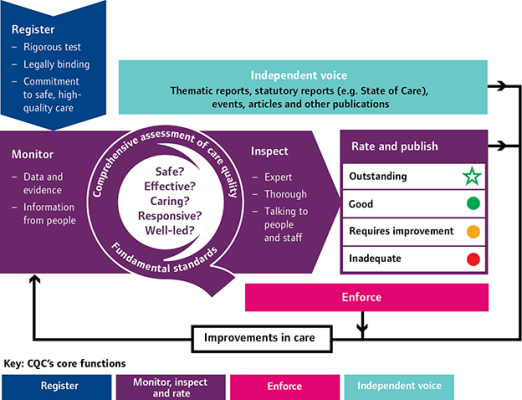
In July 2022, the Care Quality Commission outlined its new single assessment framework, focusing on a system that connects its registration activity to its quality assessments while offering a structure with greater transparency. They are looking to move away from their old approach of monitor, inspect and rate and work towards a more flexible approach where inspections won’t be determined by frequency. The CQC will base their quality assessments in all types of services, and at all levels, on the single assessment framework. For local authorities and integrated care systems, the CQC will use a subset of the quality statements.

September 8, 2022

Unregulated provision – strong oversight is required to ensure young people are safe, secure and doing well. In December 2021, Amanda Spielman, Ofsted Chief Inspector, agreed to the government’s request that Ofsted should register unregulated provisions for 16- and 17-year-old children in care and care leavers. Although supported accommodation remains unregulated, it is hard to predict when inspections will begin. Quality standards and regulatory oversight are crucial. The government expects to implement the supported accommodation regulations by January 2023. Ofsted will begin registering supported accommodation providers in April 2023 and conduct inspections in April 2024.

September 1, 2022

From 1st July 2022, all health and social care providers registered with the CQC must ensure that their staff receive training on interacting appropriately with people with a learning disability and autistic people at a level appropriate to their role. This new legal requirement is introduced by the Health and Care Act 2022.  The Government is required to consult and publish a Code of Practice, which would outline the content, delivery and ongoing monitoring and evaluation of the Oliver McGowan Mandatory Training that it has developed. It is anticipated that it will take at least 12 months to publish the Code of Practice. The CQC will provide statutory guidance until the Code of Practice is published. During the assessments and inspections of providers, they will regularly look to see if staff are working with people appropriately. If not, they will consider what training and support have been provided to staff...

August 8, 2022

The CQC are changing how they regulate services. They are moving to a single assessment framework, with new powers to assess integrated care systems and local authorities. Their new strategy strengthens their commitment to ensure health and social care services provide people with safe, effective, compassionate, high-quality care and encourage services to improve. Their purpose and role as a regulator won’t change but how they will work will be different. Their ambitious strategy sets out 4 themes: People and communities– They will focus more on people’s needs and experiences and on what’s important to people when they access, use and move between services. They will work in partnership with people who use services and help build better care around them. Smarter regulation–  They will use smarter, more flexible methods of regulating services by providing up-to-date information and ratings. By doing so they will target resources where they will have the greatest...

July 4, 2022

Ofsted Proposal Ofsted proposes to:         Introduce a separate new judgement within ILACS – ‘The experiences and progress of care leavers.’         Review and update the existing evaluation criteria to ensure that they are relevant and reflect what good looks like for care leavers         Introduce the new judgement after all local authorities have at least one OLACS inspection outcome. Proposal 1: a new judgement for care leavers Ofsted proposes to introduce a separate new judgement within ILACS: ‘The experiences and progress of care leavers’. The below table outlines the current and proposed judgement structures. Current judgement structure Proposed judgement structure Overall effectiveness   The experiences and progress of children who need help and protection   The experiences and progress of children in care and care leavers   The impact of leaders on social work practice with children and families Overall...

June 1, 2022

  The Department of Health and Social Care (DHSC) and the Ministry of Justice proposed changes to the Mental Capacity Act (2005) Code of Practice, which includes guidance on the new Liberty Protection Safeguards (LPS) system. This article outlines how the new scheme for authorising deprivations of liberty will be put into practice. The LPS was introduced by the Mental Capacity (Amendment) Act 2019 to replace the Deprivation of Liberty Safeguards (DoLS) and Court of Protection authorisations of arrangements not covered by DoLS. Though the LPS has the same overall purpose as the DoLS, the new system is designed to be more streamlined and will put the person at the centre of the decision-making process. The LPS will introduce an explicit duty to consult with the person, and those interested in their welfare, to establish the person’s wishes and feelings about the proposed arrangements. Those who are close to the...

June 1, 2022

The Proposed National Standards Gov UK state: ‘This standard should enable a young person to have confidence in the organisation providing their accommodation and support, and the people responsible for running it.’   The Purpose and Intent Statement The registered provider must ensure that a clear statement (the purpose and intent statement) of the core aims, purpose and function of the service is produced, updated, reviewed regularly and accessible to all interested parties. The purpose and intent statement should include: A statement of the overall aims of the service, and the objectives to be achieved with regard to the young people accommodated there. This should include details such as age range, gender and the numbers of young people the accommodation is to be provided for. This statement should also explore how the provider intends to manage the different risks young people in the setting present to one another, and ensure...

Join 720+ providers

“We swapped a wall of binders for a calm dashboard — and our last CQC inspection was the smoothest we’ve ever had.”

Amara ClarkeDirector, Sunrise Community Care

Get started

Care that runs itself.

Replace binders and spreadsheets with one calm, compliant platform. White-glove onboarding, 14-day free trial, no card required.

Start trial

14 days, no card

Book a demo

30-min walkthrough

Talk to us

0330 808 0050

3.2 hrs

saved / mgr / wk

94%

avg CQC score

8,200+

missed visits prevented

£1.4M

admin time returned

48-hour deployment

Data migration included

UK-based onboarding

Starting a care business?

Get our free CQC registration toolkit — used by 400+ UK providers to launch with confidence.

GDPR Compliant

256-bit SSL Secured

ISO 27001

UK-based support

Care Daily © 2026 operated by NXT Digital Ltd, Registered in England and Wales, Company Number: 13265961

Scroll to Top